


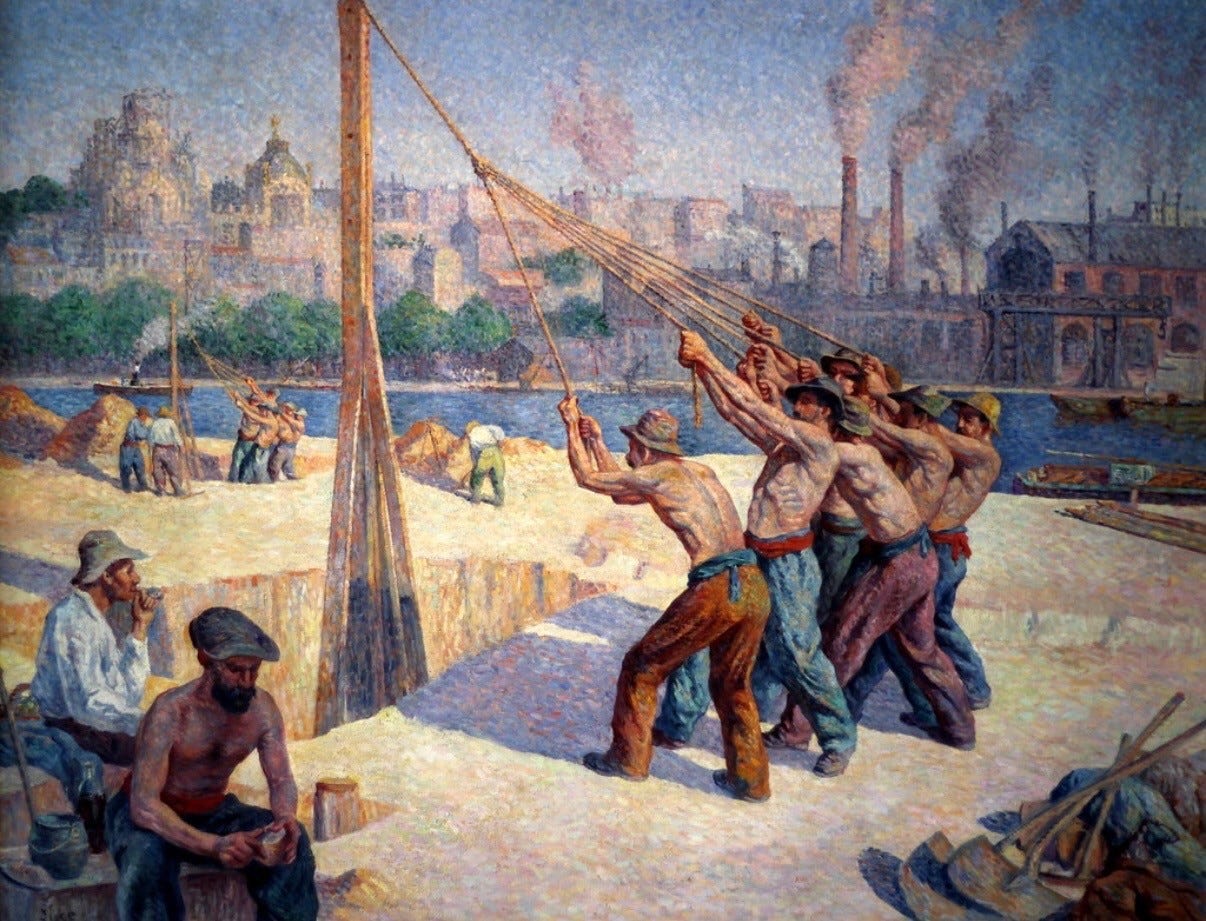
We live in a society that has become increasingly accustomed to reducing what humans create to useful products, and ultimately human beings themselves to what and how much they produce. We even tend to evaluate our next activity, chore, or nap through a kind of productivity calculus. Things increasingly have to be productively profitable to make the cut into our priorities. And that raises a question: what happens when what a person produces becomes the measure of their worth—especially when AI can now produce at a level once reserved for exceptional human effort?
In The Human Condition, Hannah Arendt argued that action reveals a person. Yet she was deeply suspicious of what we might call productivism. For Arendt there is a crucial difference between what a person is and who they are. Our talents, occupations, class, achievements, and even the works we produce belong largely to the what. The who appears through action and speech among others. Or in other words, a person’s productive output can’t fully disclose who they are.
This is why Arendt makes the even more radical claim that the notion of genius can dehumanize the person. Once we learn to measure and reduce everything to its output, usefulness, or exchange value, we risk doing the same to human beings. The genius then may command a much higher market value than the ordinary worker, but the underlying logic remains disturbingly similar: the person is valued through what they produce and therefore commodified. This means that a person can become obscured in the shadow of their own work, the work becoming a kind of shelter from fully exposing who they are in the web of human relationships, disagreements, and challenges, as both society and the individual begin to confuse the value of the person with the value of their work.
So if a human being cannot finally be measured by what they produce, by what should they be measured?
What Matters Beyond Productivity?
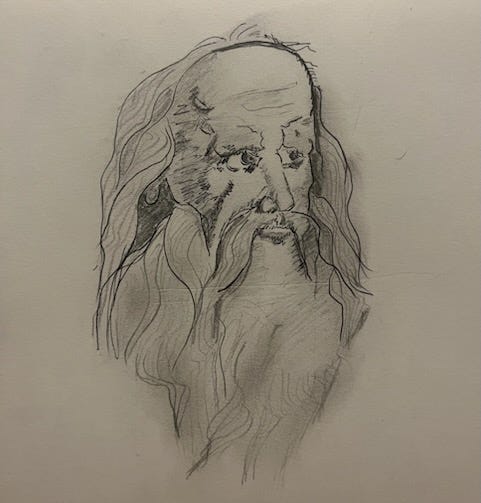
For Plato, what human souls produce externally is secondary in importance—only an expression of how they are governed—and they are measured primarily by how they are arranged internally. He famously gives us the chariot picture of the soul in the Phaedrus, and by bringing it together with the ‘just state’ of the Republic and some of the physical imagery of the Timaeus, we can try the following image. Picture for a moment our heads as a charioteer, our chests as a noble horse pushing upwards, and our stomachs as a wild and appetitive horse pushing downwards with great force. The human being is this little tripartite moving struggle.
Why does it matter to us? Because for Plato, it doesn’t matter if you’re a king or a beggar; it matters if your chariot is well led. Neither horse should be suppressed. The “wilder” horse—our appetites—is strong and crucial, but dangerous when untamed. The “nobler” horse—our spirited ambition—is also powerful, but directed toward higher pursuits: not merely sustaining life, but elevating it. Greatness, achievement, and honor concern this part. Personal justice is achieved when the charioteer can lead them both. Simply put, reason is supposed to harness spirited ambition and appetite and make genuine allies out of this struggling chariot.
But that doesn’t mean we ought to reduce this imagery to merely a person living a life of pleasures versus a person living an intellectual life. A philosopher, poet, master artist, or a wealthy politician can still be led by the values of appetite and ambition. They can produce extraordinary work externally and still feel worthless without recognition, constantly hungry for respect, power, fame, or the next success. Their intelligence might be highly developed while their sense of worth remains completely dependent on ambitious and appetitive values. In such a person, the charioteer is still failing to lead the chariot appropriately.
This Platonic picture might help illuminate Arendt’s who: not the work itself, but the character revealed when a person has to speak and act in the world of human affairs.
And if extraordinary work could already come from a poorly led chariot—and was therefore an incomplete measure of the person—what happens to that measure when extraordinary work itself becomes easier than ever to produce?
When Work Becomes Consumption
AI is already composing chorales, designing floor plans, writing books, and developing software. This is where Arendt’s criticism of the genius becomes especially ruthless: if our newest “genius” isn’t even human, then the market value of our geniuses has just dropped significantly.
But Arendt’s concern goes further than how we value the person. She also saw a transformation in how we value the things people make. To understand it, we have to look at her distinction between labor and work. The Industrial Revolution carried a promise: machines would free human beings from the burden of physical labor. Instead, human life became increasingly organized around machines, production, and endless cycles of consumption. Labor did not disappear; its values spread.
Labor exists in a cycle of production and consumption: we make bread because it disappears when we eat it, and tomorrow we have to make more. Work, by contrast, creates something durable—a table, a building, a painting, a book—something meant to remain and build a world. But what happens when we begin treating the table like bread? The values of labor begin swallowing the products of work. What was made to endure is increasingly produced to be consumed, replaced, and produced again.
And just as the values of appetite and ambition can take over the individual even when dressed as an intellectual, so the values of labor can take over the durable products of work. We become unsatisfied with our furniture, clothes, cars, and even cities, disposing of them and moving on to the next—or at least suffering from the urge to do so. And if the values of labor can turn durable work into something disposable, what happens when those same values reach the activity of thought itself?
AI as the New Steam Engine
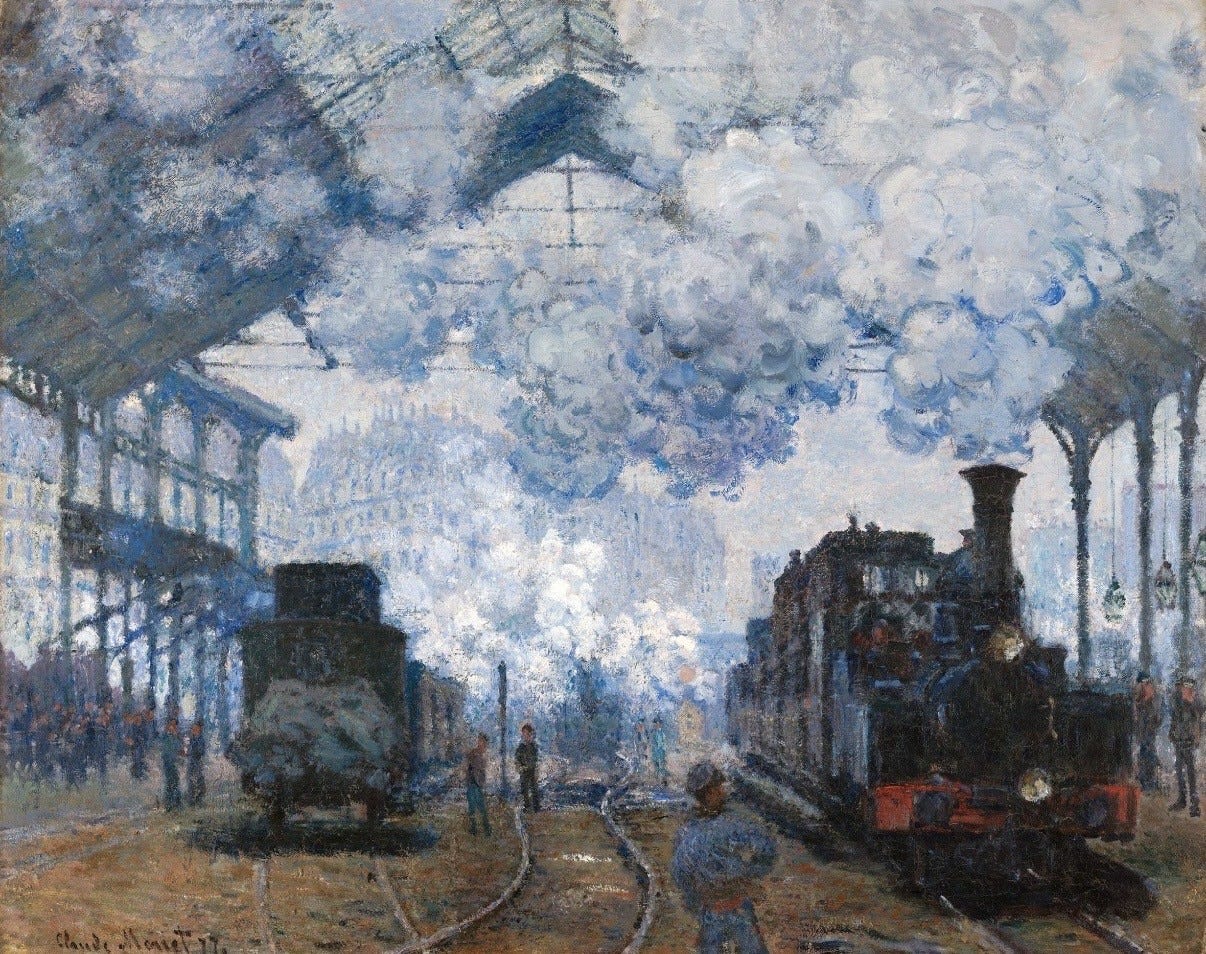
We are now approaching the same transformation intellectually. AI comes with another promise of liberation: we can finally rid ourselves of the burden of intellectual labor. We don’t have to review every line, search through every source, wrestle with every paragraph, sit with our instruments seeking harmonic solutions, or go through the contemplative journey of discovering the symmetries through which we come to recognize and imitate the order of the world.
These can begin to look like the intellectual equivalents of factory labor—repetitive burdens that stand between us and the finished product. But this is where the analogy becomes dangerous. A book is not an apple. Research, philosophy, cinema, architecture, and music are not valuable merely because there is something at the end to consume. And the activity that produces them might not be merely an unfortunate cost standing between the creator and the product.
Now, it’s important to emphasize: not every burden forms us, and there is no virtue in preserving drudgery for its own sake. Some heavy lifting should be automated. Just as modern machinery did not merely save labor but expanded what human beings were capable of building, AI is expanding what human intelligence is capable of reaching.
So the question is not whether we should automate intellectual labor, but which parts expand our capacities when delegated, and which are themselves essential to our formation. Plato gives us one way to begin drawing that line.
The Spark of Friction
“If the same questions are put to him on many occasions and in different ways… in the end he will have knowledge”, Socrates says in the Meno. And when the elements of inquiry are “brought into contact and friction one with another”, they have the potential to kindle light in the soul, as Plato suggests in the Seventh Letter.
The ongoing friction of thought holds the potential to spark the fire of understanding in our minds. And that’s where the delegation of thought becomes dangerous. If questioning, answering, comparing, revising, and arguing are themselves part of how understanding takes root, then receiving the finished answer cannot always substitute for going through that process ourselves.
Reading, writing, painting, arguing, and creating are not only ways of producing things; they are also ways in which a person learns to attend, distinguish, judge, seek proportion, and bring scattered things into some kind of unity. What the friction forms is not only the insight. It is the charioteer—or, to resolve the analogy, the habits of attention and judgment through which a life is led.
A musician who hands an unpolished idea to AI may gain a finished work while skipping the process in which inspiration sometimes appears—the “divine power” Socrates associates with inspiration in the Ion.
The problem, then, is not the removal of burden itself, but treating the processes that form us as burdens to get rid of—redescribing them as inefficiencies. What once demanded attention becomes wasted time, and what once formed the creator becomes an unnecessary cost of production.

When Thinking Becomes a Production Cost
If the Industrial Revolution mechanized physical labor, the AI revolution now promises to mechanize intellectual labor. And the more we measure human worth through productivity, the more tempting it becomes to delegate whatever stands between us and the finished product.
The question AI leaves us with, then, is not simply which intellectual “burdens” can be automated, but what kinds of human beings we become when we hand them over. If some burdens merely obstruct us, sure, let the machines carry them. But if others are part of the activity through which judgment, attention, character, and reason are formed, then removing them might mean removing part of the formation itself. And we can push this even further: we can use AI to intensify the friction of understanding instead of delegating it. We can use it to critique our work, question us, and tutor us—to enhance the spark of understanding rather than give up the attempt entirely.
Bread belongs to the cycle of consumption and reproduction. Then we began treating tables the same way. And now we risk doing the same with the thought process itself. The danger is not that machines will become more productive than us, but that we will mistake productivity for the measure of a human life and delegate away the formative process itself.
Amit Leshed is an independent writer, jazz musician, and software engineer exploring Platonic and Socratic philosophy in dialogue with contemporary life. His work focuses on human flourishing, character formation, and Platonism as a practical framework for self-examination and inner governance.
See Also from the New York Journal of Philosophy


