



Arts and Flatteries
Plato makes a fascinating distinction in the Gorgias between arts and flatteries. An art, he says, takes genuine care of the object of its craft, bringing it to good proportion and beauty. A flattery is what merely aims at either the excess of a particular attribute or the complete imitation of that craft. He criticizes rhetoricians who deal with persuasion more than truth, and cosmetics—that deal with the appearance of physical greatness in contrast to gymnastics—the art that cultivates physical greatness. One aims at appearance and persuasion, the other at being and truth. It raises the suspicion that in modern times we tend to confuse arts and flatteries more than ever.
Rhetoric detached from truth only imitates statesmanship. It produces persuasion without wisdom. Instead of seeking truth and communicating it, the speaker masters the audience’s emotions to serve personal interests. These look very similar at face value, but so are dogs and wolves. One is a guard of the household, the other is a guard of itself. Cosmetics, the enhancer of beauty, cannot develop physical excellence by itself, and so confusing the two can be dangerous. There is nothing wrong with enhancing either physical bodies or speeches, but the danger is substituting their essence. That’s where people or politicians care more for appearing than actually being right or healthy.
The Inversion of Meritocracy
So we pursue wealth and then discover it doesn’t bring the fulfillment we expected. We seek admiration only to find ourselves dependent on it. We obsess over appearing healthy, productive, intelligent, or successful while neglecting the realities and processes those images are supposed to represent. We live in a kind of social meritocracy—a society that attempts to distribute status, recognition, and reward according to talents. And while meritocracy can be a great thing, it immediately raises another question: what exactly counts as merit? In a world that rewards appearing great and viciously competes in self-worth, where we confuse fast-food with nutrition, entertainment with art, and persuasion with wisdom, our supposed meritocracy begins to invert into an “Imageocracy”—the rule of appearances.
The subtle thing about meritocratic cultures is that ultimately merit is judged through appearance, and after all that’s our only way to show our inner workings in the public realm. Merit, virtue, excellence have to appear somehow in the world. But we also live in times where appearances are the easiest to fake in probably all human history. In Athens, sophists were obsessed with changing opinions through rhetoric; modern-day sophists do so by manipulating images, content, and evidence to blur our perception of truth. That’s why Plato argued so forcefully that flatteries must never replace the arts as the ultimate standard. Nowadays we often perceive enhancers as “good enough” and move forward. Looking confident used to be a result of wisdom, unifying the ideas and worldview of an individual. Today it seems as if there’s an independent art of “looking confident.”
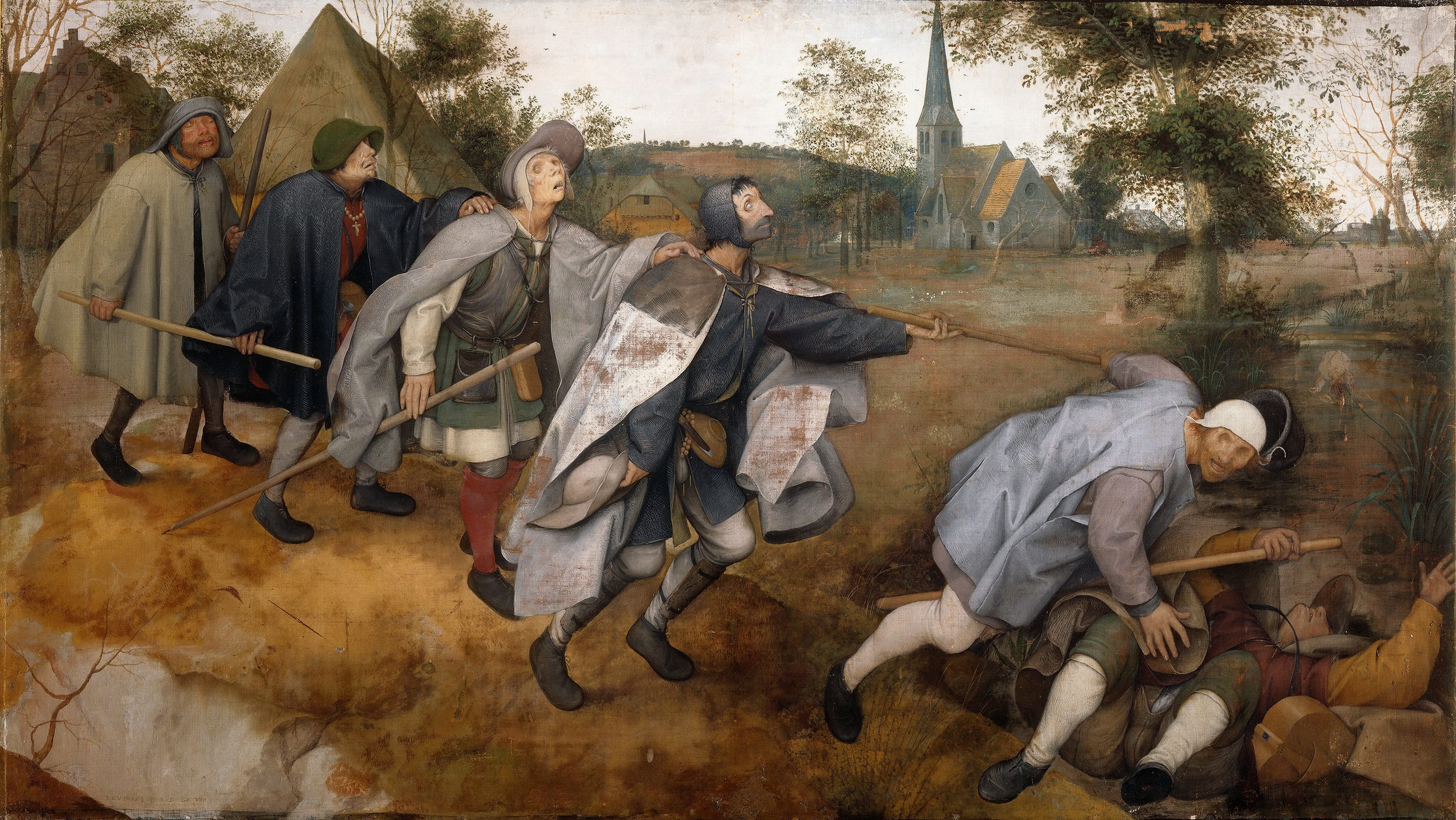
Every meritocratic realm carries a built-in danger—an obsession with images. The influencer who seems happy or successful is rewarded most. The politician who dominates global media wins elections. Startup founders who prioritize public image, investor opinions, and record IPOs are favored far more than those focused on users’ mental health and social impact. Why then, do intelligent people, who believe they are following reason, so often choose the appearance of the good over the good itself? And how can we learn to distinguish true reason from possibly other guiding forces within us?
Do We Truly Follow Reason?
We like to think of ourselves as rational beings who aren’t easily misled, so let’s assume Socrates was right and we all follow reason and logic. Throughout Plato’s dialogues—especially the Republic, Meno, Protagoras, and Gorgias—we find the idea that every human being follows what appears to be good for them and has what they take to be reasonable arguments in support of their conception of justice and the way they shape their lives and ethics. “The road to hell is paved with good intentions.” Even tyrannical leaders follow what they confuse to be the best interest of themselves and the nation. Even oligarchic individuals are reasonable enough to realize that wealth is a good possession, but fail to realize what it is ultimately good for. So if we all strive toward the good (or at least what we perceive to be good) and if reason seeks truth, why do intelligent people repeatedly pursue appearances? Money over well-being, status over character, and plastic treatments over physical health? Perhaps the problem isn’t that we fail to follow reason. Perhaps the problem is that what we call reason isn’t reason at all.
We often experience conflicting desires, and we sometimes want entire opposites at the same time: health and indulgence, truth and approval, peace and victory. But if reason were the only force shaping our actions, that would be very difficult to explain. Just as reason seeks the true and good, so our ambitions seek success and recognition through high pursuits, and our appetites seek immediate gratification through bodily experiences.
The subtle thing is that just as the self-interested politician uses rhetorical arguments to imitate wisdom, so desires and ambitions use the language of reason to justify their own objectives. It becomes interesting how many of our “rational” arguments might be post hoc defenses of conclusions reached by our desires and ambitions.
Plato, through Socrates, offers us an interesting framework to explore this exact problem: In the Republic, he walks us through a curious experiment, and he builds a state composed of three classes: producers, guardians, and philosopher-kings. Justice, in that state, is the correct hierarchy: philosophers rule, guardians protect, and producers serve. And the crucial detail about the Republic that is usually overlooked is that the state is an analogy to help us understand the individual soul better. Socrates proposes examining justice first in the city because it is larger and easier to observe there than in the individual.

So if the state consists of three parts, what are the analogous three parts of our soul? Producers represent our desiring part, guardians represent the spirited protective and ambitious part, and philosopher-kings represent our rational-leading part. With that in mind, Plato goes on to assemble different kinds of regimes and corresponding types of individual souls—or psychological states, analogous to those regimes—which we’ll cover more extensively another time. But the point I’d like to stress now is that our soul is not solely rational (seeking truth), but also appetitive (desiring), and ambitious (proud, protective, wanting great things of itself). This means that not every thought that sounds reasonable originates in reason. Desire and ambition can use reason as an attorney, not as a guide.
Considering those ideas, it’s interesting to think that we don’t only confuse flatteries with arts, but perhaps reason with anxiety, or personal pride with justice, and so on. Anxiety often disguises itself as responsibility. Toxic perfectionism often presents itself as high standards. Vanity often dresses itself as self-improvement. And the desire for approval frequently masquerades as love. The difficulty is then, that our different guiding forces can produce almost the same outward appearance, and what distinguishes them is not the act itself, but the principle that ruled it.
Let’s look at a person looking for a job. One person can look for a job out of a realization that one needs it. This will help financially and provide structure. Another can look for a job in order to prove, to earn, and to exceed, and yet another can look for a job out of complete anxiety about self-worth and a fractured self-image. They’re all very different ways of handling the same act. The same can be said of almost any practice or act we’ll perform in the world. Outward action alone, then, cannot fully disclose what guides the person acting. It takes careful examination of the principles and set of beliefs ruling that person.
Toward Radical Honesty
But the problem is not merely psychological. When entire communities reward appearances over realities, flatteries become economically and politically advantageous. Looking successful now yields greater rewards than becoming excellent. Image ceases to be a by-product of excellence and becomes excellence’s substitute. And when a community pursues only appearances rather than wisdom and character as its highest ideals, its driving forces shift toward pride, anxiety, and an obsessive concern for how one is perceived in a world devoted to accumulation, status, and consumption. It is precisely here that Hannah Arendt’s analysis becomes illuminating. Arendt argued that the ancient citizen managed private necessities in the household precisely so they could enter the public realm and exercise genuine political freedom and action. Modern society, however, has become increasingly organized around what she called “the social”—a conformist form of national housekeeping (or basic necessities) that gradually consumes both private life and authentic political action. If Arendt’s diagnosis is correct, then merit is no longer measured by character or excellence in the public sphere, but by images of social approval and accumulation through endless labor. When economic, social, and political life becomes organized around labor, production, security, and accumulation, while genuine political and social action goes unrewarded, it is no wonder that our sense of reason becomes blurred.
If that’s the case, then our problem becomes much clearer. We mistake our guiding forces for being reasonable, when in fact it is our ambitions and anxieties that lead us to think that flatteries—or appearances—of the social space we inhabit are actually ideals of truth. Now we have a much clearer understanding of how we can become confused about our inner workings, mistake falsehood for truth, and irrational forces for reason. What Plato calls flattery—or, in the language of the cave, the image or shadow—is precisely this substitution: the appearance of goodness replacing goodness itself. Therefore, a radical honesty is required, the courage to continually examine the ideals we have already shaped. Were they formed by a mind seeking approval from parents, mentors, or society? Have we been pursuing lives that make sense to our culture but not to our deeper nature? The real battle is not against external failure, but against the pride and fear that keep us from admitting we may have been chasing the wrong image of what’s good for us. Only by daring to distinguish the voices of appetite, spirit, and true reason can we begin to replace our self-rule of appearances with the rule of reason.
Amit Leshed is an independent writer, jazz musician, and software engineer whose work explores Platonic and Socratic philosophy, ethics, and political thought in dialogue with contemporary struggles. His writing focuses on questions of human flourishing, the formation of character and happiness, and the relationship between appearance and being.
Fascinating read! “The real battle is not against external failure, but against the pride and fear that keep us from admitting we may have been chasing the wrong image of what’s good for us.”
Very deep