



I. Introduction
In 1960, physicists and military strategists predicted that thirty countries would possess thermonuclear weapons by the end of the 20th century. Luckily, they were incorrect. Today, only nine nations have nuclear arsenals, fewer than in 1970. So what explains this dramatic underproliferation?
I’m going to argue that it is attributable to something admittedly less edifying than the power of non-violent resistance or any triumphs of international law. Rather, I think peace arose from fear. That fear was enforced by the credible threat of consequences and was sustained by a deterrence architecture built on threats of retaliation, economic sanctions, verification regimes, and (when all that failed) clandestine sabotage — the famous “Mutual Assured Destruction.”
Artificial intelligence, in my opinion, now confronts the same governance problem as nuclear faced in the 60’s. Nations, corporations, and frontier research labs are currently racing to develop AI systems with transformative capabilities. The rewards for being first appear enormous, while the costs of falling behind may be severe. As a result, the competition has the structure of an arms race: each actor faces strong incentives to move faster, even if everyone would be better off moving more cautiously. This encourages rapid development, even when the risks may outweigh the benefits, because no one wants to lose the race to artificial general intelligence (AGI).
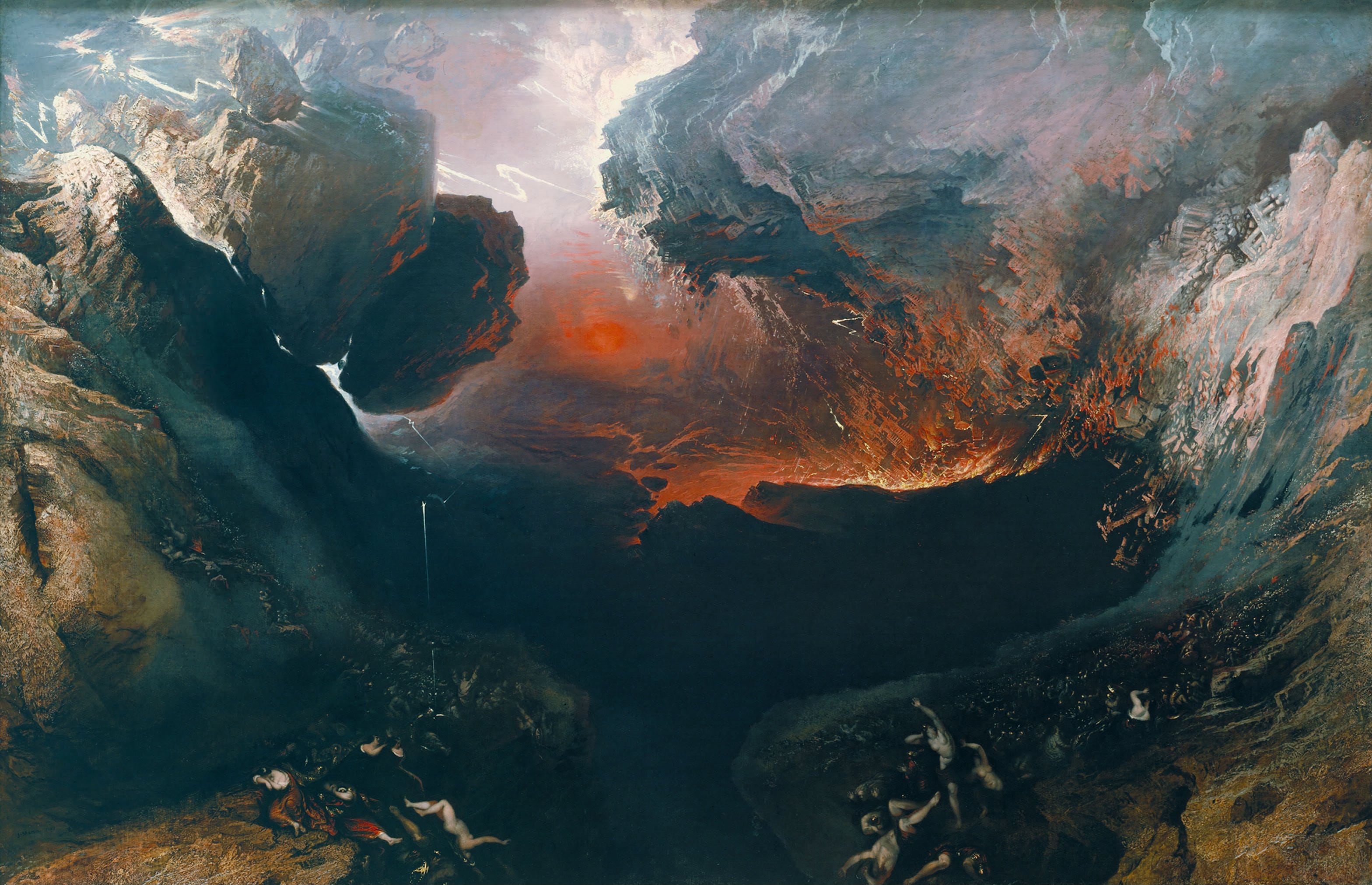
To those versed in game theory, this pattern is familiar: it is the basic structure of a prisoner’s dilemma. Every actor would be better off if everyone slowed down, but no one can safely slow down alone without losing the race.
Fortunately, this problem is not new. It is a recurring one in the history of science and geopolitics, and we have already hit upon a solution that has worked several times in the past. The lesson of nuclear, chemical, and bioweapon governance is that dangerous technologies can be contained through Hobbesian/game-theoretic mechanisms that allow one agent to unilaterally make another actor’s violation more costly than its compliance. We can change the payout matrix of the prisoner’s dilemma by applying pressure from outside.
This paper argues that AI requires the same basic approach. I call this framework Mutually Assured Containment (MAC). It adapts the deterrence strategies that helped contain nuclear, chemical, and biological weapons to the unique risks and challenges posed by the advent of artificial general intelligence (AGI).
II. The Race and the Bystanders
In our current context, two actors, the United States and China, appear to be locked in something resembling a race to the death.
Each has rational cause to fear falling behind. The first to achieve artificial general intelligence (AGI), or something close to it, may gain a decisive and durable strategic (and military) advantage; the loser may face a form of technological subjugation from which recovery is difficult to imagine. Even leaders within these programmes who privately (or publicly!) acknowledge catastrophic risks face overwhelming, perversely rational pressure to continue: whoever slows down first risks ceding the lead to a rival who is willing to keep racing.
This is the classic Prisoner’s Dilemma: rational individual choices producing collectively (and individually) catastrophic outcomes. Every actor would be better off if everyone slowed down, but no one can safely slow down first. In this regard, the structure of AGI development seems to intrinsically reward accelerationism and punish restraint (even if the ultimate consequences for reckless accelerationism are unimaginably catastrophic).
Companies and nations that race ahead capture market share, talent, and strategic/national-security advantage. Those that pause risk irrelevance, or worse, permanent subjugation to those who decided to barrel on. In the face of such an incentive structure, diplomacy and ethical exhortation become feeble counsellors, and rational fear of being dominated rules the day.

But here is what makes the situation both stranger and more tractable than it initially appears. Our current race has two clear frontrunners, the US and China, and then a second tier of states unlikely to win it but who retain the capacity to stop the race altogether (including, but not limited to, the UK, EU, Israel, and Russia). They, metaphorically, have handguns (near-peer capabilities) and can take aim at the likely winners.
This sounds extreme, even destabilizing. Yet it is precisely how humanity has contained every technology that approached dangerous limits of power: nuclear weapons, chemical weapons, bioweapons. In each case, restraint came not from the leading powers’ goodwill but from the credible threat of enforcement by actors or coalitions capable of imposing unacceptable costs on violators.
The logic for these second-tier powers is straightforward, once seen. An AGI breakthrough by the United States or China could produce an overwhelming and durable asymmetry of power not just military but economic, informational, and political. They would lose their near-peer status, and the negotiating leverage that comes with it, which would essentially leave them at the whims and largesse of a foreign country (in the worst case, an adversary).
For countries already operating within American or Chinese hegemony, this should be deeply concerning. Whether power is centred in Washington or Beijing changes the leadership, but not the basic structure of the status quo.
What AGI introduces is a break in that structure. Traditional hegemony still relies on interdependence (trade, alliances, supply chains), so middle powers retain leverage within the system, and the hegemon can be reined in by a coalition. (To take a recent example, the United States cannot invade Denmark if the EU does not want it to).
But a decisive lead in AGI could weaken or even effectively eliminate the hegemon’s dependence on the middle powers, effectively allowing the leading state to act with far greater autonomy than if it remained dependent on the others. (In our example, the US could invade Greenland with impunity). The issue is no longer which hegemon dominates, but whether any meaningful influence remains at all. The difference is between operating at a disadvantage within a system and being rendered largely irrelevant to it.
From that perspective, containment is rational, even if it locks in the current balance of power. Trading one hegemon for another is a tolerable outcome. Enabling a step-change in capability that no non-leading state could counter or survive politically is not. For the vast majority of the world, the calculus is simple: the worst version of the status quo is preferable to a future in which a single state possesses capabilities that make deterrence, negotiation, and sovereignty itself functionally obsolete.
This is the structural fact on which any plausible AI containment regime can (and, I argue, must) be built.
III. The Hobbesian Structure
Thomas Hobbes famously described the state of nature as a “solitary, poor, nasty, brutish, and short.” Nobody trusts anybody, everybody lies, cheats, and steals, and society therefore devolves “war of all against all,” (Not all philosophers are happy).

By “war of all against all,” Hobbes did not mean that people were constantly in active conflict. Rather, he meant that, without a common power to enforce peace, everyone lives under the constant threat of violence. In such a world, distrust is rational. Even actions taken for self-defense can look like preparations for attack, and this perversely makes conflict more likely even when no one wants it.
Many scholars of international relations argue that sovereign states live in much the same condition. There is no world government which has power to enforce agreements when states have conflicting incentives, and as a result states cannot fully trust one another. This creates what political scientists call “the security dilemma”: one state’s efforts to make itself safer often make other states feel less safe. As a result, both sides continue to arm themselves, even when neither wants war, and this perversely increases the probability of conflict. The problem has nothing, really, to do with the intentions on either side, rather it’s a problem with the game-theoretic incentive structure (or “payout matrix”).
Frontier AI development increasingly resembles this Hobbesian world. The leading laboratories (OpenAI, Google, Anthropic, and their Chinese counterparts) operate in an environment where the fear of falling behind pushes everyone to move faster.
Many researchers openly acknowledge that the risks are profound. In the largest survey of AI researchers to date, the median respondent estimated a 5% chance that advanced AI could CAUSE HUMAN EXTINCTION or similarly permanent and severe disempowerment. Geoffrey Hinton, who won the Nobel Prize for his work on AI thinks the risk is 10-20% in the next 10 years. Elon Musk, who cofounded OpenAI and later founded xAI (Grok), agrees with him. Dario Amodei, the CEO of Anthropic comes in at 10-25% risk of human extinction or similar catastrophe. Sam Altman has declined to give a numerical probability estimate.
Yet, because of the game-theoretic incentive structure, no leading lab can safely slow down on its own without risking that a rival gains a decisive advantage.
Recent efforts to govern AI (including the EU AI Act, the U.S. Executive Order on AI, and voluntary commitments from leading labs) are important first steps but they lack the regulatory teeth requisite to effectively deter these technologies. In particular, none of the aforementioned agreements addresses the underlying strategic puzzle wherein violating safety norms confers a competitive advantage to the violator, such that under the circumstances voluntary compliance becomes irrational even when it is relatively clearly in the interest of even the leaders of the race.
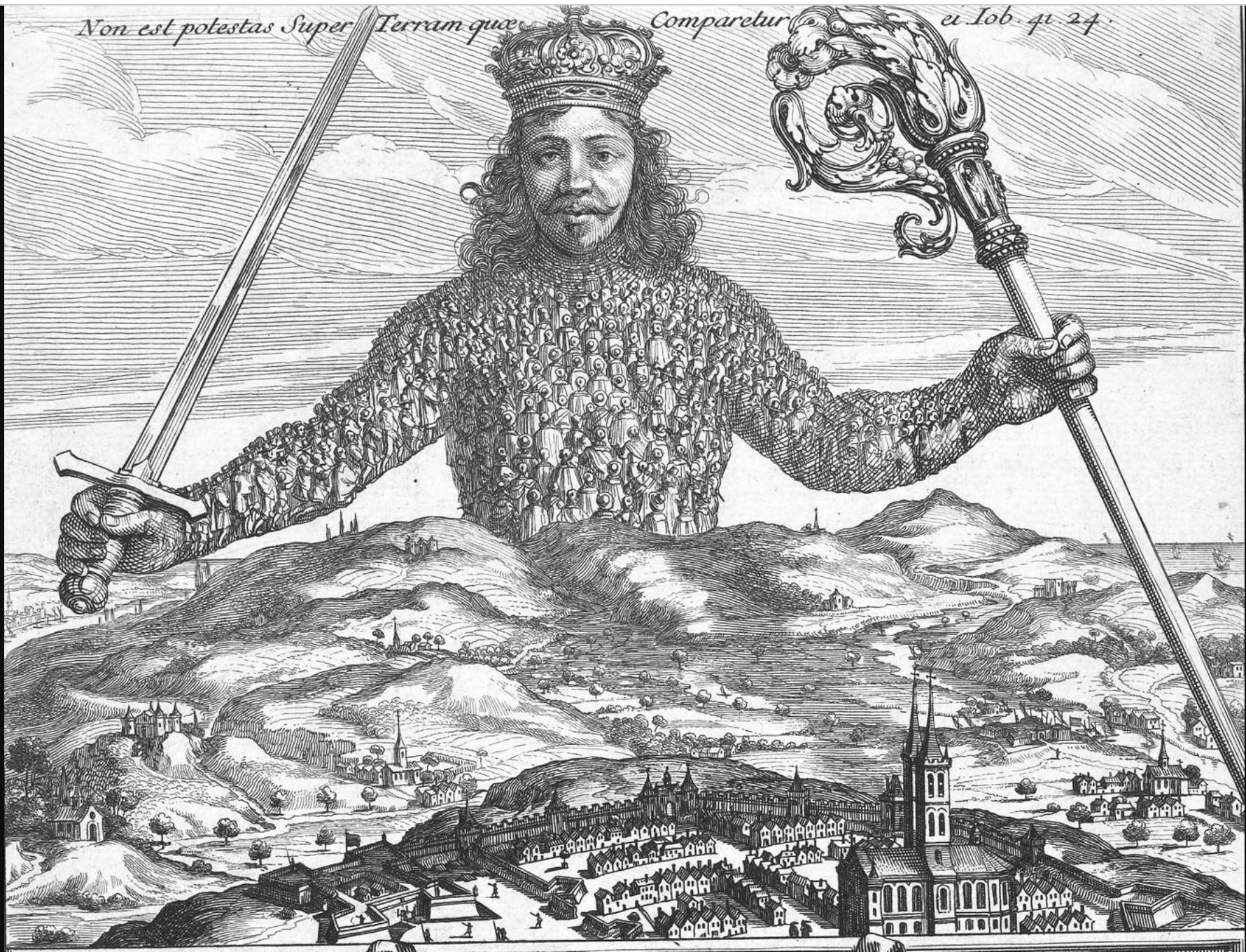
Hobbes faced a similar coordination problem in the domain of political philosophy and international relations. How do you get people to cooperate when, rationally, they cannot trust one another? His brilliant answer was the Leviathan: a sovereign powerful enough to make cooperation rational by making the cost of defection intolerably high. In game-theoretic terms, the Leviathan changes the structure of incentives from outside the game by making defection artificially costly. Change the structure of incentives, and you break the prisoner’s dilemma. Break the prisoner’s dilemma, and you can have peace. And so, Hobbes argues, the secret to perpetual peace is carefully constructed coercion.
This is the basic logic that helped contain nuclear, chemical, and biological weapons throughout the twentieth century. I argue that artificial intelligence now requires the same kind of governance. The goal is not to eliminate competition or remove incentives altogether. It is to change the incentives so that violating agreed safety limits becomes more costly than obeying them. Only then does cooperation become the rational choice.
Hobbes’ solution was the Leviathan. The international system has no Leviathan. But it does have something that Hobbes did not anticipate: coalitions of states capable of acting as a distributed collective enforcer, (a distributed Leviathan), not through goodwill but through credible threats of punishment. This is what produced nuclear restraint, even in the midst of the cold war. It is (I am arguing) what AI governance now urgently requires, in order for the technology to be developed responsibly.
IV. From Mutually Assured Destruction to Mutually Assured Containment
The nuclear age confronted humanity with a parallel dilemma: how could large-scale conflict be prevented when many actors possessed both immense destructive power and relatively strong reason to strike others preemptively?
The answer was, curiously, not disarmament (despite decades of advocacy, nuclear arsenals persist) but unilateral strategies of credible threats and deterrence. Mutually Assured Destruction has (so far) prevented annihilation not primarily by eliminating the weapons themselves, but rather by making their use strategically irrational. For when many actors in a potential conflict possess a credible second-strike capability, the only (sane) winning move is not to play the game at all.
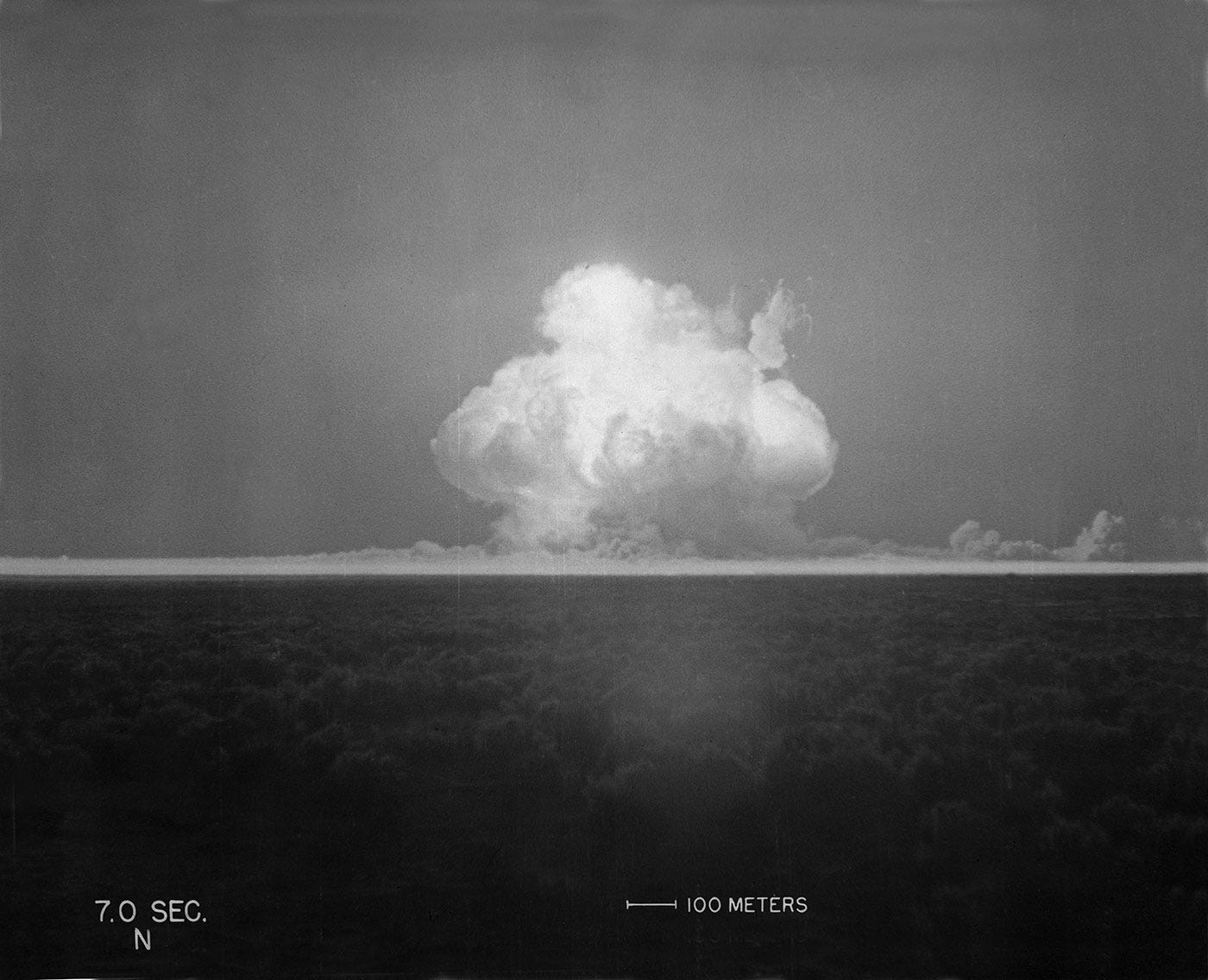
Mutually Assured Containment applies this logic to AI. Rather than threatening mutual destruction, it threatens mutual enforcement: proportional consequences for violating agreed-upon thresholds. The goal is not to destroy frontier AI capabilities but to restrain their unsafe proliferation: to convert the current race into a stable well-paced equilibrium where caution is rewarded and reckless acceleration is punished.
Despite the similarities, MAC is nonetheless importantly different from MAD (and other proposals such as MAIM). MAC aims at deterrence primarily via denial, not only via retribution and punishment. Sanctions, cyber disruption, and infrastructure denial work as proportional measures designed to restructure the payoff matrix, break the prisoner’s dilemma, and so deny the underlying capability of AGI to the violator. In this regard, MAC ideally has a far more expressive palette with which to strategically and geopolitically constrain AI.
As the game theorist and Nobel Laureate, Thomas Schelling memorably put it, “the power to hurt is most useful when held in reserve.” The basic logic is that where consequences, such as economic isolation, cyber disruption, denial of compute, are credible, violations become irrational before they occur, and crucially, avert the likelihood of potentially catastrophic kinetic conflict between near-peer states.
How would this work in practice? In a longer version of this piece, I have articulated a more complete map of AI’s structural weak points, sufficient to design a deterrence regime (i.e. MAC) that operates across multiple layers simultaneously, and ideally to point the way towards a more complete and articulated strategic mapping of AI’s vulnerabilities and chokepoints. For the present piece, however, it is enough to review the plan in outline.
The framework begins with international agreement on moratoriums for large training runs above specified compute thresholds. Practically, these can be measured in sustained energy consumption and GPU-hours, and gradually adjusted downward to account for the possibility that algorithmic breakthroughs may yield catastrophic capability at lower compute. But currently, frontier AI capabilities still require industrial-scale infrastructure: massive GPU clusters, enormous energy supplies, specialised semiconductor hardware. These cannot be hidden effectively, and depend on a complex (and therefore fragile and highly disruptable) global supply chain.
Notably, perfect surveillance is not required. Deterrence depends on perceived detectability, not omniscience. Even partial transparency (e.g. monitoring chip exports, auditing energy consumption) creates enough strategic uncertainty to make clandestine violations risky, costly, and ultimately prohibitive. In this regard, MAC acts as a kind of distributed, peacetime analogue to a blockade. Where a traditional naval blockade concentrates force at geographic chokepoints to restrict the movement of goods, this framework targets industrial chokepoints (compute, energy, and advanced semiconductor supply) across a globally networked system.
Enforcement of such a regime could follow a graduated escalation, beginning with the least coercive measures and intensifying only in proportion to verified or strongly suspected violations. The first tier is economic: sanctions targeting compute infrastructure, energy supply, and semiconductor access; export controls on advanced GPUs; financial isolation through SWIFT exclusion. These tools have effectively constrained Iran's nuclear programme and can be adapted to the development of frontier AI with comparable precision.
The second tier involves targeted cyber operations (non-destructive denial of service, interference with training runs) following the Stuxnet precedent, which demonstrated that sophisticated actors can degrade technical capabilities without kinetic force.
The third tier involves legal and diplomatic enforcement: seizure of illicit models, exclusion from international bodies, public delegitimisation. The fourth tier, held in reserve and seldom required, involves covert infrastructure denial: sabotage of rogue compute facilities, modelled on Stuxnet-style cybernetic degradation rather than kinetic (i.e. dangerous, risky, and costly) military strikes. This last option exists ideally not to be used but rather to make all prior tiers ultimately credible.
V. The Power of Coalition Enforcement
1. How MAC Can Work
A common objection to MAD-style systems such as MAC is that the containment regime depends on multilateral consensus and so is unlikely to materialize in a fragmented geopolitical environment defined by U.S.–China rivalry. But this misunderstands how deterrence works. MAD-style systems (crucially) do not require universal agreement; they require only that a sufficiently powerful state or coalition can unilaterally impose costs on its violators. Arguably the best feature of this proposal is that even a modest probability of retaliation (especially economic retaliation) can reshape the strategic calculus of rational actors, because global trade and technological development depend on stable access to shared systems.
The United States, the European Union, and their allies control critical parts of the AI supply chain, including advanced semiconductor design, fabrication, and much of the cloud infrastructure on which large-scale AI training depends. This gives them substantial leverage over the development of frontier AI.
The most immediate and obvious source of that leverage is market access. Frontier AI depends on a delicate network of trade, investment, and supply chains that make large-scale development commercially viable. By restricting access to advanced chips, compute services, and key software tools, a coalition can effectively raise the cost (and lower the profitability) of developing frontier AI -- not just because they will make the AGI harder to make, but because they will make it even harder for already ridiculously leveraged AI companies such as OpenAI to credibly claim that they will be profitable in any acceptable timeframe. As such, the goal of a MAC-style architecture would not only be to make AGI more difficult to build, but to make unsafe acceleration economically unattractive.
A contemporary example can be seen in Iran’s restriction of the Strait of Hormuz. Iran did not need to stop every ship passing through the strait to disrupt global shipping, and effectively force the US to the negotiating table. The credible threat of the disruption of trade alone changed the behavior of shipping companies and made the cost of shipping unjustifiably high. MAC relies on the same logic: it need only be strong enough to make violations appear too costly to attempt.
An example of how this sort of restriction might be pursued is ready at hand: Leading-edge chips depend on lithography equipment from ASML in the Netherlands and fabrication capacity at TSMC in Taiwan. As such, this coalition already possesses de facto veto power over large-scale AI development. Disruption (or credible threat of disruption) to their activities could make AI companies quickly unprofitable, and hence could effectively stall development in the extreme case.
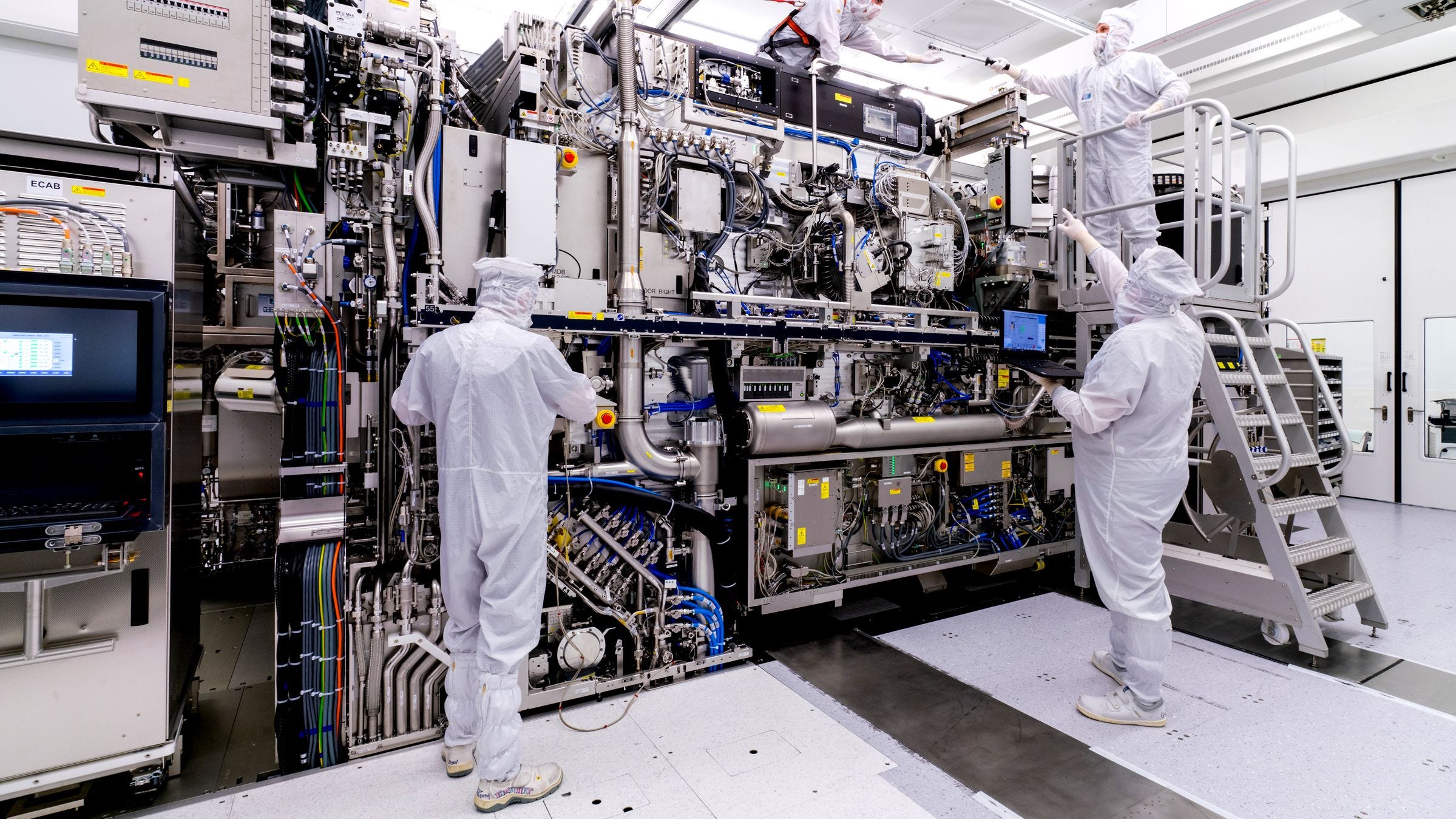
Importantly, this leverage does not depend on participation from every major power. It is enough that access to essential inputs passes through jurisdictions willing to enforce common rules. The precedent is familiar. Regulations such as the GDPR achieved global influence not through universal adoption, but through the gravitational pull of market access. The same logic applies here. A state can harden its data centers, but it cannot easily replace denied access to advanced lithography, high-bandwidth memory, or leading cloud infrastructure.
2. Middle Powers and China
This structure also clarifies the role of so-called “middle powers.” States such as the United Kingdom, France, Germany, Israel, and Russia may not lead the AI race, but they retain meaningful influence over its critical inputs. Their incentive is not necessarily to win the race, but to prevent any one state from gaining a decisive technological advantage (and, self-interestedly, to maintain their “near-peer” status and the strategic leverage that comes with it). A dominant AI power could weaken the interdependence that currently gives smaller states a “seat at the table.” From this perspective, preserving a constrained equilibrium is more attractive than allowing an unchecked technological monopoly to emerge.
China’s position is admittedly more complex. Beijing may reasonably view containment efforts as attempts to preserve Western dominance under the guise of safety. But even adversarial powers share an interest in avoiding catastrophic outcomes. The Cold War nuclear regime emerged not from trust, but from mutual recognition that escalation was existentially dangerous for all parties involved. China’s own statements on AI governance suggest at least some awareness of similar risks. The question is not whether full alignment is possible, but whether shared vulnerability can support partial, functional cooperation.
3. A National-Security Lens for the Argument
Our underlying argument may therefore be simplified in the following way. Advanced AI increases state capabilities. Those capabilities can be used for many purposes, good and bad, including scientific discovery, economic competition, but not limited to cyber operations, intelligence, and military power (killer robots and drone swarms). While many of these uses are beneficial, they can also be used against rival states.
For this reason, any near-peer state that does not expect to develop AGI first should view another state’s AGI development as a potential national security threat. Game-theoretically, no rational state should willingly allow a rival to gain a decisive advantage, because that would weaken its own security, reduce its bargaining power, or permanently shift the balance of power, especially if the newly-AGI-empowered state decides to become adversarial towards it.
States have long acted to prevent rivals from acquiring capabilities that threaten their security. Frontier AI should be viewed in the same way. The question is therefore not whether states will respond, but whether they will respond early, through coordinated containment, or only after a destabilizing breakthrough has already occurred.
Historical precedents serve (by and large) to reinforce the point. Nuclear proliferation has been limited through a mix of export controls, sanctions, and credible enforcement, often without universal consent (i.e. it has been imposed on unwilling states). Chemical weapons have been constrained by a combination of legal prohibition and the demonstrated willingness of powerful states to respond to violations. Even where formal verification has been weak, as in aspects of biological weapons control, compliance has been supported by the expectation that violations would be detected and punished (notably in the case of bioweapons, unlike in chemical and nuclear weapons, humanity has to a great extent contained the threat proactively, without prior major incident). Moreover, in each case, the decisive factor for global containment was not consensus, but credible commitment by actors with the capacity and willingness to enforce the rules.
These examples cut directly against the claim that AI development is either inevitable or beyond meaningful control. That narrative reflects the interests of actors who benefit from continued acceleration. In reality, frontier AI development is unusually exposed to disruption. It depends on concentrated capital, specialized hardware, energy-intensive infrastructure, and globally distributed supply chains. This makes it more, not less, amenable to external pressure.
For this reason, MAC does not rely on eliminating incentives, but on reshaping them. By making access to critical inputs conditional on compliance, and by maintaining credible enforcement mechanisms, a coalition can shift the payoff structure so that restraint becomes the rational choice. The objective is not to halt technological progress indefinitely, but to ensure that its trajectory remains subject to collective control rather than private acceleration.
VI. The Clock Is Running
There is an urgency to this proposal that the nuclear analogy, for all its usefulness, actually understates. Nuclear deterrence works because nuclear weapons are controlled by humans who fear death, understand threats, and respond to incentives. In other words, deterrence assumes rational and human decision-makers.
MAC makes the same assumption. It is designed to influence the governments, companies, and laboratories building frontier AI, but it may not be well-equipped in the same way to contain AI if and when AI becomes an independent actor.
This matters because AGI may eventually become highly autonomous, operating largely beyond meaningful human control and making decisions faster than humans can reliably intervene. Whether or not this happens soon, it marks an important limit of deterrence. If the relevant decision-maker is no longer human, then the logic of deterrence begins to break down. A highly autonomous AI system may not respond to political, economic, or military incentives in the way that human actors do.
Another way to see this is to consider that geopolitics is like chess. Chess is a strategic contest between players trying to anticipate one another’s moves. Today, AI systems consistently outperform even the world’s best human players. Humans have no shot against the best models. Likewise, in our analogy, once machines become the strongest, fastest, most reliable strategic actors in a game, human intuition and human strategy no longer set the pace.

The primary concern of this paper is not that scenario (distressing though it may be). The more immediate danger is the social, economic, and geopolitical disruption that increasingly capable AI systems may produce while humans remain in control. But the possibility of autonomous AGI makes early action even more important. The window for effective containment exists before, not after, AI outpaces the institutions designed to govern it.
Once technology advances beyond the point where human institutions can reliably shape its development, those institutions become far less effective. The opportunity for containment must therefore come while governments, companies, and researchers remain the relevant actors, and while the incentives that MAC changes can still shape their behavior.
VII. The Justice of the Remedy
The deepest objection to this proposal, from my perspective, is moral, not practical. Even if coordinated restraint is feasible, is it fair to coerce states and corporations into slowing AI development? Three lines of argument converge on a single answer: yes.

First, there is a classical Hobbesian (or Pragmatic Idealist) justification. Hobbes argued that peace requires an authority capable of enforcing common rules, and his account is still widely agreed to describe the quasi-anarchic nature of international relations. As Hobbes wrote, “the end of obedience is protection.” When the alternative to coercive authority is existential chaos, the imposition of order (imperfect and resented though it may be) becomes morally necessary, the lesser of two evils which must be chosen until a stable and rational legal regime becomes feasible. In this sense, coercion is not the enemy of liberal order but one of its prior conditions, as overly idealistic notions of “freedom” will predictably lead to chaos, control, and domination by private interests and unelected actors.
There is, in addition, a game-theoretic justification. In a Prisoner’s Dilemma, rational actors cannot escape suboptimal outcomes through goodwill alone. The incentive structure itself must change. This is, in many ways, the purpose of law. When a society faces a tragedy of the commons, an arms race, or another harmful equilibrium, credible enforcement changes the incentives by making harmful actions more costly than cooperation. Under these conditions, defection is no longer the rational strategy. Coercion is therefore justified not for its own sake, but only as the minimum intervention required to make cooperation, peace, prosperity, and political stability strategically possible.
Finally, there is an ethical justification. Hans Jonas argued that “the promise of power must be matched by a principle of responsibility.” The burden of proof falls on those who would unleash transformative risk, not on those who urge caution. But nothing guarantees that the owners of AGI will remain accountable to the common good.
Consider the often-cited promise of universal basic income. If the leaders of frontier AI companies wished to pursue large-scale public redistribution, existing political and economic institutions already provide ways to do so. The fact that these mechanisms have not been widely used should encourage caution. It is difficult to assume that actors who are not required to subordinate their private interests to the public good today will reliably do so once they possess even greater wealth and power.
More fundamentally, no stable political system should depend on the virtue of whoever happens to hold overwhelming power. Institutions exist precisely because human virtue cannot be assumed. When a technology—or the concentration of power it creates—poses an existential risk, there is no unlimited right to its unrestricted use. Under those conditions, proportionate political, economic, and social restraints can be morally justified.
These three arguments converge on the same conclusion. When cooperation is structurally impossible without enforcement, coercion is not the opposite of peace and justice but one of their necessary preconditions.
VIII. The Alternative
Any system of deterrence carries risks. Sanctions, for instance, can harm civilians in myriad ways. Cyber operations and disrupting technical infrastructure can trigger conflict and escalate in unpredictable ways. But the relevant comparison is not between coercive containment and an ideal world without tradeoffs. It is between containment and the path we are currently on: an unregulated race toward systems that may exceed our ability to control them, either because they are in the hands of private actors not held to public account, or because they have become fully autonomous.
The alternative to MAC is what Luke Drago has called “technocalvinism”: the view that AI development is effectively predetermined by technical and economic forces, leaving little room for human choice or responsibility. This position presents itself as realism, but it functions more like fatalism. It treats outcomes as fixed in advance and, in doing so, removes the basis for restraint.

The historical record, by and large, does not support this view. Societies have shaped the development and use of powerful technologies before. Nuclear proliferation has been quite effectively limited. Chemical and biological weapons programs (as well as potentially irresponsible technologies like cloning) have been constrained even before major incidents. In many cases, biotechnology has been effectively directed toward medical use rather than weaponization by precisely these sorts of regime. These efforts have often been imperfect, but they show that technological trajectories are not beyond influence. To the contrary, they are relatively amenable to outside control as they can often be easily disrupted by interfering with their chokepoints, especially by a mobilized coalition of sufficiently powerful states. As such, the claim that AI alone cannot be steered, stopped, or obstructed, far from being an established fact, flies in the face of one of the more interesting geopolitical discoveries of the 20th century: technology can be contained by decentralized game-theoretic deterrence mechanisms (i.e. “a distributed Leviathan”).
A minimal baseline should be stated plainly: humanity should reduce existential risk before creating systems that could amplify it. If AI delivers on its promises (if, e.g. it helps address disease, poverty, and other large-scale problems) then a delay of a few decades is a modest cost relative to civilizational survival. If those promises are overstated, restraint costs very little. In either case, the downside risk is large enough to justify caution.
As Hobbes argued in Leviathan, order can emerge even among actors who do not trust one another, provided the incentives are structured correctly and the strategies are executed in time. His insight is still commonplace geopolitical strategy, and applies particularly well to this special case of geopolitical strategy: unfettered AGI development.
In other words, it is relatively straightforward to acknowledge that geopolitical, economic and social advancement requires credible and prudent constraints. The question is whether those constraints will be established deliberately, through law and coordinated agreement, or imposed reactively after a crisis, potentially by a rogue state actor, such as Russia or China. In the absence of a single authority, states can approximate one through shared enforcement mechanisms that make restraint the rational choice.
To sum up, this is an argument for credible deterrence as a temporary measure, ideally, one that creates the conditions under which more durable, cooperative governance can take hold. It is a Leviathan of reason: coercive in structure, conservative in purpose, and justified by the enduring imperative of human survival. For until wisdom can govern us, deterrence must suffice.
Cole Whetstone did his undergraduate work in Classics at Harvard University and received an MSt in Ancient Philosophy at the University of Oxford. He taught Ancient Greek at Oxford and co-founded Oxford Latinitas, a society of Oxford academics dedicated to reviving Latin and Greek in scholarly use. He now lives in New York City, where he is a co-organizer for the New York Philosophy Club.

Thank you very much for the piece, I had a question regarding MAC. Maybe this is due to my lack of understanding of the topic, but wouldn’t using MAC still result in a hegemony? For example the author references applying the same principles used in the nuclear arms race to AI, mentioning the prevention of Iranian development of nuclear weapons through economic sanctions. But this gives the US a clear advantage- they are able to control the production of nuclear weaponry and who develops it almost as if it is a monopoly. The authors statement that MAC requires “only that a sufficiently powerful state or coalition can unilaterally impose costs on its violators,” is also merely justified by the fact that “even adversarial powers share an interest in avoiding catastrophic outcomes.” They reference the Cold War arms race, however I believe the arms race ended not from mutual recognition that escalation was dangerous for all parties involved, but because the US was able to establish international dominance.
I understand that this also reflects the Leviathan as well- Hobbes did support a monarchy after all, and I believe at least that the sovereign is supposed to represent the ultimate artificial representative of the people. However a monarchy itself poses the threat of totalitarianism, which many argue that we are also beginning to see in the US as of now too, and though the prisoners dilemma is temporarily resolved it still does not form equilibrium due to an imbalance of powers and would most likely emerge in the dilemma rising once more through alternative uprisings. Please do correct me if I have misinterpreted the article or have provided any factually incorrect information and thank you again for the piece, it was interesting to read.
Very fine piece!