



I. The enshittification of Brooklyn
I moved to Brooklyn a few months ago from a different state, and I can’t help but notice the virulent discourse on gentrification that pervades the borough. Of course, this discourse manifests itself in all domains: the new Korean-Mexican fusion hotspot frequented by non-Korean non-Mexican folk, the latest deconstructed addition to the Williamsburg skyline, or even the accelerated proliferation of strollers in Prospect Park. However, the ones I find most intriguing are the sentiments around the nightlife scene.
The reputation of the Brooklyn nightlife scene precedes itself. As the cultural epicenter of (arguably) the cultural capital of the United States, Brooklyn enjoys a cultural vibrancy and diversity that is almost unparalleled in the country. Nightlife being an integral component of the cultural engine in Brooklyn’s motorworks, mainstage venues such as the soon-to-close Brooklyn Storehouse and the soon-to-open Pacha NYC validate Brooklyn’s momentous staying power, while smaller scenes and movements that dot the borough replenish the cultural current and ensure the fringe flourishes. As I have slowly explored both these types of venues within the nightlife scene of Brooklyn, I have found myself heeding the seemingly paradoxical philosophies within the scene.
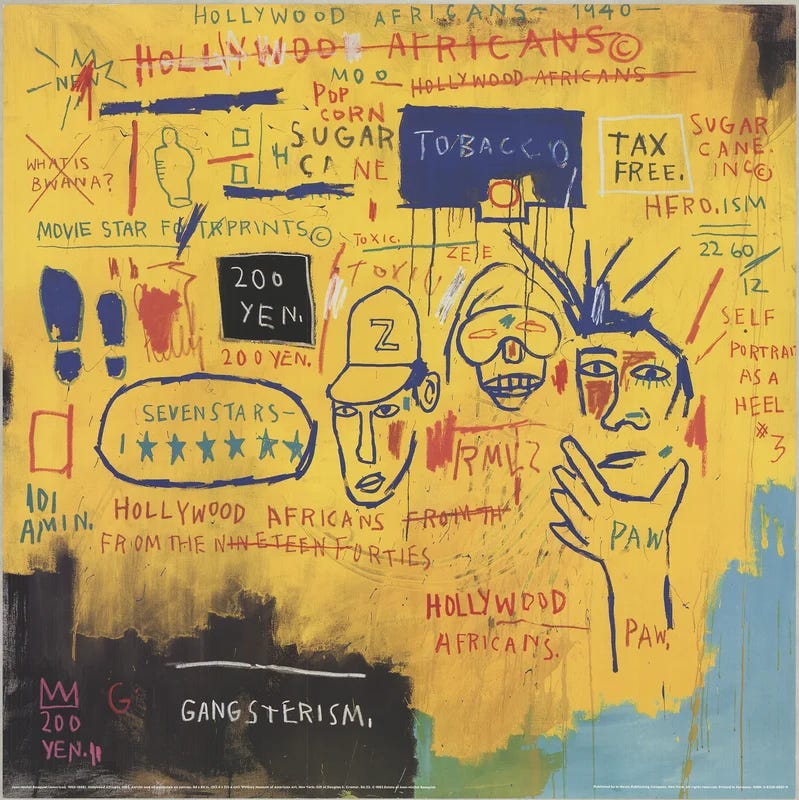
On the one hand, you have camp ‘Manhattanite’. These frequenters of mainstage and popular venues, largely residents of the foreign land of Manhattan, view Brooklyn precisely as an exercise in exploring the exotic. Whereas venues in Manhattan are riddled with opportunities to bump into your coworkers, those in Brooklyn are escapist fantasies for finance bros who wish to improve cultural clout through proximity.
On the other hand, you have camp ‘NIMBY’, who, unsurprisingly, resent Manhattanites. As is the case for any other domain of gentrification, the ‘enshittification of Brooklyn’ occurs when venues in Brooklyn orient their priorities towards these new folks, thereby disregarding the patrons of long-time. This presents itself not only in jacked-up prices through overly sensationalized features, but also in crowds that are generally unrepresentative of the cultural norms that enable Brooklyn to be Brooklyn—the very norms that undergird the cultural production that Brooklyn is known for. From the non-dancers to the video-grabbers to the Patagonia-vest-wearers, these crowds contribute to an atmosphere that is not only conducive to dancing flowing with the music, but can sometimes even be hostile to this behavior.
I find myself torn. On the one hand, I myself am a transplant living in a relatively nice part of Brooklyn, gradually finding myself exploring the less-nice parts in the name of cultural exploration. On the other hand, having been deeply involved in the raving scene prior to moving, I feel deep resonance with the sentiments of Brooklynites.
Therefore, in examining this discourse, I don’t believe it is productive to play the blame game, where each side holds steadfast to their principles without a comprehensive examination of the situation. That is to say, there is more to this discourse than the Brooklynite’s contempt of Manhattanites because of their capitalistic tendencies that harbor on the Orientalist, or the Manhattanite’s reciprocal contempt of Brooklynites due to a false perception of elitism. In fact, the nightlife scene is a particularly fascinating domain to explore, if only because it is a deeply raw area of life where artificial barriers are often softened, and we readily succumb to the oneness of humanity. This rawness enables us not only to derive interesting implications on the discourse on gentrification, but also on a wider understanding of what the nightlife scene stands for.
In this essay, I use concepts from Giles Deleuze and Félix Guattari’s (D&G) Anti-Oedipus to philosophically ground why the nightlife scene is so unique. Specifically, I take a higher-order examination of the dance floor, substituting the empirical (what is currently happening to Brooklyn’s nightlife scene) with the theoretical: what fundamental features of the dance floor can help illuminate our understanding of what is happening to Brooklyn’s nightlife scene?
II. Leave your ego at coat check
Traditionally, the dance floor is a setting where one can lay their masks bare: a setting where one can break down the structures that one has built through their interactions with society.
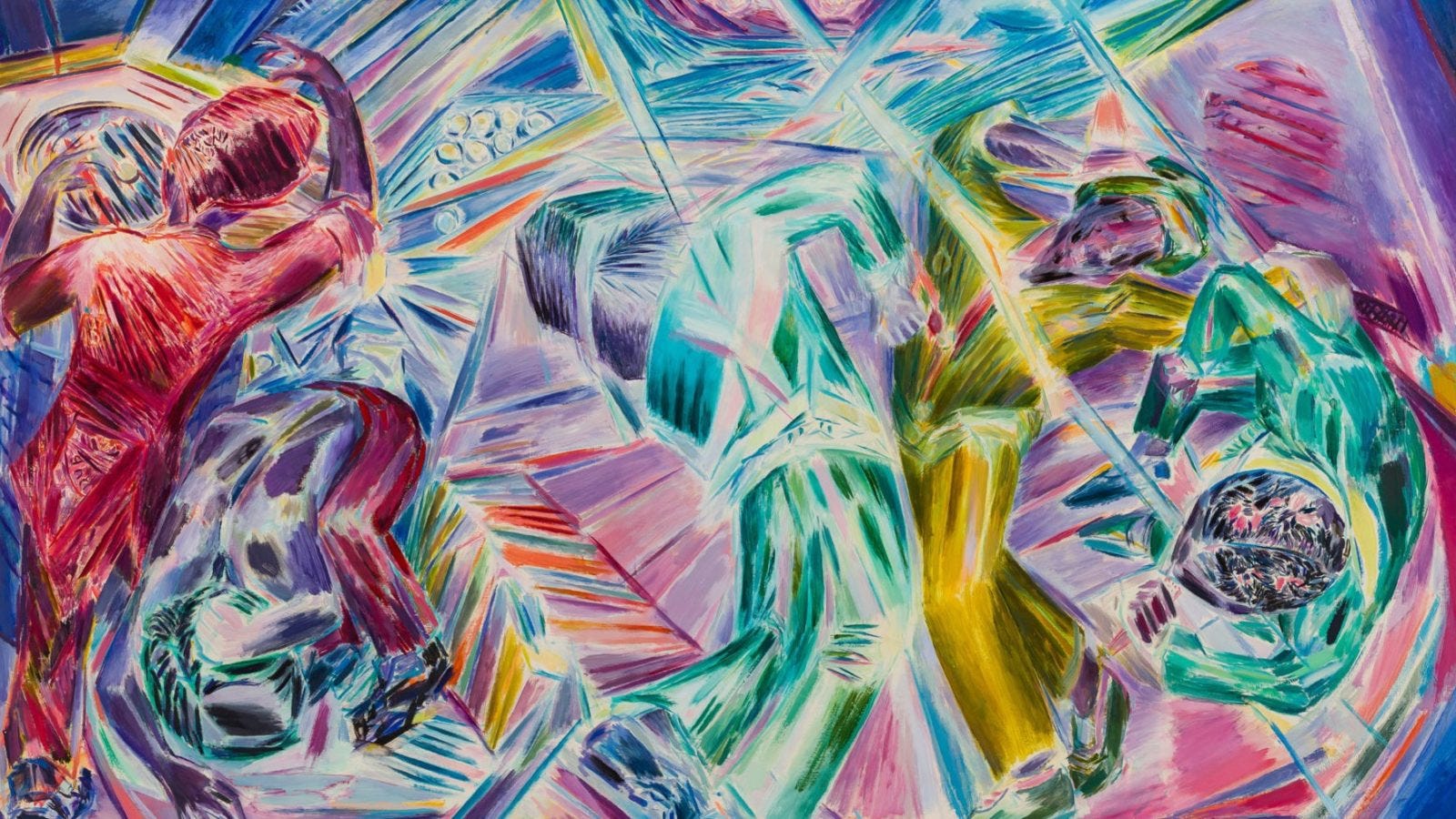
This manifests, of course, in the breaking down of appearances, whereby people are encouraged to flow with the music as automatically as possible and do whatever feels right, as the crowd withholds reservation and judgment. Raving culture began in the 1970s, predicated on universal acceptance for marginalized communities who did not receive acceptance in day-to-day life. Even today, the concept of PLUR (peace, love, unity, respect) unites a universalized empathy among ravers, and venues such as Berghain are infamous for their extremely high tolerance for actions that ‘normal’ society would perceive as extremely deviant.
More importantly, however, is that this feature of the dance floor encourages a deterritorialization of identity. By (temporarily) breaking down the fixed, rigid habits and social roles that one has built internally, one can alter not only their appearance, but their identity. This shifts the focus of the individual on the dance floor from constraints (being aware of what they cannot do) to potential (being aware of what the individual can be). If the individual on the dance floor wishes to dance as a lunatic, the driving question isn’t “to what extent can I do this and get away without judgment?” but rather “how much more lunacy do I wish for in my dance?”
This ability to suspend identity is precisely what many seek out in the distant corners of the underground rave scene. For many, it is an opportunity to build a life that concurs with their true sentiments — that is, a life that is uninhibited by social roles we have begrudgingly adopted to appease society. This applies to the queer and African-American communities of the 1970s, thanks to whom this scene developed a vivacious origin. This applies to marginalized communities today who may feel outcasted by the systematic oppressions of modern society. This applies to individuals today who are pursuing life paths that have navigated away from their true intentions and values — a particularly poignant aspect of many working professionals (e.g., Manhattanites).
In its pure form, the dance floor is a healthy representation of D&G’s representation of a deterritorialized society; as not only have the individuals suspended their social roles and norms, but consequently, the newly-formed ‘society’ of these freed individuals is one that is predicated on a lack of ‘societal’ rules. This enables the society to be rhizomatic: each individual has the potential to connect freely (and without reservation) with any other individual. In this context, to ‘connect’ can connote any form of interaction that is unencumbered by social expectation, such that it could take any form. This is the equivalent of ‘catching a vibe’: two individuals could start grooving with each other, bopping with each other, talking with each other, boogying with each other, etc.
This aspect further solidifies the importance that the rave community holds for people. As individuals come unencumbered by social constraints, they are met with the opportunity to connect with other individuals who are able to complement this raw side (that they rarely show in a stratified society). This is relatively unsurprising, as the reputation of the PLUR community precedes itself as among the most welcoming environments.
III. God is a DJ
In any dance floor, the DJ is almost single-handedly responsible for the totality of the audience’s flow of vibrations. Genre, tempo, EQ, volume, trims — any minute action performed by the DJ is materially felt in the energy of the dance floor; and consequently, any minute action performed by the DJ is materially felt in the lived raving experience of every individual on the dance floor. When the DJ increases the BPM, the raver feels their body dancing faster. When the DJ turns the volume up, the raver feels their body frenetically dancing more expressively. When the DJ executes a flawless yet surprising transition, the raver basks in awe.
A substantive part of the raving culture is a concerted focus on being present in the lived experience over the habit of critiquing that many defeatists are oft to adopt, elevating themselves above the experience to be lived. Barring the presence of an incompetent DJ without any of that essential capacity to ‘read the room’, a true raver is one who dispenses with hyper-judgment of transitions for true immersion with the music, readily synchronizing the rhythms of their dance to the beats of the DJ’s music. If, for example, the DJ were to play a genre of music that the raver is unfamiliar with, the raver would need to be open-minded in the ways in which they can groove to the music.
This innate predilection to ‘trust the DJ’ in the raving experience is not only an operative component of living in the moment (thereby improving the overall experience for the dancer), but also in the raver’s deterritorialization, in their ability to release their accepted social hierarchies and roles in the first place. Without this predilection, a raver is rendered unable to fully let go on the dance floor and listen to their bodily rhythms. One can lamentably imagine the sulky self-righteous critique in the corner of the dance floor who claims to enjoy pointing out insignificant flaws in trim-cutting rather than immersing themselves in the music. And though one may argue that the two behaviors can co-exist — one as the intellectual, and the other as emotional — it is clear that the full experience of ‘letting go’ requires a complete suspension of the critique.
This leads to a funny implication, however. In order for the raver to desecrate the codified flows of traditional society, they must consecrate the codified flows of the DJ, effectively swapping one authority figure for another. Whereas the codification of traditional society presents itself in the morality standard of society (e.g., ‘thou shalt not kill’), the codification of the DJ presents itself in their musical taste (e.g., this tune blends extremely well in this particular niche setting).
This applies equally to all ravers on the dance floor, whereby all ravers have formed a similar ‘swapping’ connective tissue with the DJ. This further cements the codification of the DJ’s taste in the micro-society of the dance floor. Any rhizomatic interaction between any two individuals on the dance floor is not completely ex nihilo — rather, it comes with the presumptive notion of acceptance of the DJ’s music. One can imagine an individual, grooving their hips to the 127 BPM tune, approaching another individual, grooving their shoulders to the same 127 BPM tune. This collective acceptance of this central codification of the dance floor enables a synchronization of the dance floor, enabling connections between any two individuals to flow more naturally. Therefore, although the dance floor may appear to be purely rhizomatic, the DJ acts as a secret central organizing node.
IV. Micro-fascisms in the dance floor
In Anti-Oedipus, D&G write:
“The masses were not innocent dupes; at a certain point, under a certain set of conditions, they wanted fascism, and it is this perversion of the desire of the masses that needs to be accounted for.”
By fascism, D&G mean less the National Socialist Party, but rather concerted investment in domination, hierarchy, exclusion, and/or obedience; in stark opposition to deterritorialization. It is the subordination of oneself to such codified norms and regulations. Given the collective presumption of the superiority of the DJ’s taste, the DJ fits in as the despotic-signifier of the dance floor — the sole entity through which the system’s codified flows derive meaning.
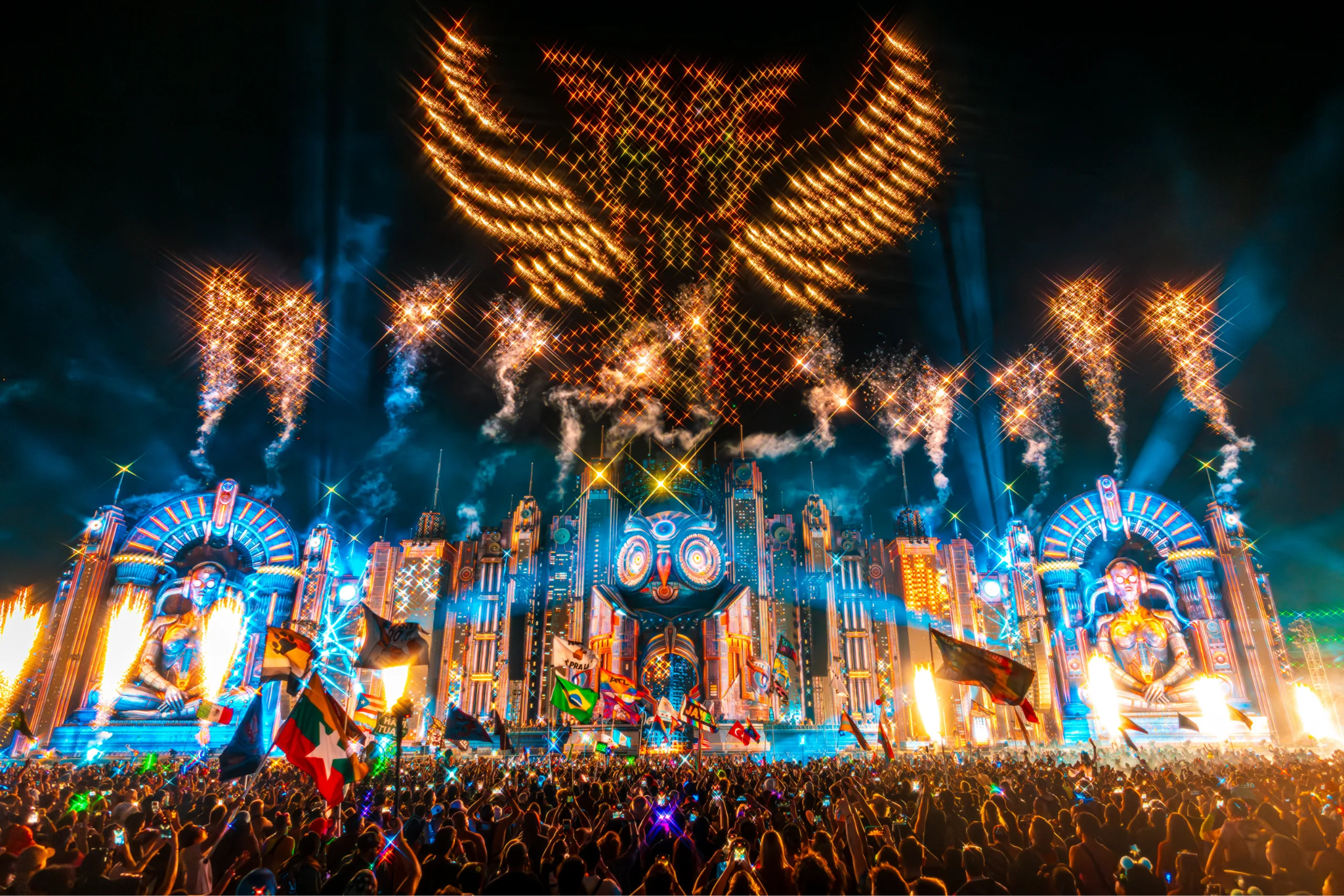
That is, there is a clear investment in the domination of the DJ in the hierarchy of the dance floor, as ravers are shepherded to obedience to the taste of the DJ (at the exclusion of the taste of any other individual). Of course, this is heralded in the modern hyper-modern rave setting, where the DJ is visibly anointed in extremely ostentatious mainstage stages that are meant to evoke their transcendence as an individual. But even in traditional rave settings, even if the DJ proves to be invisible to the eye, the DJ’s presence is acutely felt, recognized, and worshipped in the spirit of the dance floor.
Which raises the question: In this rave setting that provides the greatest opportunity for complete deterritorialization, why is it that there must be a despotic-signifier? Why do the masses pervert their seemingly strong desire for deterritorialization? In order to answer these questions, we must explore further the metaphysics of D&G’s desire.
D&G write:
“If desire produces, its product is real. If desire is productive, it can be productive only in the real world and can produce only reality. Desire is a set of passive syntheses that engineer partial objects, flows, and bodies, and that function as units of production. The real is the end product, the result of the passive syntheses of desire as autoproduction of the unconscious.”
For D&G, all of reality can be explained through desire, which functions as a productive capacity that is responsible for creating the totality of reality as we see and experience it. Desire is produced by desiring-machines, which can be any entity that is capable of forming any connection or flow with another entity (desiring-machine). The examples for what a desiring-machine could be are endless: the body and the music, which can connect to form synchronized dancing; one person’s eyes to another person’s eyes, which can connect to form a dance floor connection; even the mouth and the burger, which can connect to form an action of eating. For D&G, desire is not so similar to the traditional psychoanalytical interpretation, but more akin to connective tissue that enables entities to connect in any manner (e.g., the body and the music each form desire to connect with each other, thus forming synchronized dancing). And again, D&G go so far as to claim that everything is a desiring-machine.
By nature, desire is production: by forming connections between disjointed desiring-machines, desire produces new realities. And since this is the capacity through which a desiring-machine defines itself, desiring-machines continually form connections.
However, by continually forming connections, desire continually produces some extent of structure. For example, when the body and the beat connect to form a body dancing to the rhythm, there is an implicit codified structure of what is ‘supposed to happen’ between the body and the beat, such that the body and beat can continue to synchronize. It is as if, as separate entities, the body and the beat convene to agree that the resulting form of dancing is the correct way to dance. That is, desire reterritorializes. There is a new micro-order that is created between the two entities on the dance floor.
This tendency to reterritorialize helps explain why the raving scene benefits from the despotic-signifier. Desire ultimately always reterritorializes to some extent — and as such, at some level, desire and order are an inevitable pair. Spread over the collective raving audience, reterritorialization is manifest not only in the universal trust in the DJ, but also in the proliferation of PLUR culture, or the universal acceptance of everyone (both of which, again, are the prerequisites to a successful rave scene).
V. The problem with Public Records
Hitherto, this whole essay has presupposed a theoretically ideal dance floor, where every raver fulfills their PLUR obligation to become the ideal raver for everyone else. However, it is the desecration of this scene that is at the heart of the enshittification of the Brooklyn nightlife scene. Complaints abound of Public Records, Elsewhere, Nowadays, Knockdown Center — former mainstay venues in the Brooklyn nightlife scene that have gotten too popular for their own good, attracting hordes of non-dancers who have failed to leave their institutional pretensions at the door. (See thread)
As a raver, attracting these crowds is innately hostile to the culture that ravers attempt to encounter within the pearly gates. A dance floor in which a raver feels at liberty to express their true selves is only made possible if other individuals buy into the reterritorialized norms pervading PLUR culture. However, at the rate at which these scenes are popularizing, it becomes difficult for these newer ravers to immerse into a culture of complete surrender, especially if these newcomer types start dominating the dance floor, instead of the true stalwart ravers who can help inspire them. Therefore, it is all too common a sentiment to find hostility against these new ravers among the stalwart ravers.
That being said, given the complex deterritorializing and reterritorializing dynamic of the dance floor, it can be understandable why the new raver would struggle to immerse themselves in the scene. Notwithstanding the extreme types (e.g., the MM-fund analyst who shows up violently drunk with his pledge class; the Instagram baddie who, being dissatisfied in trading free bottle service for house music, overcompensates by consistently recording everything), most newcomers enter the scene open-minded into the culture. However, without the proper understanding of what to expect, especially coupled with the disappearance of veteran ravers in former mainstay scenes like Public Records, this becomes increasingly more and more unlikely, only fueling further animosity between older and newer ravers.
An additional problem arises when these newcomers misinterpret what the rave scene actually is. Emboldened by their multiple excursions to scenes they believe to be raving mainstays, they start conceptually differentiating raving from clubbing only through the music selection and substances taken, completely ignorant of the true fundamental features of the rave scene. This faux-raving scene establishes itself as a substitution for clubbing, and not as the complex deterritorialization and reterritorialization that is very core to the heart of raving.
A panacea solution is not easy, and may not exist. Zealots in the rave community would argue for a complete gatekeeping of the rave culture, forcing current mainstay venues to enforce extremely strict crowd-selection maneuvers (think proto-Basement, although many in the community would argue that even Basement’s gates are not difficult to bypass). And surely, there is merit to this argument. Scaling the rave scene is the first step to the encroachment of the capitalist behemoth in the Brooklyn scene. Universalized admission into the scene would ensure that closed-minded types (those that, even with strong encouragement and guidance, would be unwilling to adopt the deterritorialization necessary for the rave scene) invade, guaranteeing the depreciation of the PLUR culture.
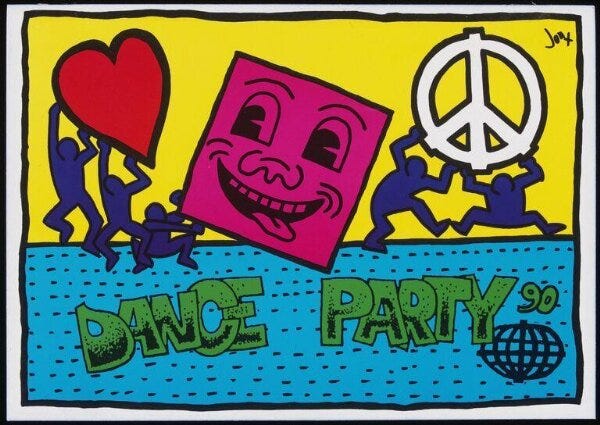
At the same time, we must not forget that the rave scene is built on the foundation of universal acceptance. In principle, everyone should be welcome. Of course, as in any society, there are bad actors who forego cooperation and choose to individually profit from the system. However, by and large, gatekeeping isn’t in the true essence of raving culture. In fact, in many scenes, newcomers are adorned with additional love and attention from veteran ravers (e.g., getting sprouted). Regardless of background, any individual should have the right to completely let go of all their societal inhibitions and identities for one night. And at its core, the raving scene acts as an engine for cultural production, with many DJs curating unique artistic experiences designed to be enjoyed by the masses.
At the very least, education and curiosity go a long way. My hope is that the philosophical grounding of the nightlife scene I have expounded in this essay can help not only any newcomer understand what hallowed grounds they enter when raving, but also encourage veteran ravers to refine their understanding of the situation at hand. Enshittification is obviously not great. But an unyielding, indiscriminate hostility against all newcomers isn’t in the spirit of the culture either. Perhaps there is no solution. But certainly, both sides can continue to understand each other better.
Bibliography
Buchanan, Ian. “Gilles Deleuze.” In The Stanford Encyclopedia of Philosophy, edited by Edward N. Zalta and Uri Nodelman. Stanford, CA: Metaphysics Research Lab, Stanford University, 2024. https://plato.stanford.edu/entries/deleuze/.
Deleuze, Gilles, and Félix Guattari. Anti-Oedipus: Capitalism and Schizophrenia. Translated by Robert Hurley, Mark Seem, and Helen R. Lane. Minneapolis: University of Minnesota Press, 1983.
Deleuze, Gilles, and Félix Guattari. A Thousand Plateaus: Capitalism and Schizophrenia. Translated by Brian Massumi. Minneapolis: University of Minnesota Press, 1987.
Freud, Sigmund. The Interpretation of Dreams. Translated by James Strachey. New York: Basic Books, 2010.
Haenfler, Ross. “Ravers.” In Subcultures and Scenes. Grinnell College. Accessed June 8, 2026. https://haenfler.sites.grinnell.edu/subcultures-and-scenes/ravers/.
Wark, McKenzie. Raving. Durham, NC: Duke University Press, 2023.
Evan Bimaputra (Associate Editor of the New York Journal of Philosophy) is particularly fascinated by the intersection of philosophy and culture. With a formal education in philosophy, a sideline as a fledgling disc-jockey, and a childhood steeped in the Internet, he is preoccupied with tracing the cultural currents of his Gen Z peers against the long shadow of classical philosophical thought. Offline, you can find him playing at chess clubs or munching at NYC’s many KBBQ joints.

mmm yes Deleuze is definitely best used when thinking about creativity and pleasure methinks 😌 beautiful essay xx
Well done