


בְּמַעְרְבָא כִּי נָסֵיב אִינָשׁ אִתְּתָא אָמְרִי לֵיהּ הָכִי מָצָא אוֹ מוֹצֵא? מָצָא דִּכְתִיב מָצָא אִשָּׁה מָצָא טוֹב וַיָּפֶק רָצוֹן מֵה’, מוֹצֵא דִּכְתִיב וּמוֹצֶא אֲנִי מָר מִמָּוֶת אֶת הָאִשָּׁה וְגוֹ’ (ברכות ח.)
In the West (i.e. the Land of Israel), when a man takes a wife, they say to him, “Found or Find?” Found, as it is written (Proverbs 18:22), “He who found a woman has found Good and extracts favor from the L-rd”. Find, as it is written (Ecclesiastes 7:26), “And I find the woman more bitter than death.” (Babylonian Talmud, Berachot 8a)
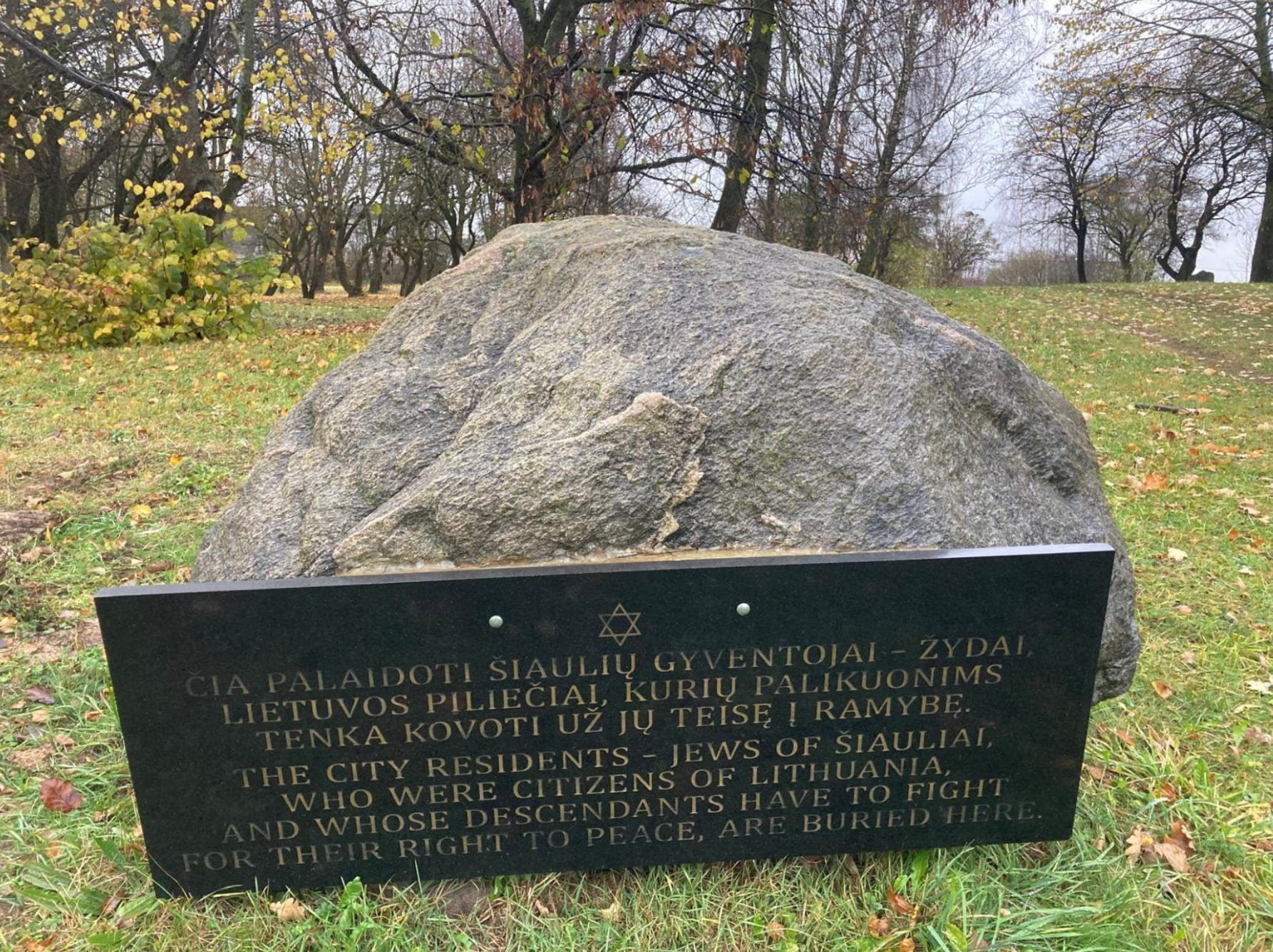
In an overgrown meadow, off the pockmarked road, a mile north of the village of Žmoniai, Samogitia region, Lithuania, rests a lonely pile of stones. The steely sky is its only witness and chill breeze its only visitor. Even the local youth who occupy unused spaces at night to escape their parents for a secret drink steer clear of that particular meadow. If you ask them why, they will give different answers, products of active minds and limited knowledge. But those few bedridden elderly who in demented daydreams still remember the days of the Activists and the Partisans — the oldest and most decrepit villagers — know what that meadow is. Before its stones were harvested to pave the road that passes by it, and before no one remained to upkeep it, that meadow was the site of the Žmoniai Jewish Cemetery.
There are no Jews living in Žmoniai today. The last ones met their leaden fate in a nearby forest in September 1941 and never made it to a proper burial. But since the days of the hospitable Duke Gediminas, until his warmth was revoked by his descendants, there had been. And so, for hundreds of years, any Jew who died in that small town would come to occupy that cemetery. Saints and sinners, tailors and blacksmiths, infants who never received names and even the great Rabbi Sleyma, author of a Talmudic commentary, are resting there awaiting the final Redemption. Their souls long whisked off to the Next World, their bodies remain beneath the swaying grasses as the last remnant of Jacob in Žmoniai.
Since no one was left who would have complained, shortly after the War ended and long-coated commissars plundered the wounded land, the inscribed stones that marked the names and locations of the cemetery’s inhabitants were repurposed for proletarian ends. Today cars limp and sputter between Žmoniai and Pašvitinys and, in some of the potholes where the asphalt has weathered off, a reader of Hebrew can spot a name or a date or a prayer that someone’s soul be bound up in the bundle of life.
But some souls do not merit such prayers or intricately carved and polished stones. Thieves and murderers, suicides and the scandalous are not buried with the community’s upstanding members. Their graves are not embellished and, but for a reluctant obligation to bury them by Moses’ law, their bodies would have been left out for the dogs and the birds of prey. The stones in the outcast section, some yards away from the graves of the respected, were too small and fragile to pave a road with. So Žmoniai’s occupiers had left them in a messy pile in the cemetery, which was then abandoned and left to overgrow.
No one has bothered to inspect the pile since then, but if someone had, they would find some stones blank and nameless, some with a name and little else, and one with the Biblical inscription “And I find the woman more bitter than death.” Her name is not recorded, nor how she earned such a stone, but she is why the townspeople avoid that meadow, whether they realize it or not.
Nechama-Reyzl was a beggar. Her life was short and marked by privation and disease. She had grown up an orphan and been widowed soon after her marriage to a consumptive. He had left her little in the way of money and she lived in a homemade shack on community funds. Since those were insufficient, she often found herself sitting in front of the synagogue asking for donations. Few gave. But she had one joy in life, her son Zalman. While she would be outside begging, nine year old Zalman would be inside the synagogue poring over holy books that men many times his age struggled to read. She would send him to Yeshiva and he would become a scholar. Lacking this world, she and her son would at least claim the next.
But one day Zalman disappeared. He was supposed to return home for their meager dinner after evening prayers, but he was not seen in the crowd of men leaving the synagogue and, in fact, had not even shown up. She ran through the streets shouting his name frantically, knocking on every door and asking for him from everyone who crossed her path. Some townspeople avoided her pleading eyes and looked away, while some gazed on her with pity, because even though they had not witnessed it, they knew what had happened to him and that he would not be returning.
In those days, the Russian Czar ruled over Lithuania and her Jews. He did not like that there was a large minority who did not worship the same god as he and whose loyalty was questionable. So he resolved to make good Russians out of them. He demanded a quota from the Jewish communities in his realm of young boys to be sent off to military barracks deep inside the empire to be re-educated in the ways of Russianness and Christianity. Upon reaching adulthood, those children would be conscripted to serve in the military for decades. Since no Jewish parent would volunteer their child for this risky and hostile endeavor, Jewish communities responded by hiring kidnappers to steal them. Rich families could bribe their way out of being targeted, but Nechama-Reyzl was anything but rich. Her youthful scholar would be fed swine and preached the Gospel and beaten if he refused to accept it. She would never see him again. And once she realized it herself, her fear turned to rage.
She knew who the kidnapper was. Everyone in town did. She had watched Avrom, always an undisciplined and rowdy youth, grow from street thug and petty criminal to enforcer of the community’s decree. Not that he was ever a pious, community-oriented man. He was unmarried, but a regular stream of peasant girls flowed in and out of his house. For anyone else that would have been an unforgivable scandal, but Avrom was a source of loathsome fear to the Jews of Žmoniai. His violent nature and connections to the authorities meant anyone who crossed him could end up imprisoned or worse. The townspeople treated him with a distant and begrudging respect, and someone with corrupt business to achieve might secretly pay him to facilitate it.
But Nechama-Reyzl was not afraid of him or anything he could do. He had already taken the thing she valued most in life and, as far as she was concerned, nothing worse could happen to her. A few nights later, she snuck into Avrom’s house while he was sleeping and ended his life with a kitchen knife. She fled into the woods outside of town and hid out, wrapped in blankets.
When morning dawned and Avrom’s fate was noticed, the town was abuzz. Everyone had hated him; he had been responsible for much communal misfortune and grief. But due to his connections, despite his lifestyle and deeds, Avrom was given a stately funeral, funded by the wealthier members of the community. Men prayed and women wailed as they accompanied him to his final resting place. Community leaders vowed to find the culprit for his murder, but he had had so many enemies it was unclear who exactly that was.
A few had noticed Nechama-Reyzl’s absence from her usual begging spot in front of the synagogue, but the rumor mill had decided she had run away to look for her son, and anyway that frail woman would be the last person they would pin a murder on. Every so often, a chicken or a few potatoes would go missing from one household or another in the village, but she was not caught and her forest hideout remained undisturbed.
But her anger did not subside. After all, Avrom had merely acted on orders from the community leaders, frightened that their own children might be demanded instead. Is the true villain the spear or its wielders? When, in the days of the Prophets, the Almighty poured out His wrath on the sinners of Israel, did He limit His punishment to one or two offenders or did He upend the entire society? And so, Nechama-Reyzl resolved to remove anyone and everyone who would have Jewish children be taken and shipped off to uncertain and dangerous fates.
She could not touch the heavily armed Russian officials who had implemented those policies, so she focused on the community leaders who carried them out. The first to fall was Zkharyeh, the head of the Kahal. It was he that had given the dirty money to Avrom in exchange for her child’s future. One morning, his wife woke up drenched in his blood and her screams rang out from one end of the village to the other. Townsfolk gathered and gawked. They rushed to her aid and whispered to each other their theories of who and how.
They remembered what had happened to Avrom. But Avrom had been a thug with many enemies, while Zkharyeh was a beloved societal pillar. He had probably run afoul of the authorities for his selfless devotion to the Jewish community and they had sent an assassin after him. Yes, that was it! Clearly Vanya was trying to stick his hand in their pockets by removing their leader and protector. What a holy martyr!
Nechama-Reyzl watched the funeral from afar and took note of who attended. All those good Jews who could not spare a kopeck for her in her begging days but had gleefully allowed her only child to be taken instead of their own. She hated every one of them and their false innocence. Their families and lives that came at the cost of hers. Their new clothes while she wore rags. Their future while she had none. She watched them lower Zkharyeh into the ground and resolved to have them join him.
A few more incidents and the community noticed a trend. Someone was hunting them. Heavy locks sprouted on doors and prayers in the synagogue became more heartfelt. The larger men among them stayed out all night looking for offenders and watched the entrances to the town. Two Lithuanians, Joris and Evaldas, were hired to comb the surrounding fields and forests with rifles looking for anything amiss. Three days later they brought back a small woman’s emaciated body and a long knife.
Nechama-Reyzl was buried the next day without much fanfare. The mystery was solved and the curse had been lifted. The poor woman had clearly been driven mad by the loss of her son and the townsfolk discussed her with more pity than anger. Over time, her memory faded, save for the occasional warning from a parent to a child to behave or “the beggar will get you” and a newfound fear among the Lithuanians to enter her resting place, lest her restless spirit take revenge for Joris and Evaldas. Besides that, all that remained of her was a stone in the cemetery the community had erected to condemn her deeds, inscribed “And I find the woman more bitter than death.”
Author’s Afterword
1.) To what degree is the collective obligated to consider the needs of the individual? Nechama-Reyzl was a recipient of the charity of the community and considered the community obligated to help and support her. This meshes with traditional Jewish values surrounding charity that she expected the community to uphold, an obligation they fell short of, in her view.
2.) To what degree should the collective sacrifice the individual for its own sake? When faced with the threat of having their own children conscripted, the leaders of the community decided to sacrifice someone they viewed as less important. While this is an understandable human impulse, it led historically to much discontent and strife within the communities where the conscription of so-called “cantonists” was imposed and undermined trust in the communal authorities (the “Kahal”) as legitimate political bodies. They were mostly abolished after 1844.
3.) To what degree should the individual assert himself over the collective that considers its needs over his? Although the community viewed her and her son as disposable, Nechama-Reyzl herself was highly sensitive to the injustice that had been performed on her and decided to take the law into her own hands. At first she targeted the specific people endangering the children of the community, but eventually became more indiscriminate as resentment took over. What should she have done?
4.) To what degree should nations attempt to assimilate minorities and how? While, to a modern eye, the idea of conscripting children by kidnapping seems heavy-handed, to say the least, it stemmed from an anxiety on the part of the governmental authorities that still exists in some form today with various subjects. To what degree should minorities and immigrants be expected to assimilate into the mainstream culture? Is some degree of assimilation necessary for a nation’s social cohesion? How much? And by what methods should that assimilation be encouraged, if any?
5.) To what degree should minority communities assimilate into the mainstream? To most of the Jewish community of the early 19th century Russian Empire where the story takes place, the idea of assimilating into the Russian culture was viewed as sacrilegious and catastrophic, due surely in no small part to some of the unpopular methods used by the authorities to encourage that. In the German lands, meanwhile, many local Jews, influenced by Enlightenment ideas, viewed assimilation into German culture as desirable. Later on, various approaches would develop in various places regarding to what degree it is desirable to join other cultures and to what degree to keep one’s own, a debate that continues to this day, both in Jewish and in other communities.
6.) Does respect for the memory of people who are no longer around trump practical concerns of the present day? After the widespread destruction of World War Two had finished, many gravestones across Eastern Europe were repurposed as building materials. Was that the right thing to do?
7.) How should a community treat scandalous behavior? The scathing rebuke etched into Nechama-Reyzl’s headstone is based on a real epitaph in the Jewish cemetery of Gibraltar. Until very recently, it was a widely accepted custom that society needed to make an example of scandalous people even after death. This typically included cases of suicide, a behavior that many nowadays consider a guiltless expression of uncontrollable mental illness or despair, but back then was viewed as a crime akin to murder. Were the people of previous eras too harsh or are we too soft? Do we encourage problematic behavior by deproblematizing it or is empathy always the solution?
Ben G. is a frequent Philosophy Club attendee and native New Yorker. This story was inspired by a recent trip to Lithuania.
Wonderful read.