



I. Performativity and Mommy Issues
I recently had a discussion with a friend centered around our innocent acts of performativity,1 a concept of which criticism is haughtily du jour in modern discourse. Certainly, after the maturation of satirical social trends that ironically glorify performative men (e.g., performative male contests, the rise of performative outfits in our algorithms), the concept of performativity must elicit some emotional reaction in everyone — and ideally, some intellectual perspective. This friend of mine held a strong Jung-esque one: that all performativity resulted from some unresolved childhood issue. In relation to the wave of performative men, my friend likened this fiercely to a generation rife with ‘mommy issues.’
I think it is an interesting idea, if only because it intuitively feels reasonable. Part and parcel of the widespread societal criticism of performativity is a distaste for the performative act — a societal desire to harken back to authenticity in its truest and rawest forms. Gone are the days when we endow the masquerading corporate worker with systemic valor. Rather, it seems we (especially those of my Generation Z) look up to idols who supersede the shackles of this ever-constraining world we inherited from our parents: the influencers, the entrepreneurs, the hustlers, the activists. So it seems inherent that those who seek to purposefully deceive others through their performativity are those who are deficient in some way, at least compared to our idols who uphold the utmost authenticity. My friend’s argument then naturally flows: this deficiency must be one rooted in our very formative childhoods.
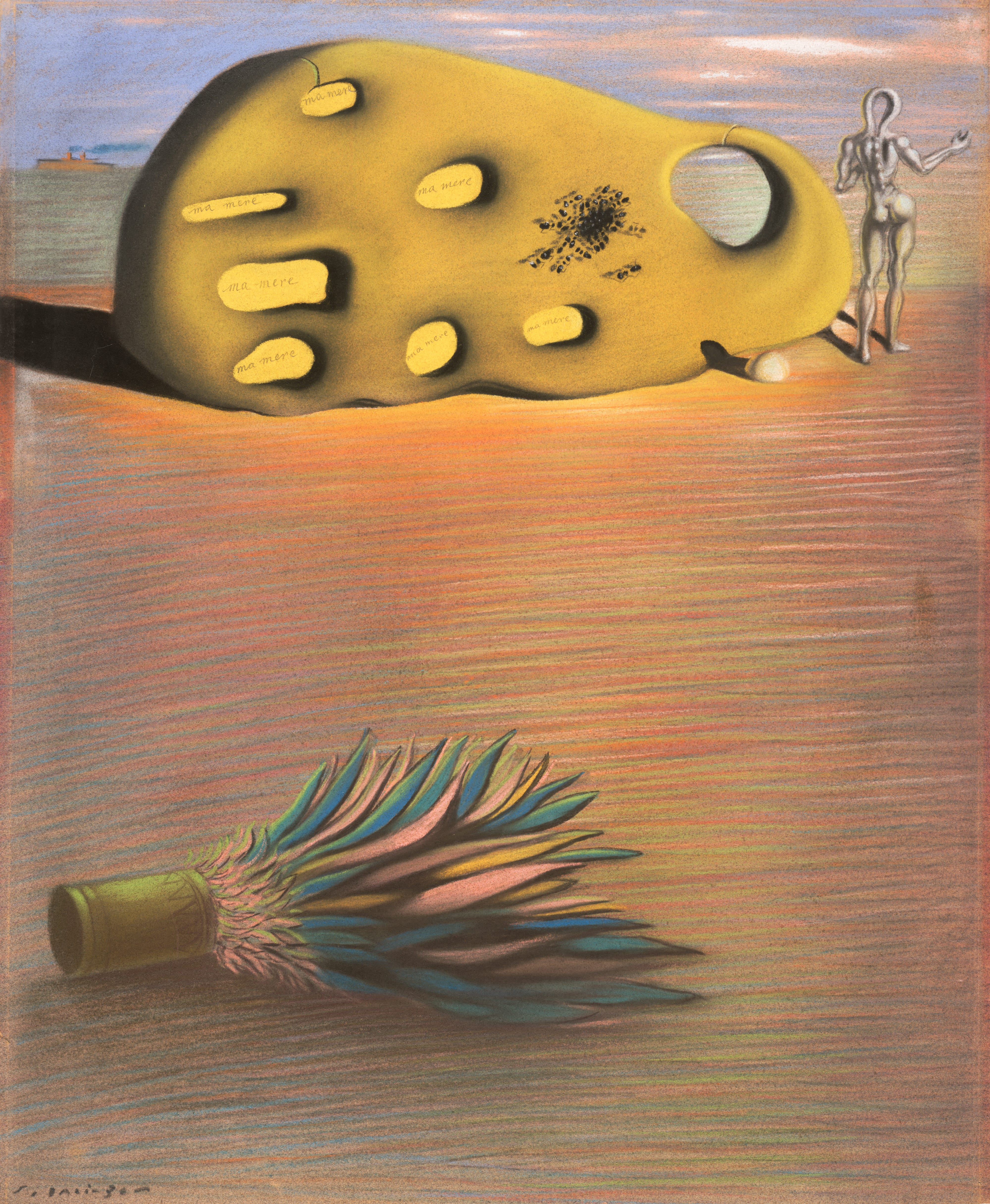
Standing on its own feet, the argument has very funny implications: here we talk about a modern society built by the hands of men with undiscovered Oedipus complexes. But of course, as is the fallacy with any over-simplistic generalizations reliant on intuition, this one cannot be wholly true.
I say ‘wholly’ because I believe there is at least some merit to this cynical intuition. For one, I think we are right to feel trusting of those who are authentic and distrusting of those who are inauthentic. Our society stands to benefit by eliminating the influence of conmen and fraudsters. The optimal game-theoretic condition is one in which all parties cooperate in full thrust, punishing those who are caught for lying and cheating. And for another, perhaps it is true that those who perform are deficient — for what could propel performative people to intentionally perform, if not to attain something that could not have been attained without such performativity (e.g., social influence, validation)?
But what is performativity? I think we have taken the conflation of performativity and inauthenticity for granted in much of our intellectual discourse on the topic. But whereas the inauthentic refers to the expression of what is not part of your identity, the performative (especially as we understand it in modernity) refers to expression with the intent of influencing others. That is to say, although the intent of influencing others may permit the existence of some deficiency, it does not necessarily follow that this act results in any inauthenticity.
Surely, there are cases where this is so: the casual observer needs only to look at that first batch of matcha-drinking labubu-wearing Clairo-listening men who—before the discourse on performativity mimetically spread—truly believed that they were the paragons of femininity. But at its core, performativity is an integral part of our society. It is the medium through which all social currency is exchanged, as all forms of social transactions are subject to intentionality. That is to say, any interaction we have with another party will always be filtered through a lens that intentionally curates how we come across: through dress, mannerism, posture, speech, etc. Even (and especially) in cases that lack the gilded performative intention to ‘look better’ in front of others, any social interaction is always encoded with some form of intentionality, whether for love, power, knowledge, or even casual mirth.

II. Performativity Allows us to Survive and Thrive
Let’s consider the multi-round Prisoner’s dilemma. As opposed to the single-round game—whereby two parties have to independently decide whether to cheat or cooperate, then reap either the rewards or punishment coming from that decision—the multi-round game enables both parties to take stock of past decisions. Although one party might cheat in one round to reap an outsized reward, they will be penalized in all future rounds because they have effectively tarnished their reputation as an ‘unreliable cheater.’ Therefore, the optimal strategy for both parties (barring any extraneous circumstances) is to continually cooperate in order to maintain the benefits of cooperation.
This is a very similar argument to the dramaturgical argument that Erving Goffman puts forward in The Presentation of Self in Everyday Life, in which he states that “when an individual appears before others, his actions will influence the definition of the situation which they come to have.” In the multi-round Prisoner’s dilemma, a history of continued cooperation between both parties defines a ‘cooperative’ situation, whereas any incursion by either party against this pristine history of cooperation would define a ‘hostile’ situation. But of course, Goffman’s explanation can also be used in complex realms of societal interactions, those in which any combination of thousands of actions can produce some unique situational definition for any given social interaction. Rather than the binary code of cooperate or cheat, the continuous spectrum of actions within our world signifies different variations of cooperation or cheating. For example, in a more ‘realistic’ multi-round Prisoner’s dilemma, you can have actions that yield different degrees of cooperation (e.g., staying silent vs. actively telling false information that would remove any suspicion from the other party) or cheating (e.g., confessing partially vs wholly). In any case, actions that help define cooperation can boost cooperative tendencies from the other party, and vice versa. Therefore, despite any intuitive urges for cheating, one would do well to perform actions that herald cooperation.
At its core, however, is the ‘reputation’ of cooperation, rather than the actual acts of cooperation. What is of utmost importance is the security of future cooperation from the other party (or parties in more complex social interactions), whereby you have built credibility for cooperativeness through your previous actions. This can be done through actions that aren’t explicitly cooperative. One clear example is deception: someone who confesses only minimally (enough to not cast suspicion on themselves) yet communicates a cooperative intention can effectively engineer a ‘cooperative’ situation while individually reaping the benefits of cheating.
III. Taste, or Performance-Maxxing
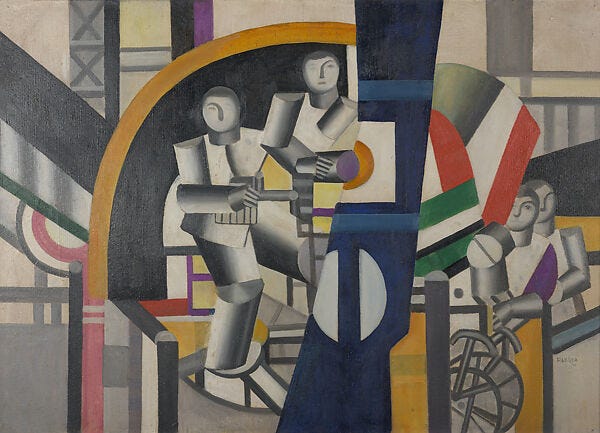
The field of appearances presents another interesting set of actions that can be enacted to engender cooperation without necessarily participating in cooperative activities. On a surface level, our appearance could be used to communicate identity with a particular group, with the aim of encouraging participation from that group through familiarity. For example, wearing a suit signifies involvement in ‘business’ through association, which could elicit trust from other businessmen due to familiarity (i.e., businessmen have known other businessmen to be cooperative in the field of business, and thus are more inclined to trust other businessmen based on association). This concept of familiarity is a crucial one — it is a short-circuited way of evaluating a stranger without any recorded history of past actions. In his essay Dandyism and Fashion, Roland Barthes argues that for a large part of human history, “To change clothes was to change both one’s being and one’s social class, since they were part and parcel of the same thing.” That is to say, our appearance played a pivotal role in communicating association with class, a pivotal piece of information to dictate the ‘situational definition’ of any social interaction in pre-modern history.
More interestingly for me, however, is what our clothes can imply in regards to taste—the concept that is all the rage in Gen Z discourse—and how it ultimately conveys cooperative intent. In the same essay, Barthes discusses the democratization of clothes after the French Revolution. Due to the disappearance of the rigid hierarchy of class in society, everyone began to have access to clothes that were previously ‘off-limits’ to people of their status. Due to this democratization, “the superiority of status, which for democratic reasons could no longer be advertised, was hidden and sublimated beneath a new value: taste, or better still, as the word is appropriately ambiguous, distinction.” By taste, Barthes talks about one’s ability to differentiate one’s outfits from the mass through discreet detail, despite wearing similar outfits (e.g., the way your cuffs are worn). But of course, this extends in today’s terminology not only to discreet detail, but perhaps any point of differentiation — color and proportions theory, knowledge of couture, familiarity with foreign indie brands, etc.
There are several reasons why taste can convey much of the same cooperative messages conveyed by ‘associative’ fashion. Barthes discusses taste as a unique differentiator for one’s peers — one is only able to recognize taste if one possesses taste. These peers, then, form a de facto group of tasteful people, with which association through fashion enables a similar cooperative intent from the group. But perhaps beyond the associative power, taste also conveys seriousness in craft. It is something that requires deliberate intention and curation, and thus a fashionable outfit is a marker of one’s high taste. Much like how admiration is naturally bestowed upon those who excel in traits valued by society (e.g., competitiveness in sports, charisma in speech), admiration is bestowed on one who exceeds in taste for the implication of their great work in acquiring such taste. This extends beyond the in-group — just as anyone is able to celebrate winners of a race without prior knowledge of track and field, one can recognize individuals who are much more fashionably dressed than their peers. Of course, there are limitations to this — just as it might be difficult for the uninitiated to understand the winners of a foreign sport (e.g., an American trying to watch cricket), it might be difficult for one to differentiate on certain elements of taste (e.g., Balenciaga conceptual pieces). However, it is generally the case that taste is discernible through beauty — one who has placed greater successful intent and effort into curating one’s look should provide greater artistic coherence, so as to convey beauty.
And what better way to convey taste than through one’s fashion, a manifest performance of one’s knowledge of what is fashionable and what is not. Of course, performance here harkens back to our ultimate initial concept: a form of intentional impression management. In fact, taste is one of the highest forms of performance, in that it represents a higher order of associative fashion. Whereas one can choose to wear a suit to curry favor among businessmen, one’s ability to select the right suit brands and effortlessly match one’s suit with other pieces (e.g., watch) requires a higher order of curatorial intentionality. Therefore, whereas one who wishes to associate with a group can simply wear a suit, one who wishes to gain the highest level of trust should select the right suit, given the country and season, and pair it with the right watch.

Of course, one’s intentionality in taste-making could differ. Taste goes beyond performance, in that one strives for beauty, too. Nonetheless, taste possesses a potent performative power in its ability to build credibility and trust. Whether one is or is not concerned with this performative power in social interactions will not change one’s ability to influence situational definitions in social interactions. And to be sure, those who are concerned with this performative power can wield it to ensure maximum cooperative intent from all parties.
There is so much more that I would love to say regarding performativity (e.g., Foucault’s concept of discourse as applied to fashion). However, the primary point that I have defended here is that performativity is integral to society, for it is through performativity that we learn to trust one another to cooperate. Fashion provides the most perceptible manifestation of performativity, as it dominates our strongest sense of vision. Therefore, one’s ability to curate fashion tastefully is of utmost importance to influencing social interactions, enabling taste to take an important stage in power in modern society.
I must note that the implication that I think to be important here is not that of the necessity of performativity in society — this is more a metaphysical point, as all societal interactions must be conducted through performance. The more monumental implication is that performativity plays a pivotal role in society regardless of its metaphysical nature. Because of its prowess, it has evolved into a role beyond one of mere definition, but one of influence. That is, people are able to convey all variations of cooperative intent through all variations of performance, the extent of which is controlled by taste (in fashion). Whether such performance is in conflict with one’s authenticity is a discussion for another time.
Bibliography
Barthes, Roland. Dandyism and Fashion. Translated work. New York: Bloomsbury Academic, 2015.
Barthes, Roland. The Language of Fashion. Translated by Andy Stafford. Oxford: Berg, 2006.
Foucault, Michel. The Archaeology of Knowledge. Translated by A. M. Sheridan Smith. New York: Pantheon Books, 1972.
Goffman, Erving. The Presentation of Self in Everyday Life. New York: Anchor Books, 1959.
Riley, John G. “Multi-Round Games.” University of California, Los Angeles. Accessed January 29, 2026. http://www.econ.ucla.edu/riley/106P/GAMES/Multi-roundGames.pdf.
Rocamora, Agnès. Thinking Through Fashion: A Guide to Key Theorists. London: I.B. Tauris, 2016.
Evan Bimaputra is particularly fascinated by the intersection of philosophy and culture. With a formal education in philosophy, a sideline as a fledgling disc-jockey, and a childhood steeped in the Internet, he is preoccupied with tracing the cultural currents of his Gen Z peers against the long shadow of classical philosophical thought. Offline, you can find him playing at chess clubs or munching at NYC’s many KBBQ joints.
Separate from the modern colloquial definition of performativity that I discuss in this essay, performativity can also describe language that has the ability to enact social change (e.g., a judge pronouncing verdicts), as opposed to language that merely describes.

As a part time dabbler in perfomative male behaviors myself (which canvas tote bag I choose to leave the apt with is of utmost importance, or course), I wonder where mimicry lies within the mix. And further, aspirational mimicry. With fashion this can feel probably a tad shallow, but I think about children performing/mimicking behaviors for their parents, and later, our (adults) aspirational mimicry of others as a way to move us towards our goals. Ie, it isn't authentic... yet. But if I can copy someone's suave enough maybe one day it will truly be an authentic espression of my true nature.
I'm not sure. But alas, I think today calls for a wonderful taupe canvas tote from a candle maker in Brooklyn. I am sure people will notice and talk of my impeccable decision for days to come.
When I think of a 'performative' person, I usually picture someone acting disingenuously. Do you think there’s a meaningful difference between the 'everyday' performances we all use to maintain social order and those who very deliberately present themselves in a specific, perhaps artificial, way? Maybe the level of performance is a spectrum, and when we perceive that someone is performing too much, we view that as inauthentic?