


In “What Makes a Life Significant,” William James argues that the significance of a life does not depend on social position or visible achievement, but on the union of an ideal with the strength and strenuousness with which one pursues it. To arrive at this conclusion, James works through a series of candidates for significance, discarding each in turn.
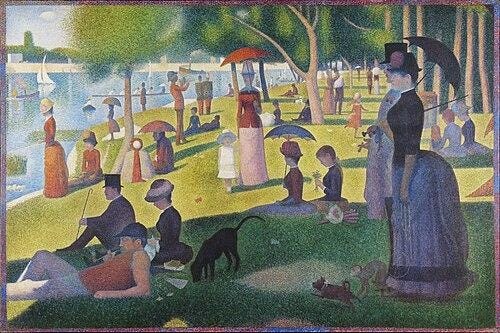
The first candidate for significance is the civilized ideal. For James, this ideal is typified by Lake Chautauqua, a miniature utopia filled with education, music, and wholesome recreation. But something is missing. James’ relief upon leaving Chautauqua tells him as much. Comfort and culture seem incapable of satiating the peculiar human craving for the trials that give life its edge. Repulsed by the safe mediocrity of Chautauqua, James swings to the opposite extreme. If modern civilization drains life of its intensity, then perhaps we ought to forget reality altogether and trade the world as it is for the world as it has been mythologized.

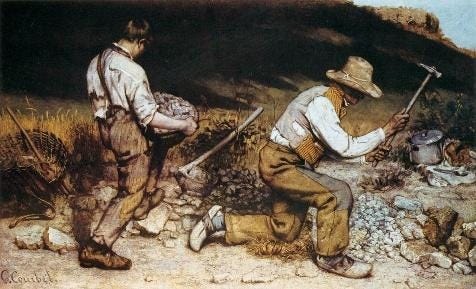
Yet it is not long before James is wrenched from his romantic haze by an unsuspecting interruption. The culprit? The sight of a workman, and within it, the heroism of the ordinary. The romantic escape is revealed for what it is, not a higher vision, but a failure of sight. Taking its place is James’ rendition of the Tolstoyan deification of the natural man, who toils each day, selling his labor but never his soul. Thus, James arrives at his third candidate for significance. But, alas, this refuge proves just as fickle as the others. Just as it is foolish to see significance only in the gleaming armour of a martyred warrior, it is equally foolish to see it only in the dirty boots of manual labor. The key to life’s meaning cannot lie in social station.
Each of James’ failed candidates captures only half of what makes a life significant. The civilized ideal provides ideals without struggle, the romantic vision supplies spectacle without reality, and the Tolstoyan glorification of labor offers effort stripped of any consciously held aim. From this process of elimination, James arrives at his central insight: a life becomes significant only through the marriage of an ideal with the strenuous effort required to realize it.
In thirty-seven pages, James artfully walks us through this meticulous process of elimination. Each candidate for what makes a life significant is raised, examined, and set aside. The process creates the feeling of convergence. We start broad and watch options fall away: not this, not that, not that either.
At last, the conclusion seems to have been distilled to the essential. But the distillation has somehow produced more liquid than we started with. “Ideals married to effort” applies to the Salvation Army convert, the class-loyal laborer, the intellectual adventurer, the soldier, the Chautauquan. Heroism is everywhere, James tells us, at the college, in the stockyards, in the czar’s court. The formula is broader than any of the individual positions he rejected. Rather than narrowing the field, James seems to have opened the floodgates.
This is what I find so interesting about James’ argument, and so frustrating. The form says, “we’ve narrowed it down” while the content says, “it’s everywhere.”
So, have we been hoodwinked? Certainly, the structure of James’ argument has an undeniable effect on the reader. The meticulousness of his analysis gives us the satisfaction of a proof completed. And perhaps too, after journeying through the boredom of Utopia and the drudgery of uninspired labor, we are so relieved to have found a middle way that we do not notice that it is wider than the landscape it was supposed to navigate.
Yet, whether or not we notice, James certainly does. He concedes that his conclusion is vague, invoking a problem all too familiar to philosophers that questions of significance can never yield precise answers. This is a disarming move. James raises the objection before the reader can, not to refute it but to absorb it. But acknowledging your own vagueness is not the same as resolving it, and gesturing toward the whole territory is not the same as illuminating any particular part of it.
Nonetheless, James is explicit that the essay is therapeutic rather than theoretical. His goal is not to propose an analytical treatise on the meaning of life but to widen our vision to the meaning that exists all around us, in lives unlike our own. Fair enough.
But even as I recognize its therapeutic value, I find myself still wrestling with a tension lurking beneath James’ argument. His definition of what makes a life significant is essentially first-personal. It requires the marriage of your inner ideals with your active courage and endurance. But his therapeutic move is third-personal.
There are two distinct senses of meaning at work here. First, there is the meaning that James rightly insists we ought to recognize: the inner ideals and quiet heroism that exist in other people’s lives. But there is also a second kind of meaning. The meaning that is immediately available to us, that we actually inhabit and feel, that exists for us whether or not we reflect on it. That meaning is everywhere is an important point to recognize. But a world saturated with significance can still feel out of reach.
And yet I think this gap between seeing meaning and feeling it is not a flaw in James’ argument so much as the place where it does its real work. The very breadth of his vision encourages you to dissolve your own particular sense of significance. If meaning is everywhere, equally, then your own life is just one more instance of the universal pattern.
But you do not experience your own meaning the way you experience anyone else’s. You do not see it from the outside, you feel it from within. By widening our perception of meaning in others’ lives without filling the first-personal void for us, James makes us feel the distance between the two. And the moment his levelling vision presses that felt sense of your own significance into relief, you realize something his formula does not quite say: what makes your meaning yours is not that it is richer or more valid than anyone else’s, but that you are inside it.
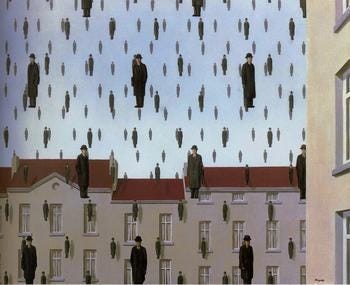
Perhaps, then, “What Makes a Life Significant” is not merely a therapeutic tool, it is also a diagnostic one. The act of genuinely widening your perception momentarily flattens you into the universal. You become a blob in a sea of significance, one more life among the countless multitude James describes. But something strange happens when you see yourself that way. The very act of dissolving into the universal makes you suddenly aware of what cannot be dissolved. Your own inescapable subjectivity. You can perceive meaning in the workman or the hero, but perceiving their meaning is not the same as feeling it. Their significance reaches you from the outside; yours reaches you from within. And so, in the very gap between perceiving meaning everywhere and feeling it for yourself, you discover something James’ formula does not quite name, a renewed consciousness of your own felt life, sharpened precisely because you have just seen how much of the world’s meaning you can recognize but not inhabit. If that is not an answer, it is at least a provocation. And maybe a good provocation is worth more than a tidy formula anyway.
Grace Theodoly is a law student at Stanford Law School and holds a B.A. in Philosophy from the University of Chicago. Though she currently studies law, she continues to read and write about philosophy in her spare time, with particular interests in epistemology, metaphysics, and the philosophy of mind.
"Taking its place is James’ rendition of the Tolstoyan deification of the natural man, who toils each day, selling his labor but never his soul." -- Beautiful prose.
The final paragraph reads to me like a beautiful narrativization / illustration of a dialectic
The strongest distinction here, for me, is between the meaning we recognize in others and the meaning we feel from within. That makes James’ therapeutic project feel both generous and incomplete in exactly the right way. He widens perception, but widened perception is still not inhabitation. We can admire the workman, the soldier, the convert, or the intellectual adventurer, yet their significance reaches us from the outside. Our own reaches us as burden, pressure, hope, fatigue, and choice. Perhaps what James leaves unsaid is that significance is not only perceived as a pattern; it is carried as a life.