

Once religion loosens its grip, we tend to inherit our picture of value from one of two places. Either we take the scientific, mechanistic picture of the world at face value, so that morality ends up looking like a human invention laid over a universe that doesn’t care one way or the other. Or we take freedom itself as the ground of value, so that a good life becomes whatever life we author for ourselves. Our culture has absorbed the second option so completely that it barely feels like a choice anymore. Choose your values, express your identity, follow your freedom: that’s the working ethic of people who would never call themselves existentialists. Iris Murdoch thought both options were mistakes, and her case against them has grown stronger with time, because the defaults she was attacking have since hardened into common sense.
Beyond the Sovereign Self
Murdoch wrote against existentialism in the 1950s and 60s, when it had become the default humanism of educated secular life, and she thought its infatuation with freedom was a form of egotism. Existentialism puts the will at the center of ethics: I become good through the strength and sincerity of my own choices. Her objection isn’t that choice doesn’t matter. It’s that this picture flatters the very self it’s supposed to be judging, because it quietly assumes that what stands between us and the good life is a failure of nerve rather than a failure of vision. In The Sovereignty of Good, she writes, “Good, not will, is transcendent,” which encapsulates a lot of her moral philosophy. She was just as unconvinced by the behaviorism of her era, which went to the opposite extreme and treated inner life as unreal, or at least unimportant next to observable conduct. Where existentialism overvalues the will, behaviorism empties out the very self it claims to describe. What Murdoch wanted was a third option, an account of moral life centered on a consciousness that attends to what lies beyond itself.
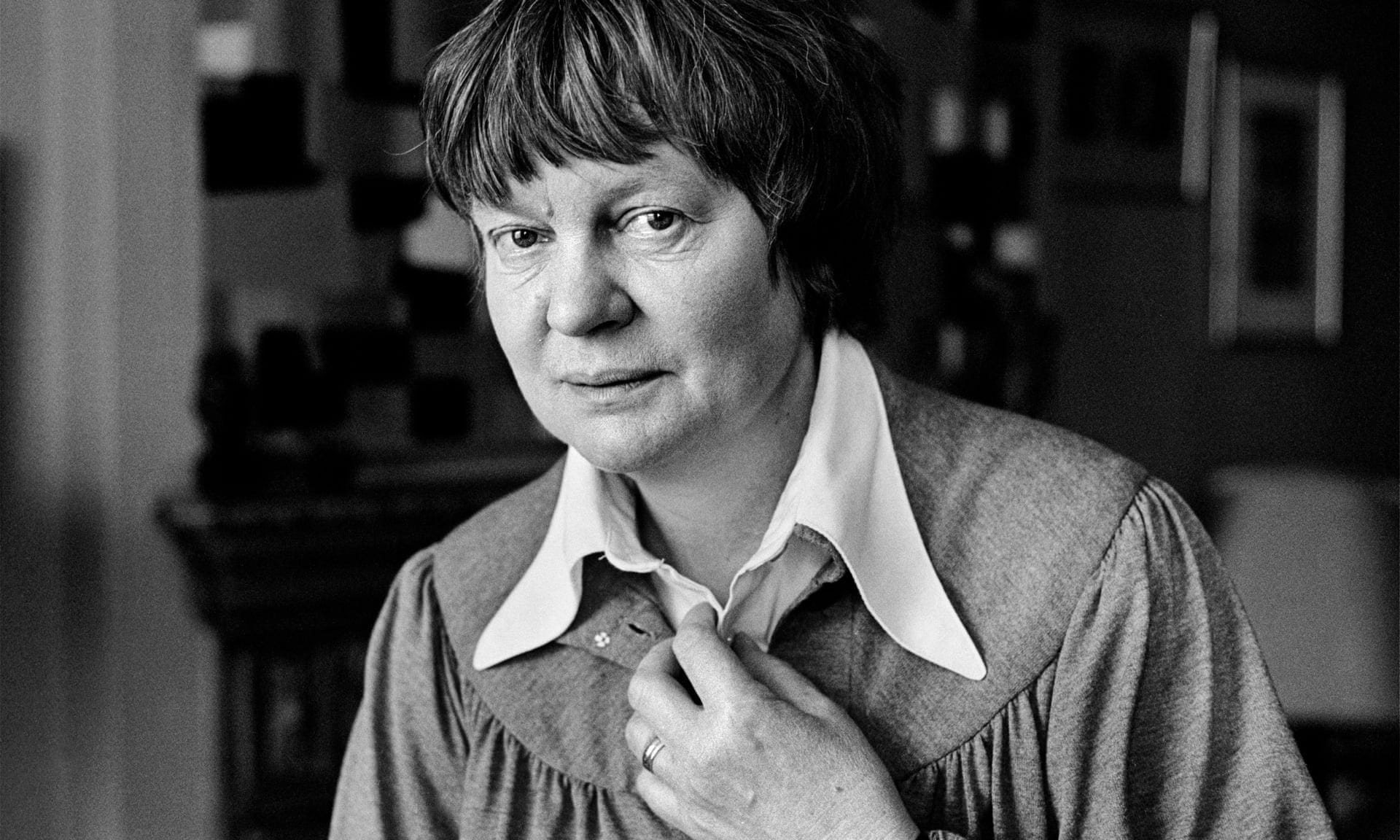
That third option starts with a warning about self-discovery. Most of us treat it as an obvious good, and the ethic of self-creation treats it as a duty. If the self is less a stable source of authority than a restless producer of fantasy, protecting its own centrality however it can, then digging inward for a truer self won’t get us far. We may just excavate more elaborate illusions. Murdoch’s advice is to stop searching the self for answers and direct attention outward instead, toward the Good and toward other people, both of which resist our wishes far better than the self ever resists its own.
This account of moral perception also challenges the mechanistic picture. Its philosophical signature is the sharp line twentieth-century philosophy drew between facts, which were supposed to be objective, and values, which were supposed to be our subjective additions to a neutral world. Murdoch rejects this line entirely. On her view, moral perception is a form of truthful seeing rather than a private feeling projected onto value-free data. When we recognize someone as courageous, or cruel, or vain, we aren’t decorating a bare fact with an emotional reaction, as if it’s a random subjective imposition on the world. We’re perceiving something real about a person, and perceiving it well or badly depending on how much fantasy and self-interest we bring to the act of looking. And we live this reality when we argue over whether an act was cruel, point to evidence, and sometimes discover we were wrong. Taste doesn’t behave that way, but perception does. We may live inside a mechanistic worldview that can’t find objective morality, but our lives are primarily moral and not scientific: our days are spent reading motives, weighing fairness, noticing kindness, and the scientific picture is somewhere we visit while the moral one is where we live. Moral failure, then, is very often a failure to see clearly, and only secondarily a failure to choose correctly. Moral improvement is a slow correction of vision, not a single decisive act.
Beauty and the Good
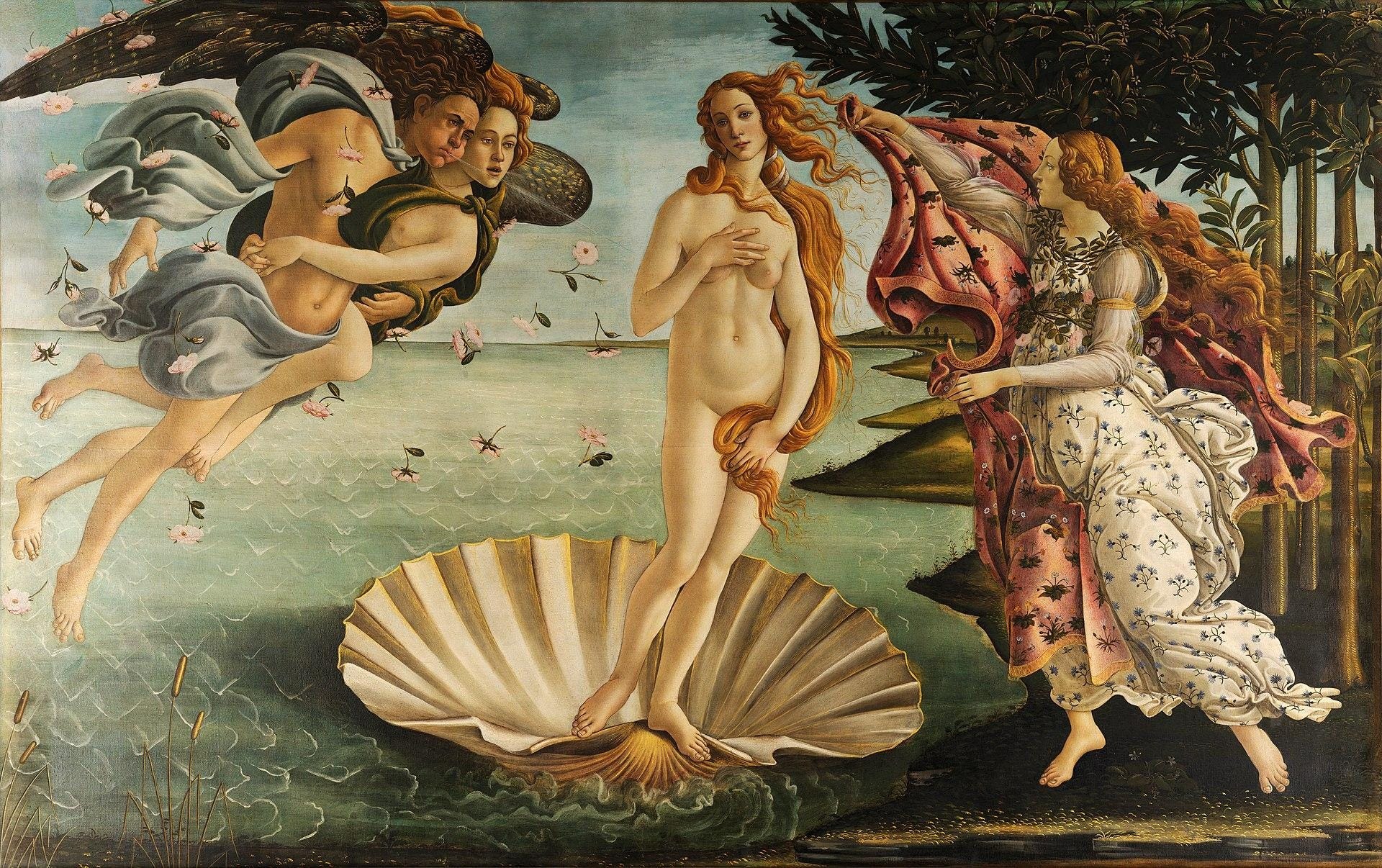
Beauty is where all of this is easiest to see, and it’s one of the ideas Murdoch develops the most. She ties the Good directly to Truth and Beauty, and beauty, more than the other two, is available to the senses in ordinary life. A great painting or a serious novel can pull us, briefly, out of our own concerns and toward something that exists whether or not we’re looking. Murdoch calls the appreciation of beauty “the checking of selfishness in the interest of seeing the real,” and that phrase explains why the pull has moral weight. It’s practice in the same movement goodness requires: attention turned away from the self and toward the world as it is. Murdoch, though no conventional believer, read prayer the same way, drawing on Simone Weil to understand it less as a transaction with a distant deity than as an exercise in exposing the soul to something beyond it through selflessness. As Weil beautifully said in Gravity and Grace, “Absolutely unmixed attention is prayer.” The same structure of attention shows up in how we engage with art. Both are training in a kind of seeing. For Murdoch the whole moral life runs on this metaphor of vision: becoming good is learning to see, which is why Plato’s image of the cave, the slow climb from shadow toward light, keeps returning in her work.
Left as psychology, all of this could be shrugged off as advice, one more technique for the self-improvement shelf. Murdoch rejects this by grounding her account in metaphysics, insisting that how we understand reality’s fundamental nature has to guide how we understand morality, rather than the two being kept in separate departments. She places herself in a long tradition of philosophers, Plato, Kant, Wittgenstein, Schopenhauer, and Hegel among them, who wanted to protect the absolute, necessary character of moral value, and who tended to do it by removing that value from the messy, accidental, contingent world and installing it in an eternal realm the world couldn’t touch. Murdoch goes the other way. She locates our access to value inside contingency itself, treating the imperfect, particular, accident-prone world as the only route to transcendence we have. The route runs through attention: a particular person, honestly seen, resists our fantasies, and that resistance is the experience of something that doesn’t depend on us. If she’s right, the choice we started with was never forced on us. Value doesn’t have to be an illusion laid over a machine, and it doesn’t have to be conjured by the will, because it was never missing from the world to begin with.
Out of this reversal comes one of her most useful images, the broken circle. We have a natural desire to make reality cohere into a single, complete, well-ordered picture, a tendency she calls one-making. It’s a comforting desire, and an intellectually attractive one, but it falsifies reality whenever it excludes whatever is accidental, painful, or unresolved. A sound moral picture has to stay a broken circle: coherent enough to orient us, honest enough to admit that it’s incomplete and points beyond itself. She reads Plato in the same spirit. There’s no literal other world in her Plato, no separate heaven waiting behind this one. The Forms are metaphysical images offered with what she calls a kind of playful irony, gestures that say something like this might be true, never flat doctrine. What’s higher isn’t elsewhere. It is, as she borrows from the medieval mystic Meister Eckhart, inside the soul.
Religion After Belief
That refusal to sever the ideal from the actual explains why she takes the ontological argument seriously without accepting it as a proof. The argument tries to move from the concept of a perfect being to that being’s necessary existence, and Murdoch doesn’t think the move succeeds as logic. What she keeps is its suggestion that perfection was never simply an idea we invented for our own convenience. “The idea of perfection haunts all our activity,” she writes in Metaphysics as a Guide to Morals, “and we are well aware of how we try to blot it out.” Something that haunts us, something we work to blot out, isn’t behaving like a construction we could simply drop. She draws on the theologian Paul Tillich here too: what matters isn’t whether the argument proves anything, but that we stay capable of asking the question at all, of wondering seriously whether something like God is even possible. And she’s drawn to a remark of Wittgenstein’s that she quotes there: “running up against the limits of language is ethics.” Failing to say something clearly doesn’t mean there’s nothing there.
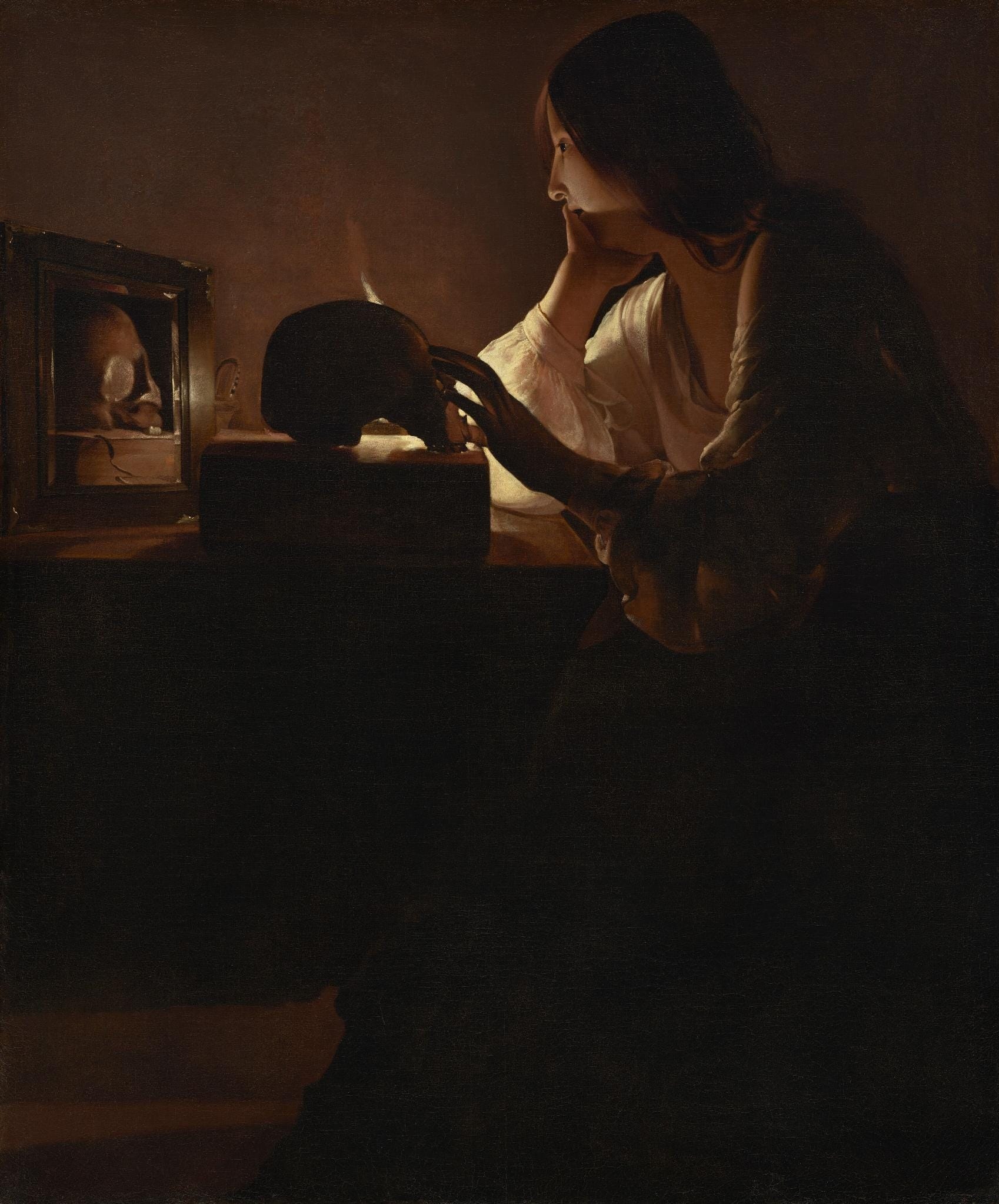
Murdoch faces these limits of religious language when she asks what can survive of Christianity. She takes seriously the possibility that traditional belief can’t survive much longer in anything like its old form, and she asks how much could be given up while leaving something recognizable behind. Could Christianity continue without a personal God who answers prayer, without a physically risen Christ, without heaven as an actual place? Perhaps, if it kept Christ himself as a living force within the individual soul, closer to how Buddhists relate to the Buddha than to how Christians have traditionally related to a supernatural savior. But she also sees how easily this goes too far. Push demythologization far enough and we may find ourselves, as she puts it, “changing religion into philosophy before our eyes.” And she isn’t sure the rescue can happen in time, before belief and practice disappear together instead of being renewed. Words like God don’t only fade through indifference. They can be reshaped on purpose, and Murdoch thought philosophy should help religion clarify words such as God through smaller, more precise companion words, so that they retain meaning instead of dissolving into slogans. She thought good prose and serious fiction carry more of this work than most philosophy manages, a conviction she backed with her own novels, because literature can hold a distinction in place that abstract argument tends to flatten.
Murdoch never pretends any of this is easy. What she offers instead of ease is orientation, and it answers both of the defaults we started with. To the mechanistic picture she says: value belongs to the reality we already perceive, in the courage and cruelty we recognize in each other, in the pull of beauty, in the perfection that haunts everything we do. Value needs neither a supernatural explanation nor an eternal realm to be real, only this contingent world seen clearly. To the ethic of self-authored freedom she says: the authoring self is the very thing that most needs correcting, and the way forward is attention rather than choice, seeing rather than self-expression.
Why Murdoch Matters Now
Both defaults are stronger today than when she wrote against them, and they’ve taken new forms. The egotism she diagnosed in existentialism has settled into the individualism that now organizes ordinary life. The behaviorism she fought is back in a harder version: where the old behaviorist set inner life aside for the sake of method, the machine comparison sets it aside by design. As AI grows more powerful and more deeply integrated into society, and as more of life is technologized and automated, the human being becomes less intelligible in our original experience of ourselves. We start describing ourselves in the machine’s terms, inputs and outputs, processing and performance, and whatever can’t be benchmarked starts to look unreal. Murdoch’s insistence that consciousness is where moral life happens, that we are seeing and attending creatures before we are producers of output, is her reply to that reduction. And the fact-value split she rejected now takes the form of relativism and a spiritual nihilism, the shrug that says nothing is really better than anything else. Against the shrug she holds up the Good: something we discover, not something we invent.
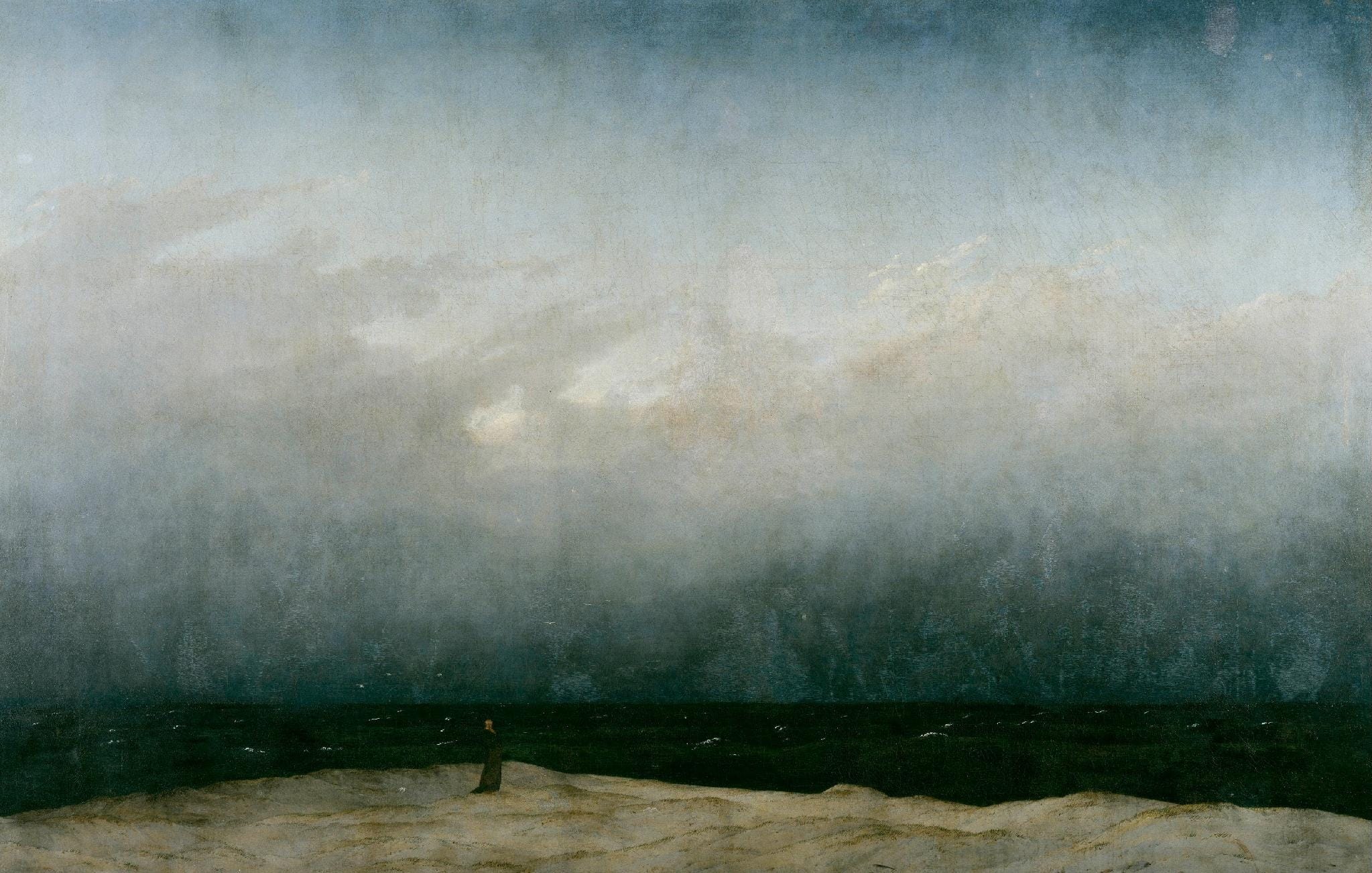
Religion, meanwhile, is caught between two bad options of its own, and Murdoch saw both coming. Down one road we lose religion entirely in an increasingly secular age, until we can no longer understand what all of humanity before us was trying to say and to cultivate. Down the other we revive it out of rebellion and nostalgia, without engaging it critically, and end up with fundamentalism or with pseudo-political religious projects that dishonor religion and politics alike. Her demythologization is the narrow path between the two: keep the great words, let their sense change, surround them with smaller and more precise ones, so that what they pointed to survives the death of their old form. That work of making distinctions is philosophy itself, and philosophy is what a culture that cares only about productivity and automation is losing, in individuals as much as in institutions.
This is why she matters now. Our defaults leave us fluent in the language of values with no account of what values are. Murdoch gives that account without asking us to abandon science or to inflate the self. When we ask whether a life or a judgment or a desire is good, we aren’t describing a preference. We’re asking whether we’ve seen, past our own fantasy and self-interest, something that doesn’t depend on us for its reality. Our culture already knows how to reward free choice and sincere self-expression, but seeing past our own fantasy and self-interest requires more of us. There’s nothing more important than values, and nothing more important than rescuing a picture of the world in which values are real, continuous with what religion always pointed toward, and within reach of ordinary, patient attention.
Tiago Faleiro is a PhD researcher at the Global Center for Advanced Studies, working on the philosophy of religion, mystical experience, Heideggerian phenomenology, 4E cognitive science, and transformative experience. He hosts the Anagoge Podcast and is the author of the forthcoming book The Altar and the Machine, which explores the relationship between cognitive science, the philosophy of technology, and religious studies.
Bibliography
Murdoch, Iris. The Sovereignty of Good. London: Routledge & Kegan Paul, 1970.
Murdoch, Iris. Metaphysics as a Guide to Morals. London: Chatto & Windus, 1992.
Weil, Simone. Gravity and Grace. Translated by Emma Craufurd. London, Routledge & Kegan Paul, 1952.
See Also from the New York Journal of Philosophy


That’s a very strong account of how we might get past the pure subjectivity of evaluation. Thank you so much.