


This article is adapted from HOW TO CHANGE A MEMORY: ONE NEUROSCIENTIST’S QUEST TO ALTER THE PAST. Copyright © 2025 by Steve Ramirez. Reprinted by permission of Princeton University Press.
Once in a while I go back to my family’s photo albums to revisit moments of my past. Some pictures immediately bring to life the vivid memories embedded in them. There is a photo of my dad and me at his surprise sixtieth birthday celebration, and whenever I see it, I instantly recall my dad’s bewilderment as over a hundred family members yelled, “Feliz cumpleaños!” when he walked in. I was twenty-four years old at the time. The room filled with applause and laughter, and some of my aunts and uncles were a bit teary-eyed. My brother, sister, and I looked at each other with excitement and relief, knowing we had pulled off the surprise. It’s a memory that feels like it has maintained its emotional impact and episodic detail for over a decade.
Other memories are blurry, almost dream-like, and the further back into my own past I go as I flip through the photo album, the trickier it is to reexperience such moments. As years turn to decades, I feel a strange sense of detachment emerge. In one picture, I’m holding up an album of Pokemon cards and looking into the camera with a real sense of pride. I was fourteen years old at the time. I loved collecting these cards, and as soon as I’d open up a package, I’d put every individual card in its own sleeve and then in a binder full of pocket page protectors to keep them nice and safe. Every week or so, my dad would drive me to the local card shop, and we’d pick out a pack to open together and file away neatly in my binder. I’d teach him about each Pokemon’s strengths and weaknesses on the ride home. One afternoon, I scored big and found a holographic Charizard in the deck—this was the holy grail of Pokemon cards. And so, when my mom saw my uncontrollable exhilaration, she asked me to pose with my collection. Flash.
Even though some of the sensory details and emotions linked to this memory are still somewhat palpable, I’ve thought about this moment so many times that I can’t help but be acutely aware of just how much of it I no longer actually remember. Sometimes I feel like the trace of this moment in my brain exists as a faded outline of the past. It’s been about two decades since my mom took that photo, and I can’t relive those few seconds of holding up my album the way I could in the days or even years after it was taken. Even though I can still reexperience the emotions surrounding the photo, this treasured memory has lost its episodic luster.
Then there are experiences I’ve had that are out of my reach—and I get an uneasy feeling of being disconnected from my own past. There is one photo that was taken on my thirty-third birthday—I was at Capital Grille with my parents, brother, sister, and partner, and they’re all forcing a smile back at the camera. Everyone (except for me) was uneasy because I had downed one too many martinis on an empty stomach, and I had come close to falling asleep multiple times at the dinner table. In the picture, I’m staring emptily past the camera and with no obvious point of focus. What’s more, it was the first time I was ever this intoxicated around my family. If it weren’t for the photo, I’d have zero idea what happened that evening. The slice of coconut cream pie on the plate in front of me, my favorite maroon sweater, my mom’s hand on my shoulder—all are details that I can see in the photo but can’t mentally relive. The memory itself is completely devoid of emotional and episodic vigor.
I know that the young adult in the photo with my dad is me. I know that the teen holding up an album of Pokemon cards is also me. And I know that the semiconscious adult at Capital Grille is me as well. But so much of my life has happened between each one that they all feel like different versions of “Steve” engaging with reality in very different ways. Some ways have led to stable memories, some have led to total amnesia, and some have led to something in between.
If I can’t remember all of the details of my life, especially some of the most influential moments that have brought everything from gratitude to shame, then how can I truly know who I am today? My memories sculpt my sense of being, but how does the brain do this when the past can be so unstable, when bits and pieces of some memories feel just as new as the day they were formed, while others feel like they might as well belong to someone else?
These fascinating, albeit thorny, questions about memory and identity are at the forefront of neuroscientific research today, and we have the fields of ancient philosophy and physics to thank for setting these questions in motion. Indeed, the idea that the self is a dynamic thing has been around for millennia. In Greek mythology, the Ship of Theseus is a thought experiment in which a ship has all its components replaced, one by one, over the years. At some point, none of the original pieces remain, so is the ship still the same Ship of Theseus? To continue the thought experiment, if we were now to take all of the old pieces of wood from the old ship that we’ve gathered over time and then build a new ship with them, is this now the Ship of Theseus? A philosophical approach to memory and identity might say that each incremental change represents the transformations we undergo across a lifetime. As long as there’s a continuous history that ties together the ship’s structure and function over time, then some semblance of sameness remains.
Physics gives us a powerful insight to work with: change is woven into the fabric of the universe. The atoms produced in the Big Bang forged themselves into stars, which exploded and released their chemicals to form nature’s ultimate experiment. This billion-year conversion of energy from one form to another made you along the way and everything else in the known universe. We are all recycled star-stuff, in other words, and the recycling never stops. In 1953, a study conducted at Oak Ridge National Laboratory in Oakridge, Tennessee, claimed that 98 percent of all the atoms in a person’s body change out every year. While that number is a very rough estimate and almost certainly depends on which types of atoms we’re talking about, the notion that our body’s molecular components are replaced over time is a basic property of biology. With the average human lifespan hovering around eighty years, this means we undergo several great transformations in a lifetime.
From the perspective of physics, there are multiple different versions of us lurking in the past. If we studied identity with our physicist’s cap on, we’d find that our seemingly stable sense of being is made out of atomically unstable pieces. We are constantly changing and morphing into some new version of ourselves over the course of our lives.
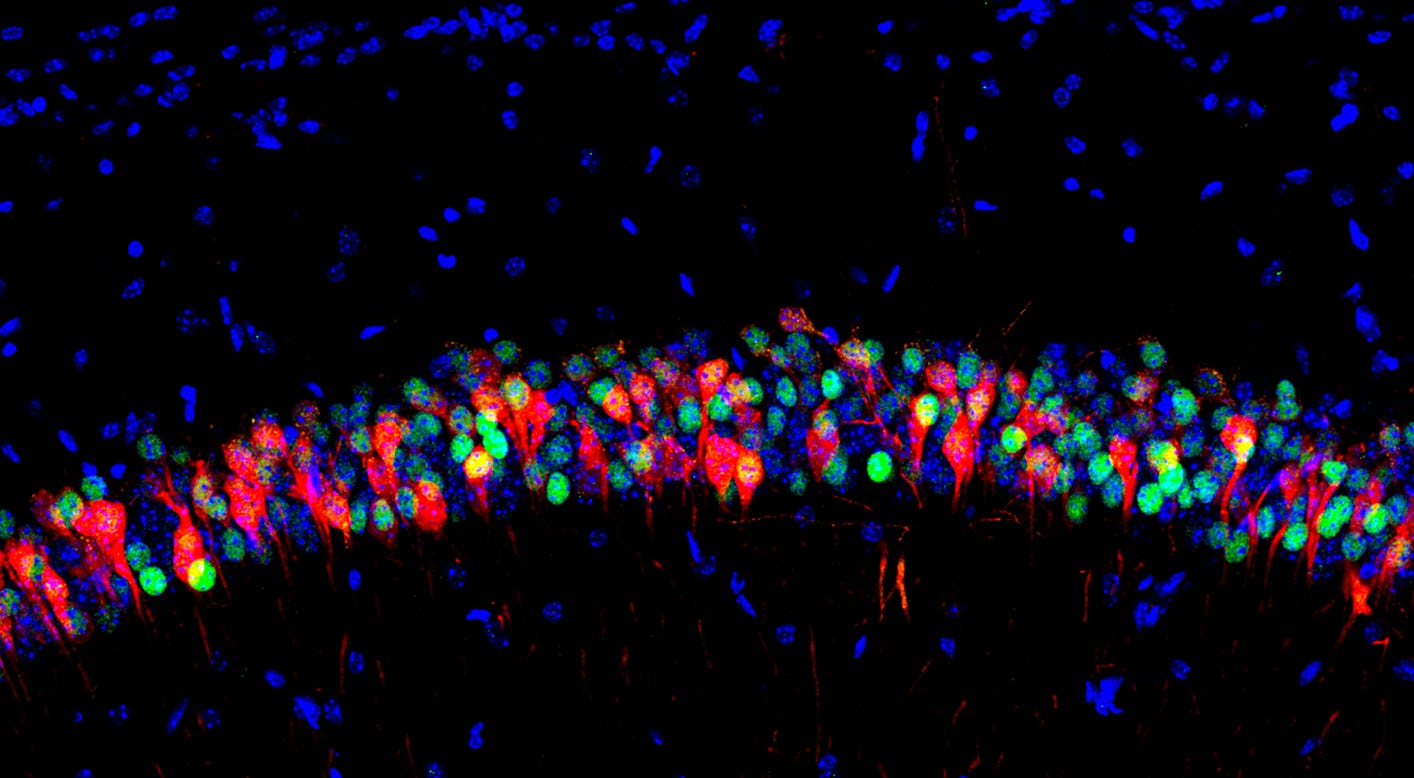
From the perspective of neuroscience, identity is the brain’s Ship of Theseus, and memory is the material that builds our identity. Say you were to somehow find my brain cells that were active when forming the memory of holding up my Pokemon card collection. And say you were to somehow keep track of which exact cells these were over the years. Every so often, you’d peer into my brain, find these particular cells again, and ask me to recall the memory. Some of these cells would turn on again for a period of time. I offer up this hypothetical because, in fact, scientists have observed something similar—just not quite as sci-fi. To start, the brain has neurons that respond selectively to pictures of people we know, including ourselves. These cells even respond if just the name of a person is written down or spoken out loud: if I see or hear “Pedro Ramirez” or look at a picture of my dad, the same cells will light up in activity for each. If I see or hear “Steve Ramirez,” a different group of cells will become active. In other words, the brain contains neurons that represent the identities of individuals in our lives. At any given moment, every plank on the Ship of Theseus serves some function to keep the vessel moving forward.
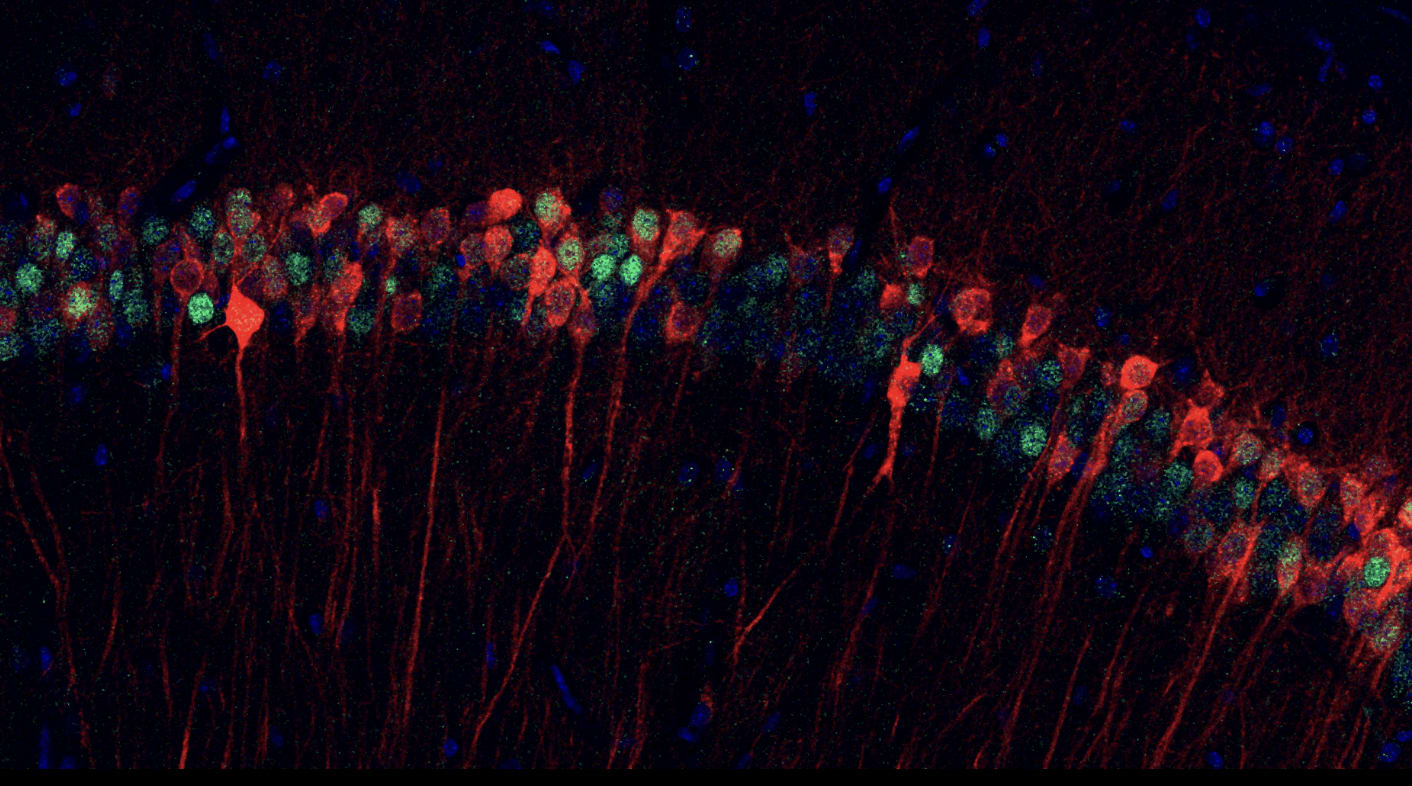
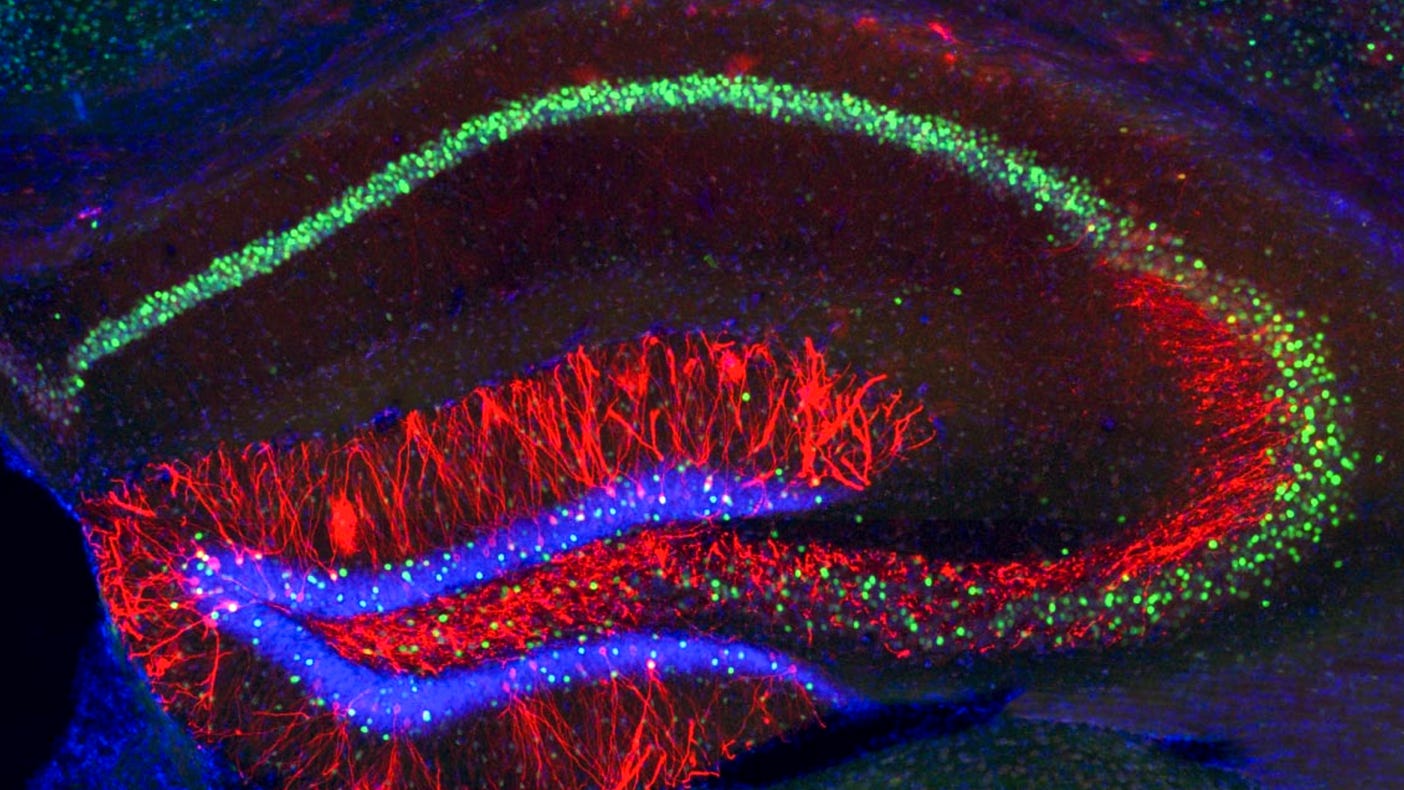
The experiment is only halfway done though. If you kept looking at my brain cells that represent my Pokemon card collection over the years, you’d end up seeing something that has baffled scientists since they first were able to track such cells: at some point, and despite still being able to recall my Pokemon memory, an entirely new team of cells would be active. My engram of holding up my beloved Pokemon card collection has shape-shifted at the cellular level. Like the old wooden planks in the Ship of Theseus, they’ve been replaced with a completely new set of cells. Ongoing experiences reorganize old memories in the brain.
The phenomenon is called representational drift: the cellular representation of an experience changes, or drifts, over time. Neuroscientists have found that the brain represents even simple sensory stimuli in the world through drifting populations of cells. For instance, my brain processed the woody aromatics of my dad’s cologne on his birthday with one group of neurons. That memory is almost certainly subserved by a completely different group of neurons today. Even if I were to actually smell my dad’s cologne over and over again, the group of cells responsive to the cologne would change over time as some cells stop firing while others start firing to represent the experience. This change is so drastic that my cellular representation of this smell today likely looks nothing like it did on my dad’s sixtieth birthday. The memory is stable but the very cells that produce it are not.
As experience accrues in the brain—as we live our lives—the neurons that processed a memory when it was formed begin to drop out while new ones come into play and take over. At a fundamental level, this means parts of my identity, as forged by my memories, drift more than others. I am both stable and unstable. It’s this kind of cellular dynamism that sparks change in the psychological manifestation of the self. This inherent changeability is adaptive: the more we remember a particular memory, the faster its cellular representation can drift into something new and incorporate more information. Like any good sports team, drift is a way for the brain’s roster of neurons to have healthy, active players on the court of experience who are ready to run a play, to adapt to unpredictable circumstances, or to be substituted in and out if needed, all with the common goal of surviving into the next round. It’s a way for our brain’s game plan to continuously adapt without being overly predictable or stuck in its ways.
The brain’s physical machinery that enables memories is being continuously modified by time and experience. From synapses, to the wiring between cells, to the activity of teams of cells, our memories constantly renew these molecular and cellular pieces, like waves crashing on a beach, tidal in their composition and drifting in their very nature.
As we’ll see next, the science of how stable memories emerge out of unstable biology is where we can learn about how the brain produces the different transformations we endure in life. It is the brain’s dynamism that lets such transformations happen, for the only constant in the neuroscience of memory is that of change. My dad’s sixtieth birthday signaled a new era in his life, and my Pokemon card collection symbolized the wide-eyed innocence surrounding my youth. After Xu’s death, my identity, who I was as a person, had to transform once more, and the process of that transformation lead me into a spiral of addiction and all the way to a second chance at life. That night at Capital Grille marked the beginning of my next great transformation. And I’m deeply thankful for the brain’s ever-changing physical configuration because it’s the reason that I am here today. The brain’s mutability enabled my well-being.
. . .
After Xu passed, I was a version of Theseus’s Ship that was just trying not to capsize. When I was serene and not on a drinking binge, when I was the calm, I knew who I was, and I was proud to manifest Xu’s dream through my research. The ship was sturdier. When I was dark and inebriated, when I was the storm, I felt alone, and I was ashamed of not having any real sense of control over my well-being. My identity was splintering. But both extremes are nonetheless me. Every single one of my experiences consist of memories, good and bad, that are engraved throughout my identity, inseparable and inexorable in their influence. I am both the calm and the storm.
This admission is liberating—curative—because it lets the remembering part of my life aid the recovering part. The moment-to-moment fluctuations of what experiencing reality feels like has taken me from the valleys of death, anxiety, and addiction to the crests of well-being, self-care, and connection, where a peace exists. The panoramic view from this version of my Ship is restorative.
Remembering is a tool that can be used to break apart an identity or to build upon one. At this point, I had two major life events to make sense of—Xu’s death and my drinking. They are both connected, down to the very synapses that enable my experiences of them. Alcohol changes the brain. It impairs activity in the circuits involved in emotion, memory, and stress. It produces long-term changes in virtually every kind of cell in the brain and, therefore, has direct access to molding the very organ that gives us an identity. So it makes sense that drinking would impact how I was processing Xu’s death. Excessive rumination on emotionally daunting life experiences can spiral into bouts of depression and anxiety, for instance, and alcohol has the ability to temporarily alleviate negative feelings. When someone is in pain in the hospital, the doctor may offer a patient-controlled analgesia (PCA) pump, which, at the press of a button, will deliver pain relief. Wouldn’t you press off on the worst feeling you’ve ever felt, even temporarily, if given the option?
By reminiscing about Xu and intoxicating myself habitually, I was restructuring who I was as a person. Life needed to make sense to me again—without Xu and now with an addiction to deal with, who was I becoming? I was trying to piece together what psychologists call our narrative identity, which is basically the story that we tell ourselves about who we really are. Constructing a narrative identity is a lifelong process, and ideally we want to be evolving toward some sense of self that feels unified and has purpose. Our narrative identity integrates our reconstructed past, perception of the present, and anticipated future into a cohesive account of our self. It is forged in the crucible of memory.
If our narrative identity is our own first-person story, threaded together by the events we experience, we are the main character and our exploration of the world is the plot. Like any story, we encounter twists in the form of heartaches and turning points that lead to triumphs. Somewhere hidden between all the things that can hurt us and everything we can learn, there is redemption. One of the goals of our narrative identity is to find this meaning, to find resolution amid adversity. When discovered, we regain a sense of control and agency over our life story.
Embedded in the process of finding our narrative identity is the idea that painful life experiences can help us grow as people. This is a two-step process: first, we sit with the episode of life that hurt us. We remember it, we hit rewind on different parts to feel them again and again, and we explore how it affected us. Not surprisingly, these are the ingredients of therapy. In the second step, we take what we learned and use it for some form of good, either within ourselves or in the world, or both—the idea is that these good acts then become ingredients for happiness.
…
Change is biologically inevitable. With our growing understanding of neuroscience, we know today that change can lead the brain down a pathological road, such as into addiction, or change can promote health and well-being, such as when grief turns into growth.
So what does it mean to know that my identity is always changing? It means that asking Theseus whether or not his latest ship is the same as the old one is like asking me which version of me is really me: the person who was addicted to alcohol or the person who is now sober?
I think the answer requires a slight rephrasing of the question: Given that change is unavoidable, what is it for? Change on its own does not have a goal. Organisms move forward or backward; thoughts occur inwardly or are expressed outwardly; molecules combine and recombine; our cells are recycled and replaced—all simply because that’s the way nature works. But to what end?
The brain is always changing by default. However, when any kind of biological change happens with a goal in sight, then we call this progress. I have changed as a person because the biological pieces that make up my identity have perpetually shape-shifted over the decades. I have progressed as a person because the goal of these changes is to restore myself with health and, by extension, with happiness. My memories change as a product of their drifting cellular components; when I give them a goal, or some kind of ethically motivated outcome that I believe truly matters, then the point of having memories is to guide me in my actions so that I may live on and share them along the way. With or without a destination in mind, the whole point of a ship is to be a vehicle for exploration.
Steve Ramirez is a neuroscientist at Boston University who is known for his studies on the formation of false memories. Through his work, Ramirez aims to find methods of alleviating symptoms associated with PTSD and depression.
It was so great getting to hear you speak about this topic and your work at Philosophy Club last week! We spoke very briefly afterward about how your work has influenced your ideas surrounding the philosophy of mind, and I’d really love to hear more about that.
While reading this article, I was particularly struck by the impermanence of memory, not only in its content, but in its physical 'storage' as well. I tend to think that consciousness, or at least our sense of self, is inextricably linked to memory. It feels like our sense of self must depend on some kind of continuity from one moment to the next. My understanding is that memories aren’t stored in individual neurons so much as in the connections between them. If that’s the case, then it seems like our memories, and maybe even our sense of self or consciousness, exist in these patterns of interaction rather than in any fixed physical structure. Then, as you describe in this article, even the particular neurons and connections that make up a given memory can change over time. So not only do we sort of exist in between the neurons, but not even in any stable set of 'in-betweens'. Our minds seem to not be what our brains are so much as what our brains do.
I find this a pretty wild idea to sit with, and I’d love to hear your thoughts, and any corrections, since I’m sure I’m missing pieces of how this all actually works. Looking forward to hearing from you!
I found the essay’s use of representational drift especially fruitful because it gives scientific language to an experience many people know inwardly: the memory remains, yet the self who returns to it is no longer quite the same. That helps avoid two simplifications at once—the fantasy that identity is fixed, and the opposite fantasy that change dissolves responsibility. If memory is continually rebuilt, then the ethical question becomes what we do with that rebuilding. The line between change and progress matters here: not every alteration heals, but alteration can become healing when it is ordered toward a good that the self can actually live by.