



In his seminal 1942 essay, The Myth of Sisyphus, Albert Camus shows us the ultimate archetype of the absurd: a man condemned by the gods to push a massive boulder up a mountain, only to watch it roll back down to the bottom for all eternity. Camus famously concludes that “one must imagine Sisyphus happy.” Why? Because in the conscious acknowledgment of the meaninglessness of his task, Sisyphus achieved a defiant victory over his tormentors.
But Camus, brilliant as he was, lacked the imagination to foresee the ultimate evolution of this myth. He failed to imagine what would happen if Sisyphus was handed a corporate ladder, a smartphone, access to a high-speed internet connection, and a premium account on LinkedIn.
If Sisyphus existed today, he would be opening his laptop or phone to draft a LinkedIn post that perfectly paints his punishment as some form of meaningful accomplishment. It would go something like this:
“I am thrilled to announce that I have just completed my 10,000th consecutive incline ascent! Huge shoutout to the Olympic Gods for the ongoing mentorship and for providing this incredible high-impact growth opportunity. Pushing this boulder has taught me so much about resilience, friction optimization, and ownership mentality. Comment RESILIENCE below and I will send you a link to my upcoming FREE Masterclass on Building Resilience. #Grit #CareerGrowth #AgileSisyphus #YouTooCanBeResilient”
The Absurd
This is the exhausting and absurd landscape of the modern achievement society. We are no longer a workforce controlled by external tyrants or explicit chains. Instead, as Byung-Chul Han notes in The Burnout Society, we have transitioned into a culture of voluntary self-exploitation. We are no longer “obedience subjects” fighting against a master; we are “achievement subjects” who willingly amp up the treadmill faster in a bid to gamify our own repetitive exhaustion into key performance indicators.
We do not accept the absurdity of pushing the corporate boulder; instead, we brand it as something that is far from absurd.
The Void
Let’s think about this ritual of performative productivity that dominates the modern white-collar landscape. In any given corporate structure, there is an immense amount of daily energy dedicated to what David Graeber calls “bullshit jobs.” These are roles that consist entirely of tasks that even the person executing them secretly believes are entirely pointless. We spend hours optimizing spreadsheets that no one will read, sync-meeting about upcoming sync-meetings, and engineering complex workflows designed purely to justify headcounts.
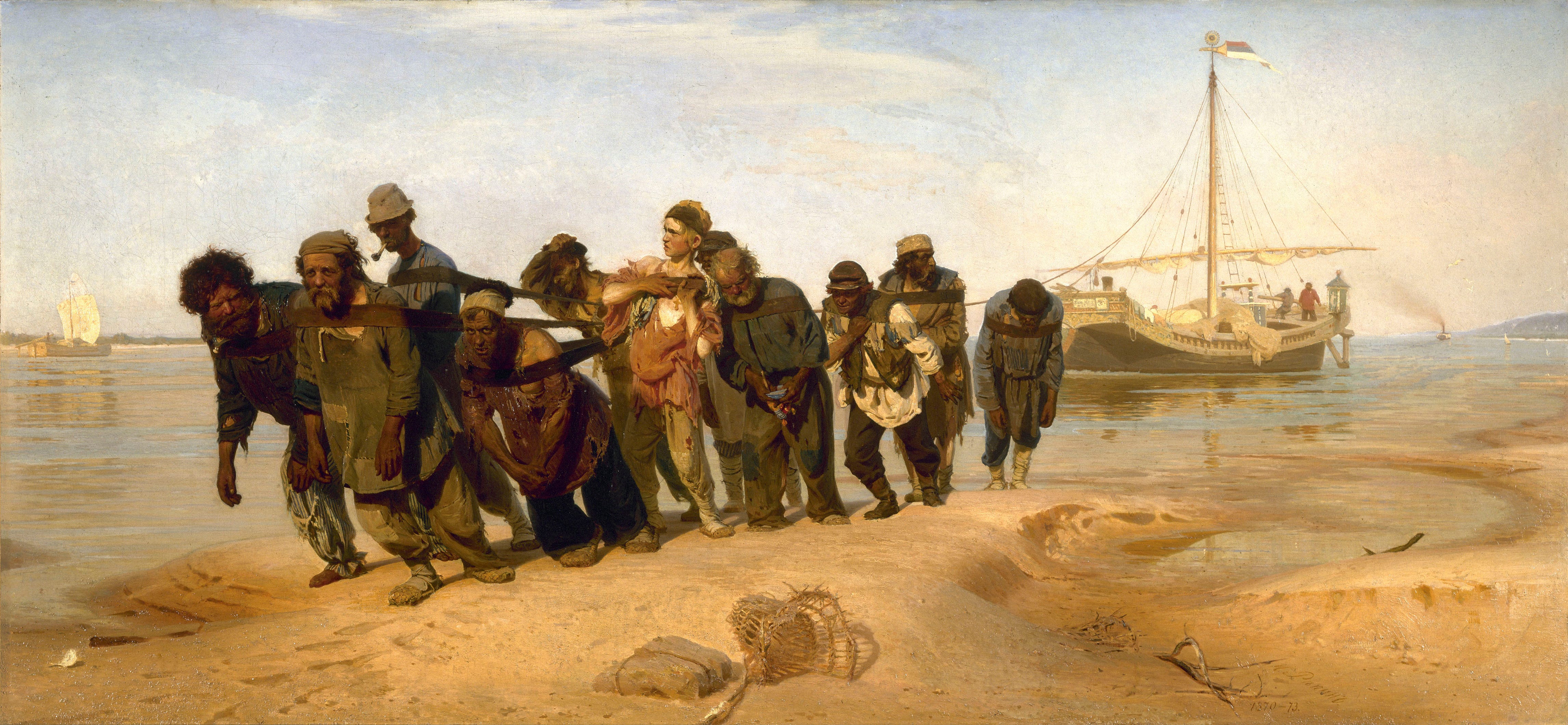
Under “standard” classical definitions of labor, this so-called corporate structure should result in alienation and rebellion. Yet, the opposite is happening. These meaningless tasks are somehow branded as existential fulfillment. We do not look at a backlog of unread emails and see an absurd pile of digital boulders; instead, we see a metric of personal worth. We log back on at 9:00 PM to clear the inbox and experience a fleeting wave of dopamine as we clear it out, all the while knowing fully well that by 8:00 AM tomorrow the boulder will have rolled back to the bottom of the hill.
This is where the modern worker parts ways with Camus’s absurd man. Camus argued that Sisyphus’s power was in his lucidity. The moment he walked back down the mountain to retrieve the boulder, he was fully awake to the tragic meaninglessness of his condition. That awareness was his liberation.
The modern professional, however, trades lucidity for a metric. To cope with the existential vacuum of the corporate hierarchy, we manufacture artificial meaning out of pure velocity. If the goal itself is meaningless, e.g., if the corporate project does not actually improve the world by ending world hunger or curing a disease, then we shift our focus entirely to the efficiency of the process. It no longer matters why we are pushing the boulder; what matters is that our velocity metrics are up 15% every quarter. We use data to shield ourselves from the terrifying realization that if we stopped pushing, quite frankly, the universe wouldn’t notice the difference.
The Fiction
This internalization of metrics represents a profound shift in political and personal agency. When an individual ties their existential value to a corporate metric, the capacity for critical reflection is effectively neutralized. You cannot question the ethical or philosophical validity of the system when you are entirely consumed by the frantic necessity of optimizing your place within it. It is simply impossible.
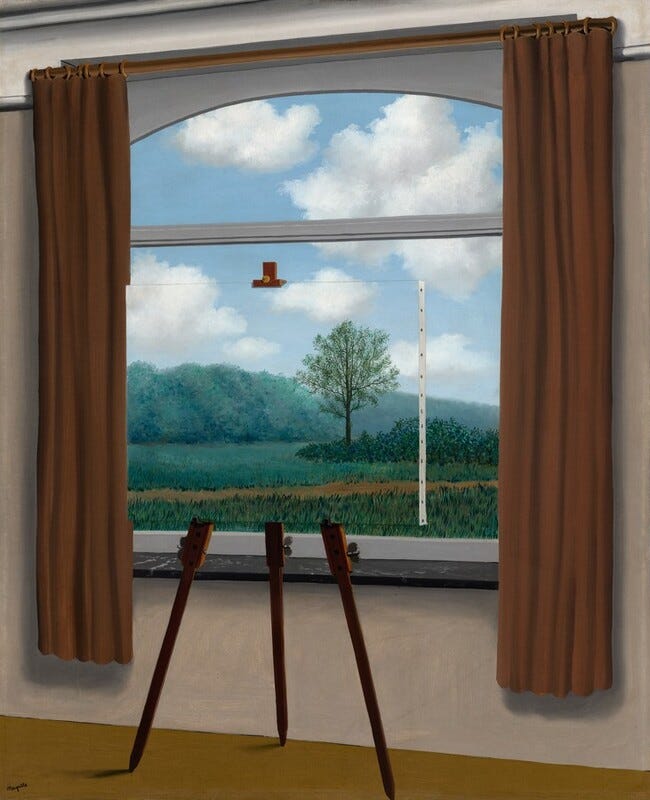
In his critique of late-capitalist hyper-reality, Jean Baudrillard argued that we have replaced the real world with signs and symbols of the real. In the modern workplace, we see the triumph of this simulation. The “performance review” is not an evaluation of actual human contribution; it is simply corporate theater. We use phrases like “circle back”, “put a pin in it” and “touch base” to obscure the reality that we are simply moving digital pixels from one side of a screen to the other.
This simulation prevents us from feeling the weight of our own alienation. Because the truth is, if we allow ourselves to see the boulder for what it truly is (a heavy piece of stone), the psychological tax becomes unbearable. And so, we brand it as something it is not. We frame the endless cycle of corporate repetition as a journey of personal development instead of an existential prison sentence, which is what it is.
The Boulder
To reclaim our humanity within this metric-driven landscape, we must perform a radical act of philosophical recalibration. We must recover the capacity to look at the boulder and call it what it is: a boulder!
This does not require us to quit our jobs or stage an unfeasible exit from the modern economy. No! Instead, it requires a reclamation of the Stoic practice of building an inner fortress. This requires establishing a hard boundary between our economic utility and our existential worth. It means recognizing that a Key Performance Indicator is a metric of optimization and not a measure of your human soul or value.
The next time you find yourself staring at an endless list of corporate tasks or the next time you feel the performative urge to post an update about your latest professional sojourn on LinkedIn, pause. Allow yourself to feel the heavy weight of the boulder against your hands and enjoy the liberating luxury of admitting that the task set before you is completely absurd.
Only then can we genuinely imagine Sisyphus free or happy, as Camus put it.
Unwana Johnson is a lawyer, writer and law tutor. Her work sits at the intersection of psychology, existentialism and the paradox of Being. Offline, you can find her watching the birds and the trees or attempting to converse with the full moon; “I am a lover of nature, she is my habitat.”
Bibliography
Baudrillard, Jean. Simulacra and Simulation. Translated by Sheila Faria Glaser. Ann Arbor: University of Michigan Press, 1994.
Camus, Albert. The Myth of Sisyphus. Translated by Justin O’Brien. Dublin: Penguin Books, 1975.
Daily Stoic. Building an Inner Fortress: Stoic Anxiety Management Techniques. https://dailystoic.com/building-an-inner-fortress-stoic-anxiety-management-techniques/.
Graeber, David. Bullshit Jobs: A Theory. New York: Simon & Schuster, 2018.
Han, Byung-Chul. The Burnout Society. Translated by Erik Butler. Stanford: Stanford University Press, 2015.


This is the first article I have read after discovering this journal. Everything about this it is just, brilliant. It wouldn't be an exaggeration to say that it takes the words out of my mouth, section to section. I absolutely love how you modeled the idea of absurd 'performative productivity' with the Myth of Sisyphus. I have been trying to get to the bottom of a rabbit hole solely on this topic for months and after reading this, I feel quite enlightened to the idea.
Everything has an 'aesthetic' nowadays, and despite bias for the field of aesthetics, I can't help but see it in the very problems you examine in this article. There are tasks, jobs, and activities that we either can't or shouldn't avoid, though it doesn't mean we should forego acknowledging the 'absurd' aspect of aestheticizing every macro of productivity (i.e. the fated 'performative LinkedIn updates' you mention throughout the article).
I often find myself idealizing many of the things you warn against in this article, and I use writing as a way to protect myself from the pitfalls of ignoring life's absurdity. I look forward to seeing your authorship in this journal for articles to come.
I really feel heard by this article. Any time I thought about the Myth of Sisyphus, I was annoyed by the fact that Albert Camus basically looked at one of the worst punishments in ancient Greek mythology and thought: 'You just have to change your mindset, bro!'
But on a more serious note, I think many forms of existential philosophy can be recuperated to our current technological and economical system. Mindfulness and meditation are probably the more popular philosophies that were used to allow for more productivity. I think it was just a matter of time until the productivity of capitalism managed to fulfill most basic desires and had to move on to social and even existential needs. This is why I would like to go further than building an inner fortress to deal with this situation. I think that people also must show each other that meaning, belonging and other needs can be created outside of this system, meaning as a collaboration between people and not as a task to fulfil by oneself.