


Introduction. Nostalgia and the Power of Artifacts
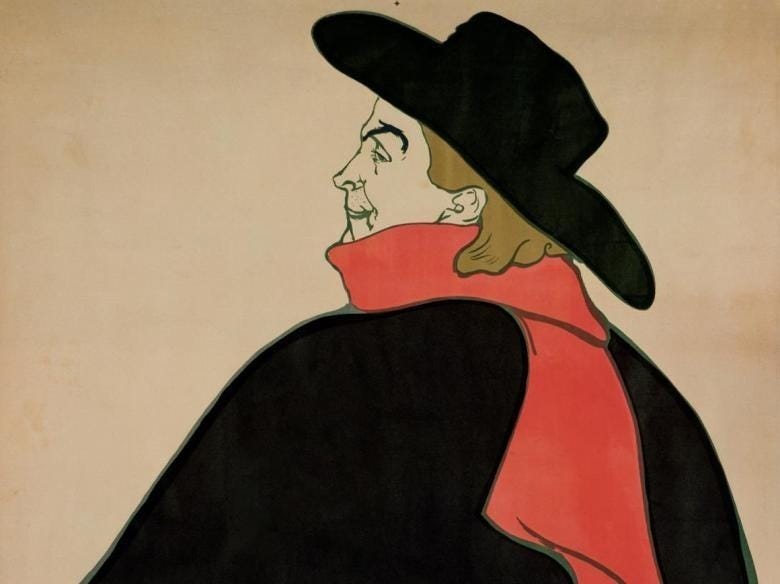
Culture and society are on a seemingly endless trip to incomprehensibility. When I was a kid, maybe four or five, my parents would bring me to my grandparents’ house in Hillsdale, New York. My grandfather served for nearly three decades as a New York City policeman. He would tell me stories of patrolling the projects and how he would save his spare change. Eventually they escaped the city. As we pulled up to the old white house, offset from the road by a quarter-mile rocky driveway, I was reminded that this was their means of escape — to get away from the buzz of city life and decompress. Yet when we walked inside, we were hit with a cacophony of trinkets and antiques. A model plane from the 1930s hung from the cathedral ceiling, something my grandpa found at a tag sale. In the kitchen, there rose a high hutch which contained hundreds of antique vases, cups, plates, and figurines. But the one artifact — a key word for this essay — that remains in my mind is the reprint of the post-impressionist artist Henri de Toulouse-Lautrec’s work Aristide Bruant dans son cabaret from 1893. The subject, Aristide Bruant, was a famous cabaret singer and nightclub owner in Montmartre, Paris. The image was an advertisement — Lautrec was friends with Bruant. There was something both horrifying and enticing about Bruant looking over his shoulder — I would stand and stare at the image. It seemed so out of place, because in many senses it was. What was it doing on the wall of a New York City Italian’s house in Hillsdale? But their house, far from an ode to the past, penetrated my 1990s childhood with a sense that culture and artifacts not only contribute to our complexity, but in some sense are the means to find simplicity among the chaos.
I. The Inevitability of Societal Complexity
Now, many years removed from staring at Bruant, with his devilish smile and side-eye gaze, I think back on that time and wonder why the past seems so simple. My time at my grandparents’ was a simple time, full of I Love Lucy episodes as my grandfather slept on the couch, and I rested on the antique fainting chair he’d thrifted from some rich person’s tag sale. In many ways, generation after generation has posed the lament “Life used to be simpler.” On its face this is just nostalgia, with each generation thinking that life was better when they were younger. The way the sands of time move, we often look back and forget the issues of the day, instead clinging to the pleasant, simple memories, images, and smells. To some older generations, the 1950s (though in my thirties I inherited my grandfather’s love for doo-wop), with its simple life and Happy Days aura, seems to draw people back out of the complexity of everyday life. But closer to home for me, my generation does this very same thing with the 1990s, pre-smartphone, when they can think back to when life seemed…simpler. Commercials were for toys and action figures with the overemphasized male voice; video games were rudimentary, like Tony Hawk’s Pro Skater 2, which I played on my Game Boy Color; and the internet was hardly the quick access point to infinity that it is today—and it was incredibly loud and obnoxious to use.
The past seems simple because society in the present seems complex.
And yet, to correct myself here, to call society “more complex” than prior generations is not quite right without defining exactly what we mean by complex. To grasp what we are getting at when we call something complex, we need to first find out, precisely, what it is that has changed. It is not simply that there are more people, or more objects, or more institutions, though there certainly are all of those things. Instead, by complexity we mean that the relationships between individuals have multiplied, and information has accumulated more than anyone can possibly take in. In the digital age there are more interdependencies, more feedback loops, more distance between any single actor’s understanding and the system’s actual operation. This distance between each other and our comprehension of the world is what we call “complex.” A village of a hundred people in sub-Saharan Africa and a global supply chain both contain “parts” that contribute to the function of the whole. What separates them is that no one inside the supply chain can hold its totality in mind the way a villager could hold the village. In other words, you cannot comprehend complex society. Complexity, in this sense, is not the pure quantity of things but the ratio between things — the ratio between the scale of a system and the scale of any single mind’s grasp of it. If thought of this way, it becomes clear why each generation longs for a prior one. That ratio continues to expand.
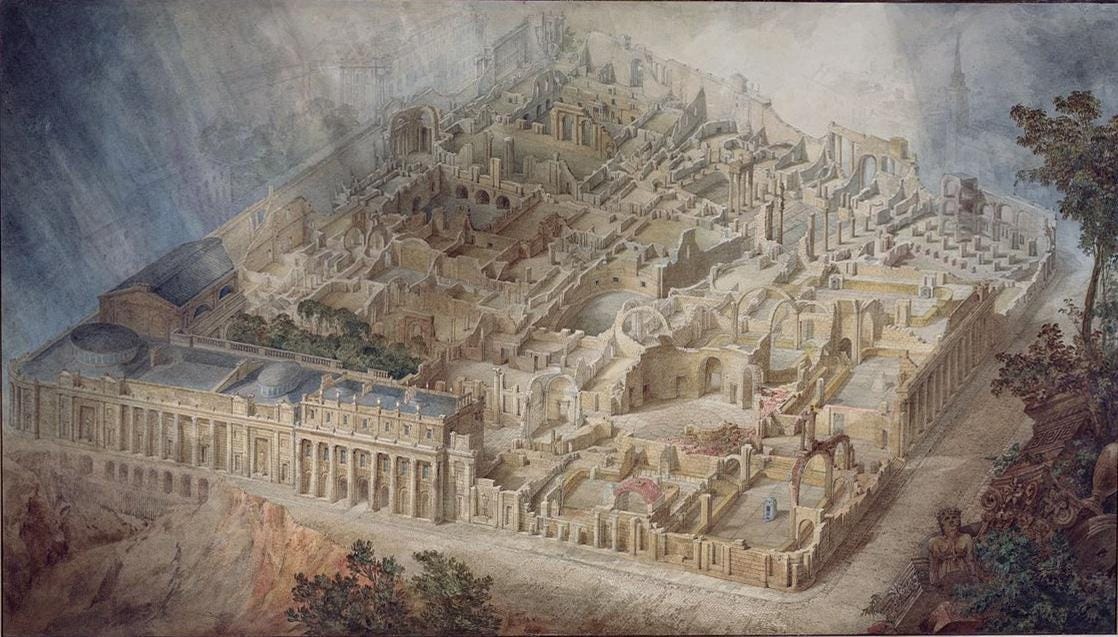
This distinction matters because it reframes the question from “how did society get bigger” to “how did society’s operations outrun the comprehension of the people living inside them.” For a helpful point of reference we should include Ashby’s Law. Developed in the 1950s by W. Ross Ashby, the Law of Requisite Variety holds that for a system or person to adequately control another system, the controller must have at least as much variety, or range of possible responses, as the system it is trying to control. I like to think of it as an air traffic controller. Certainly you watch one plane, but that one plane has to be understood in relation to other planes, else the whole system will collapse. Bringing this back to modern society, this is perhaps one reason government and political figures struggle to “get things done.” Certainly there is political jockeying and campaigning, but also, society is so vastly complex that one would need to understand it all to effectively address it.
II. The Mechanism of Compounding
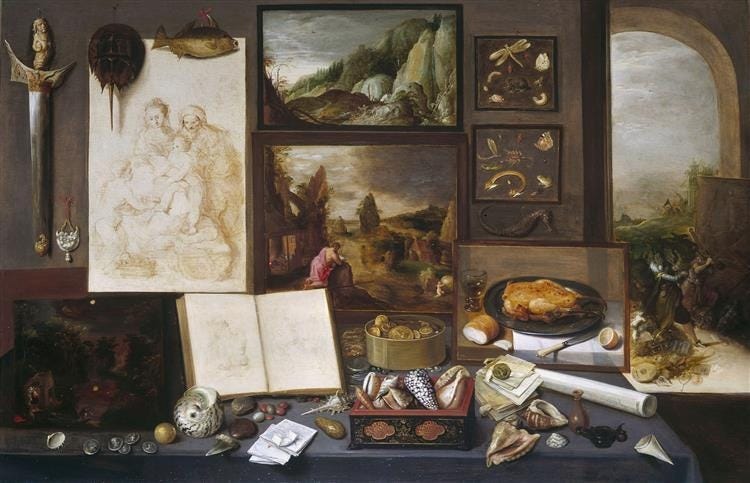
So we’ve established that the ability to comprehend society has grown more difficult. But now we shift to another aspect of societal complexity. The compounding effect of society and culture is certainly not a new phenomenon. Joseph Tainter, in The Collapse of Complex Societies, argues that societies add complexity as a solution to problems, and as the problems grow more frequent, the complexity eventually becomes unsustainable, leading to collapse. This arguably describes the Soviet Union in the late 20th century. Hard pressed to oversee all aspects of economic and civic life, the totalitarian government was incapable of dealing with the complexity. As the need for a specific resource grows owing to more complex systems and tools, a society interlocks its markets with others overseas to acquire it; that interlocking requires new administrative roles, new specialized functions, new layers of coordination. Each of these layers costs manpower, energy, and capital, and the costs compound even as the returns on each additional layer diminish.
The same compounding shows up at the level of culture. A single people, in a single place, differentiates into subcultures, which differentiate further, until what was once “a people” is, from the inside, thousands of micro-cultures. Now, I’m not saying this is decay. That we can form subcultures within cultures is a mark of our distinctiveness as humanity — unlike all other creatures, we can create social connection that transcends purely pragmatic means. But it is also, unavoidably, the engine of the very fragmentation that makes the whole harder to see. It is this, I believe, that the older generation who longs for “better times” is really seeking — a time before the thousand micro-cultures.
Society also accumulates the artifacts of its own compounding, the leftover pieces of previous generations, which persist long after the intentions that produced them have expired. This is why I opened with the story of my grandparents’ house — their house was a storage place for artifacts from the past, like the poster of Bruant. Or think of the Roman roads: built to move Caesar’s legions into Gaul and Britain, they became the roadways for Hitler’s Panzer divisions, and later still the infrastructure of inter-EU trade. Nothing about the road’s design determined which of these purposes it would serve; the artifact outlived its author’s intent and was picked up by whatever intent came next. My grandparents fashioned their house with artifacts that were at one point in time used by prior generations.
III. The Fall of Comprehension
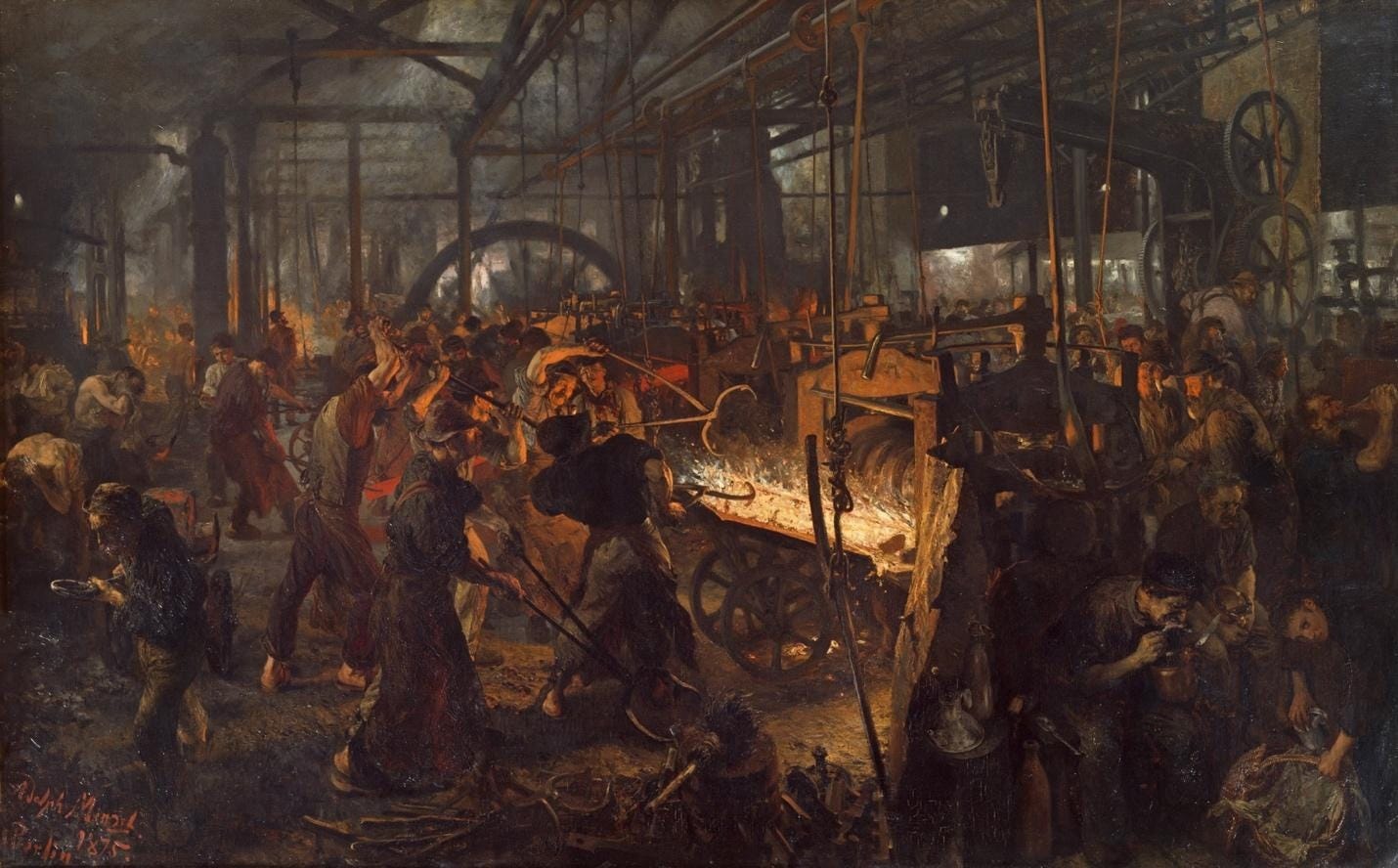
So far we’ve established that societies grow more complex, but we haven’t tackled the comprehension gap. Why is society harder to comprehend than before? German sociologist Niklas Luhmann has helpfully captured the reason in his world complexity thesis. Luhmann describes how, as time goes on, complexity, information, and potential compound, and this growth builds with it a support system of subsystems developed to treat each system — the siloing of knowledge and expertise. Luhmann adopted the concept of autopoiesis, a term coined by the biologists Humberto Maturana and Francisco Varela, to describe how each of these siloed systems only communicates with and reproduces itself. Luhmann’s theory of complexity works like a coral reef. At the start it is just the ocean floor, but over time sediment builds and builds until there are layers and layers of compact coral. Soon, one can hardly tell where it began but can see the thriving life all around, each siloed in its own ecosystem, shared by location alone. Thus social systems, so argues Luhmann, are not people, but communication.
Of course, in the twentieth century, the sedimentary layers of society were fairly easy to grasp. A Judeo-Christian worldview and Western civics offered a shared way to understand society and each person’s place within it. But with the rise of the digital age, this has become unintelligible. Deep in the inner crevices of the internet are subcultures, subpockets of algorithmic culture that do not materialize in the real, present world like older forms of culture, but instead materialize in the mind of the individual. The loss of shared information is replaced with millions upon millions of uniquely tailored opinions. This digital media serves as a feedback loop, a simulacrum of sorts, which slowly builds up and creates a reality in and of itself — one that no longer needs to make sense of other people, but merely of myself. Society, no longer a cohesive whole, is a complex, self-optimized system incapable of diagnosing and understanding the parts for the whole.
IV. The Symptoms of Complexity
There are several important indicators of complexity that are worth exploring.
As society grows more complex, and our ability to understand it becomes more difficult, we will try to simplify it on our own terms. In other words the appeal of conspiracy theories stops looking like a failure of reasoning and starts looking like a rational response to an epistemic environment that has outrun anyone’s capacity to verify it directly. This has been a bit eye-opening for me. As society grows incomprehensible, our drive to comprehend it remains, so we seek to explain it in the most simplistic terms possible. A conspiracy theory is, in an ironic sense, I know, more legible to us than the truth. It offers a small number of actors and a clear causal chain, in place of a system with millions of interacting causes that no one, including experts, can fully trace. People are not choosing simplicity over truth out of stupidity (though it certainly can be stupid); they are choosing a story that fits inside a human mind over one that does not. Of course this does not justify a conspiracy, but merely explains its appeal in the modern world.
Hand in hand with conspiracies is the loss of institutional capital. The same collapse that has us seeking out farfetched explanations for modern phenomenon shows up inside the institutions meant to foster and produce knowledge. Academic fields fracture into sub-fields whose findings speak only to each other, no longer to the discipline as a whole, let alone to the public. It is not incidental that the reading most sociology courses still treat as canonical dates largely from the twentieth century, particularly after World War II — a period, arguably, in which society had grown complex but could still be described. Since then, the object of study may have simply outpaced the available frameworks for describing it. It is not necessarily true that we lack originality today; it is instead true that the complexity of society makes originality much harder than it has ever been. To truly be original, a person needs to somehow either shed the collective accumulation of society and knowledge, or instead channel it into a new direction. Both of these are nearly impossible to do.
Along with these points, societal complexity has fractured any shared narrative underpinnings, which has damaged our ability to value one another. This plays out often when someone is being attacked, or in dire circumstances, and instead of people rushing to their aid, they are incapable of seeing the need. This push for efficiency becomes a system of distraction and perpetual indentured servitude. The Influencer Economy, far from just another means to make money, is added complexity vying for attention and time. It’s as if we are screaming out for comprehension and clarity amidst the confusion and misunderstanding of the modern digital ecosystem. As we each live within our sub-ecosystem of culture, we are out of touch with those around us who may be in a different ecosystem. This lack of shared connection is damaging our ability to connect and find bonds.
And perhaps tying all of these points together, societal complexity traps us in a cycle of feedback loop formation. Humanity, for as much as it creates culture, likes to be around things that are familiar. We listen to certain songs, certain genres. We even listen to certain podcasts because “those people think like us.” These feedback loops actually stunt our growth. In the digital age, one can go a whole lifetime listening to voices that affirm one’s own decisions, thinking, and abilities. AI is a good example of this. AI, apart from being an algorithm, is a means of pleasing the self. It rarely pushes back, and almost always affirms us. With so much complexity, there is little need to experience things that challenge and make us uncomfortable.
AI not only feeds the feedback loop, but also serves to accelerate societal complexity beyond anything we’ve seen before. In a split second we can now synthesize billions of gigabytes of data and pull together various threads. The issue, of course, is that humanity will rely on this to export its thinking, which will only serve to further complexify society. For as understanding shrinks, the ability to process likewise fades away. AI, while being sold as a means to make work more efficient, will inevitably make it more complex. The comprehension gap is not just on the input side of the equation but on the output side as well — we are not just losing the ability to comprehend complex society, but as we export our thinking to machines, we are losing any capable function to interpret society. Our thinking no longer stems organically and with rich originality, but from a series of prompts. AI is thriving because it thrives within complexity. And the more it consumes us, the more it will flatten our comprehension.
V. The Rebirth of Simplicity

We started this essay talking about nostalgia, through the lens of my grandparents’ collection of artifacts. The means to “simplify complex society” is not a simple “return.” Society is far too complicated to simply unbuild it. The layers upon layers of social materials are not easily dissected. However, there are ways to help mitigate the complexity.
One way we can undo this is to resist the urge to fall for the minimalism of the day and instead seek to integrate artifacts from past generations within our homes and lives. Certainly you can purchase art from prior generations, but this also takes the form of listening to music from the past. I often find myself putting on Dvořák’s Slavonic Dances and connecting through the artifact of sound with a time that is not my own. This is healthy and reminds me that the present is not all there is, but we carry with us the artifacts of the past, without which we would not be who we are today.
But this also shows why reading old books matters. As C. S. Lewis argued in his essay “On the Reading of Old Books,” the ordinary reader needs old books even more than the expert does, and “if he must read only the new or only the old, I would advise him to read the old.” We don’t often think of books as artifacts, but they truly are. When you crack open a book, you basically sit yourself down across from a figure from the past and begin a discourse. This discourse has a way of piercing the complexity – cutting through the silt of culture and showing you perhaps ways of living you might otherwise never have known. Nostalgia, while often misunderstood as pure daydreaming, is a good means of reckoning with the disconnect between present and past.
Having introduced AI to this discussion, and certainly aware of its effects in making culture and society more complex, I would like to posit not a doomer narrative, but that AI can create a sort of cultural flattening. As we export thinking, writing, and the creation of artifacts, we not only lose the ability ourselves but we no longer leave artifacts for future generations. Artificially generated art will find it far harder to pierce through the silt — I highly doubt my grandparents would hang up an AI image in their antique art collection — because the artwork reminds us of the artist. Without Lautrec, I would not have the image of Bruant burned into my young mind. Certainly AI can be useful; I’m not arguing that point. But it has a way of not only introducing more information than we can comprehend, but it flattens our cultural output. The better question with AI is, is this the artifact we want to leave in the sediment for future generations? I certainly hope not.
As time moves on, society will continue to grow complex, and we certainly won’t be able to fully grasp every angle of the social sphere. But we can push back. We can resist, and seek to simplify where we can. Society is complex, yes, and we struggle to comprehend it, yes, but this means that cultural artifacts matter more now than they ever have before. So if you take anything from this essay, take this: break the complexity with artifacts from the past.
E. J. LaRow is a writer and editor whose work sits at the intersection of theology, philosophy, cultural criticism, and the moral history of the modern West. A member of the Ciceronian Society, a contributing writer for Mere Orthodoxy, and a fellow at Law & Liberty, he has published in both, as well as in First Things, Modern Age, Ad Fontes, The American Mind, and on his Substack.
See Also from the New York Journal of Philosophy


