Spinoza and The Weight of Thinking
By Kyle Ainge
So you decide you want to be strong. You get a gym membership, wake up early, arrive at the gym, and begin loading weights on the bar. But then you notice the person next to you. They look strong—stronger than you—and like they could move the weight. So you ask them, “Can you lift this for me?” They oblige, and you leave.
A successful day in the gym?
As far as we know, the 17th-century Dutch philosopher Baruch Spinoza did not lift weights. But Spinoza would have recognised the absurdity of this question: the point of lifting weights is to become stronger, not merely to move the weights through time and space. In his magnum opus, Ethics, Spinoza argues that individual freedom depends on understanding the causes and essence of things—what Spinoza calls “adequate ideas”—such that we can become self-determining, pursuing only what is truly beneficial to ourselves and others, rather than being determined by the world around us. In this article, I will argue that the activity of reasoning toward an adequate idea is constitutive of what makes an adequate idea, and therefore self-determination and freedom. In other words, our understanding of ourselves and the world around us makes us self-determining, and this understanding is necessarily built by the effort it takes us to get there.
In this way, Spinoza’s Ethics offers a critical distinction to help us think about our relationship with AI: AI can increase freedom to the extent it augments the activity of thinking, helping us to understand the causes and essence of things and become self-determining. But AI subtracts from our freedom to the extent it substitutes answers for understanding, removing the intellectual activity through which adequate ideas are necessarily formed and upon which self-determination and our freedom depend.
Self-Determination
For Spinoza, freedom is a life in which the individual, through a true understanding of things, actively does and pursues only what is truly beneficial and useful to them and to others. The free individual is self-determining because they can think, desire, and act on the basis of their own nature, by understanding the causal order of nature, not by escaping it. Spinoza calls acting on the basis of one’s own nature the “Conatus”. By self-determination, Spinoza means increasing the ability to determine one’s own actions and desires through one’s own adequate understanding.
Self-determination is the connection between knowledge and freedom that runs through the Ethics: if we understand why we are the way we are, why things happen as they do, or how one event necessarily follows from another, then we become more capable of acting rather than being acted upon. In this way, we become more free.
Inadequate Ideas
To understand Spinoza’s conception of self-determination, we need to understand “adequate ideas” as the foundation. Spinoza starts by saying our ordinary experience of the world does not initially give us adequate ideas, or a true understanding of things. Instead, we encounter modern life’s blizzard of images, sensations, feelings, perceptions, and memories; we are affected by and driven to do things by the world before we understand the world.
As Spinoza puts it, when the mind perceives things according to “the common order of nature”, it possesses only a “confused and mutilated” knowledge of itself and the world, and is “driven about in many ways . . . like waves on the sea, driven by contrary winds . . . not knowing our outcome or fate”. This is to perceive effects without necessarily understanding their causes, to be driven and defined by “pre-packaged values, thoughts, opinions, and identities, delivered quietly and efficiently, while we float around the world carrying them as our own”.
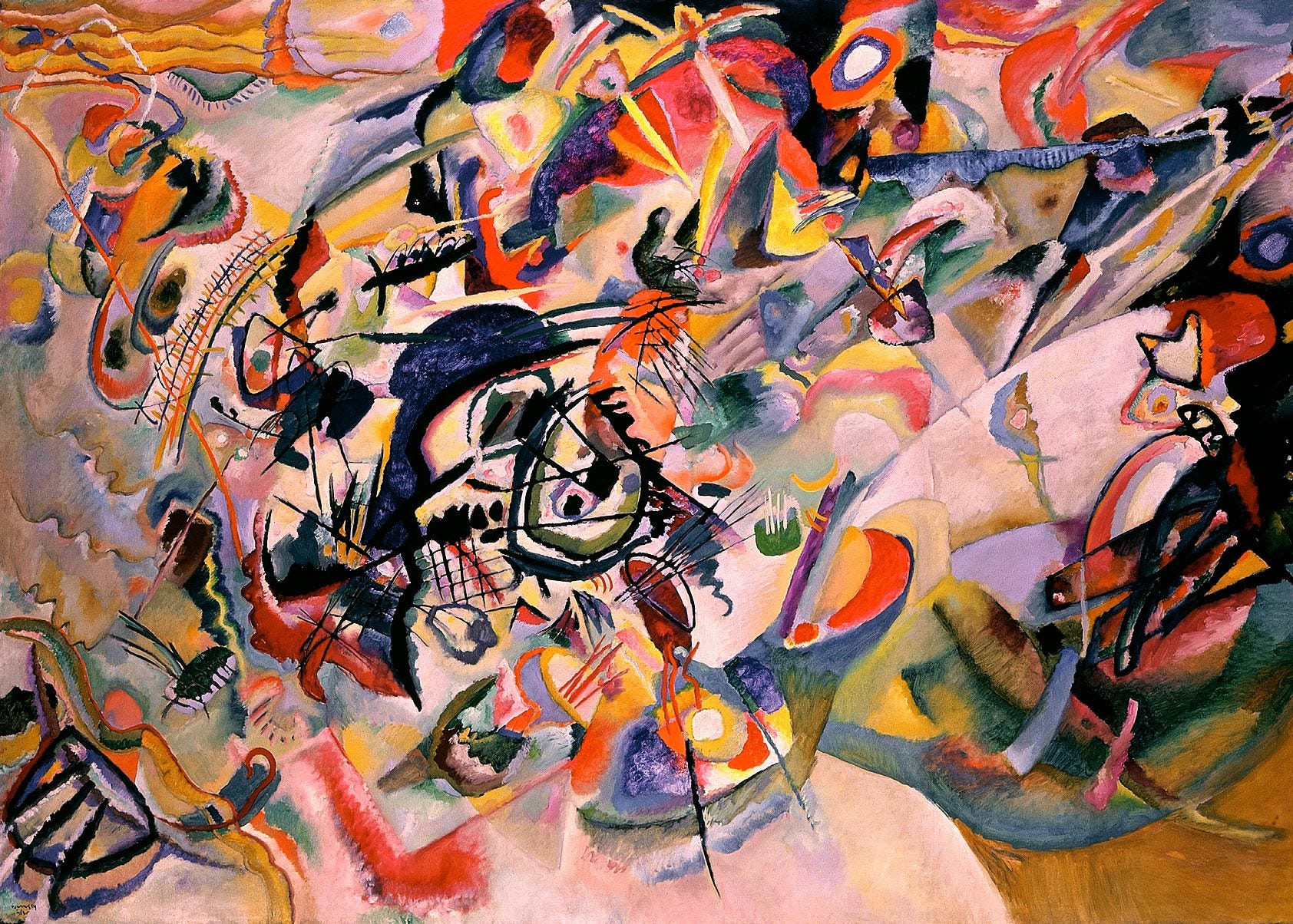
This is our modern condition, buffeted by the world. We encounter things according to the order in which they happen to affect us, and our ideas—our understanding of things and therefore our freedom—are based on these events, which our senses perceive as random and chaotic. And these images, feelings, and experiences determine what we do without our understanding as to why these images, feelings, or experiences have power over us. For example, why is it you actually decided to be strong? How did you decide that this gym or that gym was the right one? What images, sensations, feelings, perceptions, and memories assembled such that “strong” became an objective you could rationalise? Did you decide that you wanted to be strong, or did the world buffet you with images of strong people, the lifestyle they live, the identities “strong” creates, and then tell you that you should decide to be strong?
Adequate Ideas
But adequate ideas are different and belong to Reason, Spinoza’s second kind of knowledge beyond the sensory experience of the world. Reason is to “regard things as necessary, not as contingent”, to place a thing within the order of cause and effect by understanding, among other things, what it is, what produced it, what it produces, and why.
As Steven Nadler writes on Spinoza: “insofar as a person does what is an expression of his own nature alone, he is active and free; insofar as he does what is an expression of both his nature and the nature of the external things that are affecting him, he is passive and unfree”. Ergo, a person is freer if they do what they do because they understand essentially what they are than if they do something because “some sweetly alluring object” moves them. Freedom is therefore a matter of degree: to be acted upon by inadequate ideas or to act upon the world with adequate ideas, so that one acts from the necessity of one’s own nature, to be self-determining by acting, thinking, and desiring not by the passions of the world but of one’s own accord. In this way, Spinoza’s concept of conatus is an active “striving” that is “nothing but the very essence of man.”
Spinoza does, however, caution that these adequate ideas are not a panacea. Mechanically accruing more adequate ideas than inadequate ideas in one’s mind is insufficient to render a person free because even the most rational faculties succumb to those “sweetly alluring objects”. Part of freedom’s battle is to train ourselves to want the adequate ideas to overcome the inadequate ones. As Nadler puts it, “[we] really have to want to take that medicine and get better in order to overcome [our] resistance to taking it.” Ingraining adequate ideas creates a flywheel-like effect: “the mind is more liable to passions the more it has inadequate ideas, and conversely, is more active the more it has adequate ideas.”
Adequate Ideas, Inadequate Ideas, and our Relationship with AI
This is where the distinction between adequate and inadequate ideas becomes particularly incisive for thinking about our relationship with AI. An adequate idea is an understanding of a thing through the causal relations that constitute it—an active and striving intellectual exercise that sifts facts and weighs evidence to arrive at an answer. To know why something happened is different from knowing that it happened; to understand an argument is different from knowing its conclusion. Adequate ideas require the active apprehension of the thing through the relations that make it intelligible—it is through the lifting of the weight that we become strong.
This, I think, is what Spinoza would tell us about AI and our current moment. Yes, AI allows us to possess the “right” answer, but it costs a level of freedom when used as a replacement for our own efforts, because the activity of reasoning is constitutive of what makes an adequate idea.

To reason is to move through the relations between things by asking what caused it, what follows from it, what else must be true if it is true, or how the particular thing fits within the broader world. It is to turn an idea over a thousand ways and ask if the “right” answer is truly “right”, and under what conditions. To offshore the understanding in favour of the answer is to succumb to the “sweetly alluring object” of convenience.
This is one way the gym analogy becomes useful. While it is true that the point of lifting the weight is to move it to a new location, the lifting itself is the activity through which the lifter becomes stronger. Similarly, while it is true that the point of reasoning in modern contexts is to possess the answer, reasoning is the activity through which the reasoner understands, and therefore can possess adequate ideas, become self-determining, and therefore become more free. Put differently, we train ourselves to think well by the activity of thinking; we train ourselves to be strong by the activity of lifting weights.
To be clear, Spinoza does not say we can escape the causal order of nature, and we cannot simply decide that external things will cease to affect us. We will necessarily always be “like waves on the sea, driven by contrary winds tossed about by external causes without knowing our outcome or fate”. But in Spinozan terms it is a question of degree: how much of our life is determined by causes we do not understand, and how much of our life is determined by causes we strive to understand such that we can be self-determined?
Using AI is therefore Janus-faced: AI can potentially help us form adequate ideas by exposing causal relationships, comparing explanations, identifying assumptions, testing arguments, and playing devil’s advocate. On the other hand, AI can give us the “right” answer without requiring us to follow the reasoning that produces it, or tell us why something happened without requiring us to understand the “why”. We inevitably rely on reasoning that is not our own to form adequate ideas, but what matters is the position we let AI take in our intellectual endeavours.
Perhaps this is the second way the gym analogy becomes useful. If someone else lifts the weight for me, the weight has still been lifted, but I have not become stronger; if AI does the reasoning for me, the question may have been answered, but I have not necessarily become more capable of understanding. In the latter case, the answer AI gives is just another speck in modern life’s blizzard of images, sensations, feelings, perceptions, and memories— affecting our daily lives without us being able to understand how or why. Used in this way, AI can contribute to unfreedom insofar as it substitutes for the activity through which adequate understanding is earned.
Conclusion
For Spinoza, freedom depends on adequate ideas, and understanding the things that cause us such that we can be self-determining. We can also read this to mean that the activity of reasoning is constitutive of what makes an adequate idea, and what makes us self-determining. So AI presents at least two intellectual possibilities: augment our understanding and the activity of reasoning so that we can possess more adequate ideas, and therefore become more free; or to become a substitute for our understanding, limiting and atrophying our capacity to reason, rendering us “driven by contrary winds tossed about by external causes without knowing our outcome or fate”.
This is the warning we can take from Spinoza. Time to lift some weights.
Kyle Ainge is a writer who resides in Dallas, TX. His interests sit at the intersection of philosophy, politics, economics, finance, law, and history.
Bibliography
Carlisle, Clare. Spinoza’s Religion: A New Reading of the Ethics. Princeton, NJ: Princeton University Press, 2021.
Nadler, Steven. “Baruch Spinoza.” In The Stanford Encyclopedia of Philosophy.
Nadler, Steven. Think Least of Death: Spinoza on How to Live and How to Die. Princeton, NJ: Princeton University Press, 2020.
Padte, Kalika. “Existentialism in a Capitalist World.” New York Journal of Philosophy, July 15, 2026. https://journal.nyphilosophy.org/p/existentialism-in-a-capitalist-world.
Spinoza, Benedict de. Ethics. Edited and translated by Edwin Curley. Introduction by Stuart Hampshire. London: Penguin Books, 1996.
See Also from the New York Journal of Philosophy


Has AI diminished our appetite for understanding, or revealed what we incentivize?
https://danielmurphykennedy.substack.com/p/thought-experiments