The Death of Process
By Joseph Cancelleri


“As it has been, and apparently ever shall be, gods, superseded, become the devils in the system which supplants their reign, and stay on to make trouble for their successors, available, as they are, to a few for whom magic has not despaired, and been superseded by religion.” —William Gaddis, The Recognitions.
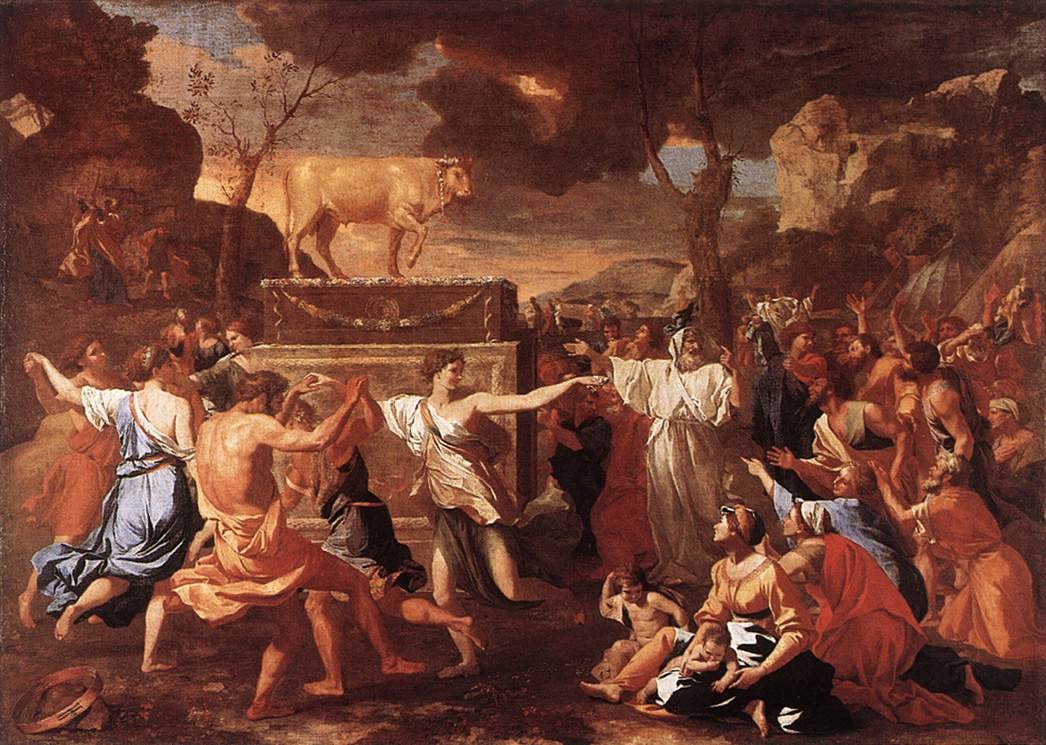
Who are the devils of the forthcoming era?
To answer this question, look to what is deified today surely provides insight into our demons of tomorrow. Consider the nigh-miraculous fact that in aggregate, the average person can: go anywhere, purchase anything, talk to anyone, hear any song, translate any language, access the most obscure and esoteric information – with relatively little effort in comparison with any other period of human history. To most of a given day’s routine, one could reliably find themselves saying, “That was easy,” particularly with respect to how previous generations may have experienced that same task. Why? Because these daily frictional elements we encounter have been worn smooth by progress. Innovation, optimization, efficiency: a constant accumulation of betterment from one era to the next. And now we find ourselves in a time where we can even offload the burden of thought itself; this is an unparalleled simplification. Is this okay, all this carte blanche reduction of process? Applying the logic of the Gaddis quote above and the preceding questions, one should ask: at which altar might we say humanity is worshipping? This essay asserts: Convenience. Intellectual convenience, technological convenience, social convenience; it is ubiquitous. The unifying principle catalyzing the societal imperative of the broad adoption of AI for business and personal use, the well-documented process of platform decay, general epistemic collapse, all are the domain of convenience. And if convenience is the god of the modern era, and we have credible suspicion for convenience to be a wolf in sheep’s clothing, this implies that difficulty (or more precisely, process) might be a virtue and may even provide absolution from a discounted human experience.
Deconstructing Process: The Particulars
To start, perhaps an example from computer science is apropos. Programming languages occupy a broad spectrum of levels of abstraction; at one end there are high-level languages (HLLs) and at the other end there are low-level languages (LLLs), and we’ll take Python (an HLL) and Assembly (an LLL) to illustrate this point. The table below contains how to compute and display the answer to 2 + 2 in both Python and Assembly:
A reader may have never used a programming language before, but the Python code is immediately interpretable. Even “print(result)” with no prior association to Python is intuitively interpreted as “display the answer to a + b.” That said, there is no tacit knowledge associated with the Python code; that is to say the depth and nuance of understanding to how the answer is achieved by the computer itself, is surface level. How does the computer actually arrive at the answer: 4? The only knowledge gained is how to add two numbers: reductively put, “a fish has been given, but fishing has not been taught.”
That is what the Assembly code unpacks. It is certainly verbose; a reader in this case would be entirely justified in not being able to interpret a single line or what the purpose of the code is, however, it is exactly equivalent to the Python code. The difference is that Assembly is much closer to how the machine interprets and executes the desired function. The user must allocate memory, assign values to the registers that are composed of the physical transistors, and define the rules for the addition. There is a fundamental understanding of the machine and the operation, the propositional and procedural knowledge, gained by the process of coding 2 + 2 in Assembly that is lost in Python. The reduction or elimination of process is convenience.
Obviously, more process in all instances at all times is neither practical nor advisable. However, resisting the urge to remove all procedural friction when producing some output is essential. The understanding latently concomitant with process facilitates understanding the output of that process, which is especially significant in instances where that output disagrees with expectation. How can cause be determined when its link to effect is a black box? There is a strict necessity for the causal chain of thought or action for people to grasp the “how” and “why” of their reality.
With this context, it can be asserted that in essence, human understanding is a long series of rounding errors. Two people might have the same lived experience, but a lifetime of variation in how subjective stimulus is perceived (What is green? What is blue? What is beautiful? What is ugly? What is true? What is false?) leads to an additive stack-up of tolerances in perceptive differences where the holistic understanding is unique and disparate.
This is illustrated practically by a common idiom in engineering from George E. P. Box, “All models are wrong, some are useful.” It speaks to the impossible nature of replicating the perfect simulacrum of a system. There are certain variables, unobservable, internal dynamics, which may govern the behavior of system that is simply impractical or impossible to capture in a mathematical model, and this is usually acceptable, because often a 99% answer is perfectly sufficient.
Human perception is like this. The perceived understanding of the universe is ultimately a mental model, and thus exists in each mind as an imperfect copy, merely verisimilitude. These imperfections mutually persist in all people’s idiosyncratic understanding of their environment, whether that is a minuscule or vast discrepancy. Each person possesses imperfect understanding to varying degrees.
This is a facet of human experience that rings especially true in the perception of other people: only the idea of another person can be formulated, not their own conceptualization of themselves or what they mean to present as reality. For example, when a partner or spouse does something we do not like, it is because they have done something that contradicts our expectations that we become confused, and thus upset or frustrated. People become enamored with a concept of a person (or thing, broadly) and are aggrieved when this concept does not match reality. In short, when the idea of someone or something is taken to be reality, people are confused when their mental model is not validated by reality or meets expectations, and when expectations are based on presuppositions, those presuppositions can be and often are flawed, and identifying the flaws is required to achieve common ground. The process is necessary for understanding.
The more abstracted humans’ interaction with the world around them becomes, the worse humanity becomes at building a mental model of reality.
People will do what their agency dictates but will also behaviorally follow certain patterns. This gives rise to a common mode of actualization: the option to choose the path of least resistance in all instances possible. In other words, the least friction at all times is the current trajectory, but it is that friction itself that governs the arc of that trajectory. The same drive to ease the burden of the collective is also what limits the discretion of the individual. Thus, the abstraction dilutes understanding; that is the danger: an incapability to interpret our environment or each other because the medium to do so – the very basis required for making an assessment – has been smoothed out, and we miss the mark.
Danger and Discretion
It is a quintessential part of human experience that has only become, in the modern era, an existential threat. And beyond this, the drive for maximal efficiency ends up superseding the reason for which the process even exists. There is a striking amount of self-determinism lost when life is abstracted; there is less room for variety when everyone is subject to the same algorithm presiding over how each interface with reality occurs. We know “is” but we’re degrading the capability to answer the question of “how?” or “why?”
As stated previously, this level of extreme abstraction has risen as far as to allow the very thinking process to be performed at the user’s behest; the same thoughts subjected to the same math will yield the same results for which there is no understood basis. The coding example would exemplify “is” without “how” but what about “is” without “why?”
Let’s demonstrate a practical example of “is” without “why” and the intrinsic dangers for optimization without basis; let’s formulate it like so: the corporation says a product exists to produce capital; the consumer says a product exists to produce value. Eventually, a threshold of profit optimization (concomitant with process optimization) is encountered, which results in a divergence from the target of making a product more valuable to the target of making money. This necessarily makes the product worse. Much of this optimization is targeted at reducing operational costs or the costs of process. Maximizing convenience optimization costs for the product maker and offloading it on to the consumer minimizes the product’s value. Unfettered profit-seeking via the use of exploitative labor, substandard or environmentally hazardous material, misrepresentation of the product’s necessity, or preying on vulnerable consumers: this is inarguably a destructive trend. This is the result of corporate convenience over product quality. This is the result of seeing the “is” without the “why.”
The abstraction of human experience to always be what is most convenient undermines the human ability to perceive what is real—to assign truth values— reliably, not a hypothetical perfect perception of reality or truth, but a practically necessary one for survival.
But how can it be distinguished, difficulty (or process) which is worthwhile even virtuous, and difficulty which is superfluous? It would be unwieldy to try to adjudicate all instances where this may be the case, so a heuristic is offered instead: difficulty that is instructive is virtuous; difficulty that is obstructive is superfluous.
A practical virtuous example: writing an essay. The cognitive friction associated with formulating ideas and translating them into coherent language makes the author both a better writer and a better reader: this is a beneficial difficulty to endure and overcome. Conversely, using a Large Language Model (LLM) to write an essay subverts the requisite critical thinking – the process – and the benefit of the essay authorship is undermined, even if the same essay is produced.
A practical superfluous example: walking to work rather than driving to work. The walk to work is beneficial from a health perspective, but it also requires 2 hours both ways to do so. The salubrious benefit of the walk is overshadowed by its detriment to the greater end of the work to be done, which is ideally, instructively difficult. In this case, the difficulty of the walk is obstructive, so it is superfluous.
This discretionary nature might seem like it trivializes a claim that difficulty should be considered virtuous, but it is significant (and what is being asserted) for the mere consideration of difficulty as a virtue. The very fact that discretion is being applied, rather than defaulting to convenience, is the argument. It is common to hear “Patience is a virtue.” But does patience not also require the same discretion as difficulty? Letting an investment mature is an instructive, thus virtuous, patience; sitting in traffic rather than finding an alternate route is an obstructive, thus superfluous, patience. All virtues require some element of discretion in their application, and difficulty is no different.
Exegesis of Images
Let’s return to the incongruities that arise from the abstraction of experience. How many levels of abstraction from human experience does it take for the perception of reality to become indistinguishable from being a simulated reality (i.e., online)? It is a question that is not as hyperbolic as it may seem on its face.
Consider a brief parable: A teacher and a student, the teacher presents what is ostensibly a block of wood. The teacher asks, “Do you know what this is?” The student responds quizzically, “A block of wood?” “Do you know what kind of wood? The origin of the tree? The dimensions of this block? Whether it is hollow or solid? How many atoms it contains? If this is actually wood at all?” Of course, the student must reply honestly, “No, I do not.” “Then, do you really know what this is?”
Now consider the same example, however, this time the teacher presents the student with a picture of the same block of wood. The line of questioning proceeds the same, and the same conclusion is reached, “Then do you really know what this is?”
What is the difference? The first example presents a block with knowable unknowns; the second example presents a block that is unknowable. In the first example, the student can take the block in their hands, test it, manipulate it, investigate it; in the second example, the student has lost the dimension necessary for perception. But what if images are what is most convenient? The surrogate of reality, its projection, the world of the Platonic cave, supplants the truth. This isn’t advocacy toward empiricism; rather, it is an illustration of the manner in which interface supersedes interpretation.
How is a text-based description of the block different from a picture of the block? This misconstrues the premise. It is assumed that the block is unknown. By using words to describe it, one must assume either that these words are facts or guesses about the block, which indicates that there exists some a priori knowledge regarding the reality of the block, but fact or guess either way, the use of words assigns some filtered perception of the block; words are inherently propositional. The observer must assign the words, and the words are a form of the block. The nature of the block can be derived from its textual description. The photo is a high-level abstraction; the words are a low-level abstraction. The argument this essay asserts is that the process of perception is obfuscated by the high-level abstraction.
Images are illusorily perceived as unmediated information, when in fact they are the reification of unknowable attributes that masquerade as knowledge, which undermine process, and thus experience. This can be generally stated: information is not equal to knowledge. With respect to images, this statement is not a normative distinction about their necessity or utility (rapid information transfer facilitated by images can be existentially important). Images flatten the dimension necessary to contextualize information which enables its conversion into knowledge.
Convenience technologies themselves are analogous to images with respect to the work they simplify. For example, take the car to be an analog to the image of moving from point A to point B; the car itself cannot be derived from the experience of driving one. Or, take social media to be analogous to the image of interacting with other people; another person was not actually “met.” Or, take neural networks to be analogous to the image of thinking; using one cannot teach the user to think. When considering humanity’s collection of all these technologies in gestalt, there is the sense that humanity is losing tacit knowledge of reality because of convenience.
One could posit this is the wisdom or intent in many religions in forbidding graven images of their deities. Icons are a distillation. Icons are imperfect copies, inauthentic to the real. To illustrate: the reader should imagine some new sect of zealots one day proclaims them as their god. As their god, you preside over them and observe what they do with their free will and maybe sometimes answer their prayers if you deem it consistent with your own will or a magnanimous mood simply strikes you (a complex, just, and powerful god). Consider then, how you would feel if your devoted acolytes began to fashion metal or wooden figurines in your likeness, and not only treating their artifacts with sanctity, but as if they were sincerely you. Blasphemy. How could a little action figure capture your nuances, your sagacity, your might? Now your zealots are worshiping a degenerate version of you. The truth of you is lost. What you are is determined by every iteration of these imperfect likenesses: the meaning of the copy has superseded the meaning of the original.
In a similar manner, a JPEG copied repeatedly propagates compression errors and begins to become distorted, losing quality, and its original form and in essence some meaning. The more an error is propagated, the harder it is to know what of the image is true and what is false. In a sense, “A picture is worth a thousand words” may have damned humanity.
Beyond icons, and in consideration of the depiction or representation of concepts, what is gained in the immediacy of visualization, also obscures its context. The boundary conditions required for meaning are undefined, so to speak. Assuming the zeitgeist of convenience and the use of images continues its trend, pictures will replace reality, and the mental models of reality will further degrade. Of course, words, too, are imperfect, as language itself is a filter applied to any thought people may express, however, the ubiquity of images used as a means to communicate information via screens is unique to modern times, and thus the caution regarding the authenticity or truth of images, specifically, is warranted.
This relational aspect of meaning implies that most of the human experience has become or is becoming untethered to meaning. This follows because the meaning can and will always lack a relative basis, thus, will always be dynamic, changing in relation to other human experiences. The implication is that experience can contain all possible meanings, which is the same as no meaning in a relative or absolute sense. It has never been the case that absolute meaning can be assigned to human experience with certainty, however not even a relative experience can be assigned to a life consisting purely of images; it is experienceless. The conditions for meaning have been lost because images obfuscate the boundaries necessary to derive it. Process gives referential tethering, and the lack of process is referential untethering.
Convenience/Apathy Animus
What is the conclusion of a society of convenience, or at least, where might it be leading? It could be argued that more than anything else, it will most certainly result in a monolithic, endemic apathy. When a process is not understood, how can the outcome be truly appreciated? That which is easily obtained is considered trivial. The process of making or doing, or observing the making or doing, results in small epiphanies. This is equivalent to the aforementioned tacit knowledge, and it is at risk of being replaced by apathy. The struggle of overcoming and the pain of feeling incompetent, it is a suffering that leads to either catharsis, epiphany, or more suffering. But by not quitting the process, by virtue of continuing, one is overcoming suffering, and coming to appreciate the outcome, whatever that may be. Experiential suffering is transmuted into something tangible, but with apathy, the suffering has no context, so why endure it?
In a sense, apathy is the first death. It is a symptom of the titular “Plague” Albert Camus warned of. Apathy begets cynicism. Apathy begets the sanctioning of injustices in the human heart. This is substantiated in the example of how casualties increased significantly with the advent of mechanized warfare and artillery in World War I. In the summer of 1914, German and French forces suffered losses numbering in tens of thousands over a matter of weeks due to the lack of anticipation of the destructive power that novel technologies of artillery shelling and machine gun fire represented. The physical distance to engage in combat that these new technologies allowed changed the mindset of soldiers to perceive their opposition as a nebulous “it” to destroy, rather than a group of individual human beings and to do so with an unprecedented, detached efficiency. In fact, some of the “safest” combat zones during WWI were in the trenches that had the closest adjacency to enemy trenches, where humanity could not be abstracted away.
This pattern of remote warfare has increasingly persisted: planes fly higher, rockets fly farther, and explosives have a larger blast radius, which all have further and further modernized into the current era. More efficient killing over longer distances. And now: AI selecting a target for an unmanned drone strike on the other side of the globe destroys a school: who is accountable? Distance on a battlefield is an abstraction; it reduces a life to a mere statistic; it is weaponized convenience.
On the individual level, convenience removes the context of existence. By fixating on the optimization of experience to make it such that it is most convenient, it is equally optimized to have the least context. The process is context. There is a sickening passivity that convenience allows. It enables one to be a disembodied observer of their own life. Letting things happen as they may absolves one of any consequence or culpability in attribution of the result. Active participation implies responsibility. Inaction is safe. Apathy is safe. It is a characteristic frictionlessness that mitigates personal risk. The current era is characterized by risk aversion, because risk implies failure, and failure is inconvenient.
The forthcoming era will be defined by finding the reason and will to defy the god of the modern era: convenience. This can only be done by recognizing the necessity of process to human experience. It is only through process that mutual understanding in the collective perception of reality can be explained and even reconciled. The future needs iconoclasts: those who choose instructive difficulty and reject instantaneous gratification, those who seek the value from having experienced process rather than subverted it via accessibility. For humanity to avoid a fate that optimizes itself into its own death, it is a requisite shift in the public consciousness for that which is effortful to be regarded as virtuous or at the very least, considered at all.
“When you read or hear those words “larger” and “more efficient” you may expect soon to encounter the word “inevitable…” “We should not try to prevent the inevitable…” This way of talking is now commonplace among supposedly intelligent people, and it has only one motive: the avoidance of difficult thought. Or one might say that the motive is the avoidance of difficult thought, for that use of the word “inevitable” obviates the need to consider any alternative, and a person confronting only a single possibility is well beyond any need to think. The message is this: “The machine is coming. If you are small and in the way, you must lie down and be run over…”” —Wendell Berry, Life is a Miracle.
Joseph Cancelleri is a NASA engineer with a deep appreciation for the humanities. Prior to working for NASA, he was a graduate research assistant publishing papers on machine learning techniques for both wireless access point security and ionizing radiation effects.
See Also from the New York Journal of Philosophy


The distinction between virtuous and superfluous difficulty is the part I'll keep thinking about. Writing an essay earns its friction because the struggle is where the thinking happens; the walk to work doesn't. Your argument about images lands the same point — convenience doesn't just save effort, it removes the context that makes the effort meaningful.
What an absolute masterful piece of an ode to human creativity and knowledge, but also the death we need of convenience. The ’process’ is what makes you an artist, the time you set aside to devote and allocate to your craft. Get rid of time and you become a content creator whose work evaporates as quickly as you produced it. Art is about making time. AI is about eliminating it. A great piece on a conversation starter that needs to be had. I loved your piece. Thank you for sharing your thoughts so transparently.